

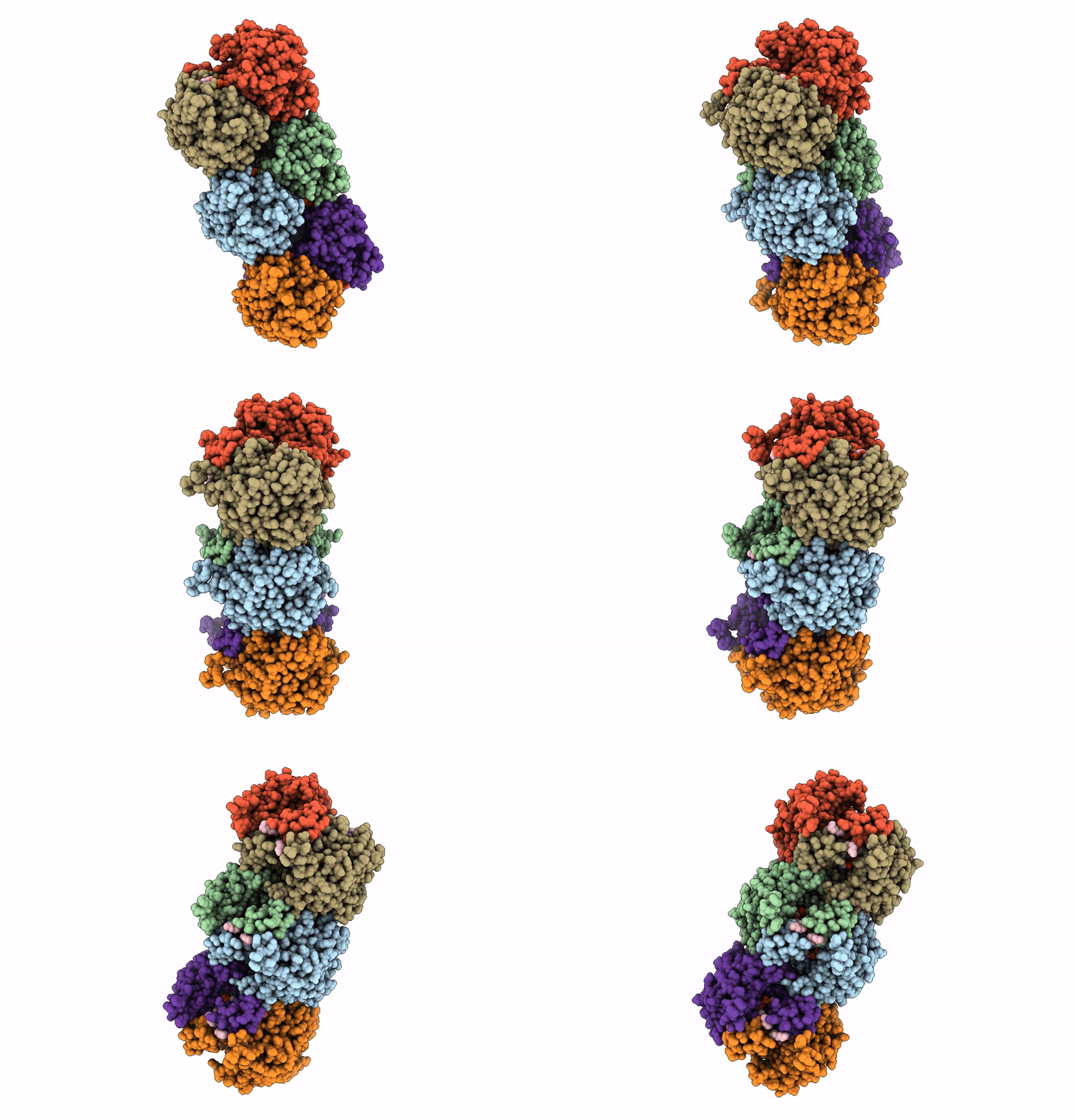
9KH6 image
Deposition Date 2024-11-09
Release Date 2026-03-04
Last Version Date 2026-04-29
Entry Detail
PDB ID:
9KH6
Keywords:
Title:
cryo-EM structure of lipase/ligand/substrate complex
Biological Source:
Source Organism(s):
Expression System(s):
Method Details:
Experimental Method:
Resolution:
2.80 Å
Aggregation State:
PARTICLE
Reconstruction Method:
SINGLE PARTICLE
Macromolecular Entities
Structures with similar UniProt ID
Protein Blast
Polymer Type:polypeptide(L)
Molecule:Patatin
Chain IDs:A, B, C, D, E, F
Chain Length:340
Number of Molecules:6
Biological Source:Acinetobacter baumannii
Primary Citation
Structural mechanism of 3'3'-cGAMP-induced filamentation and phospholipid hydrolysis by CapV in bacterial antiphage defense.
Cell Rep 45 117261 117261 (2026)
PMID: 41984589 DOI: 10.1016/j.celrep.2026.117261

Abstact

The cyclic-oligonucleotide-based antiphage signaling system (CBASS) protects bacteria from phage infection. In Vibrio cholerae, phage infection activates CD-NTase DncV to produce 3'3'-cGAMP, which triggers phospholipase CapV to degrade phosphatidylethanolamine and phosphatidylglycerol, the major phospholipids in the inner-membranes, thereby inducing cell death. However, how 3'3'-cGAMP activates CapV was unclear. Here we present crystal structures of inactive Acinetobacter baumannii CapV in apo and 3'3'-cGAMP-bound forms, along with cryo-EM structures of activated CapV-3'3'-cGAMP complex, with or without substrate dioleoylphosphatidyl-ethanolamine (DOPE). Apo-CapV forms symmetric dimers in a "closed" state. 3'3'-cGAMP binding drives lateral polymerization of dimers into filament assembly, inducing an "open" state that exposes the active site and substrate-binding cleft. DOPE binding further shifts CapV to an "ajar" state, where a Y-shaped cleft positions DOPE for hydrolysis via a conserved Ser/Asp catalytic dyad. This 3'3'-cGAMP-induced filamentation mirrors activation mechanisms of TIR-STING, TIR-SAVED, and mammalian STING, revealing a conserved signaling pattern across immune systems.

Legend

Protein

Chemical

Disease

Primary Citation of related structures
Feedback Form
Name
Email
Institute
Feedback