

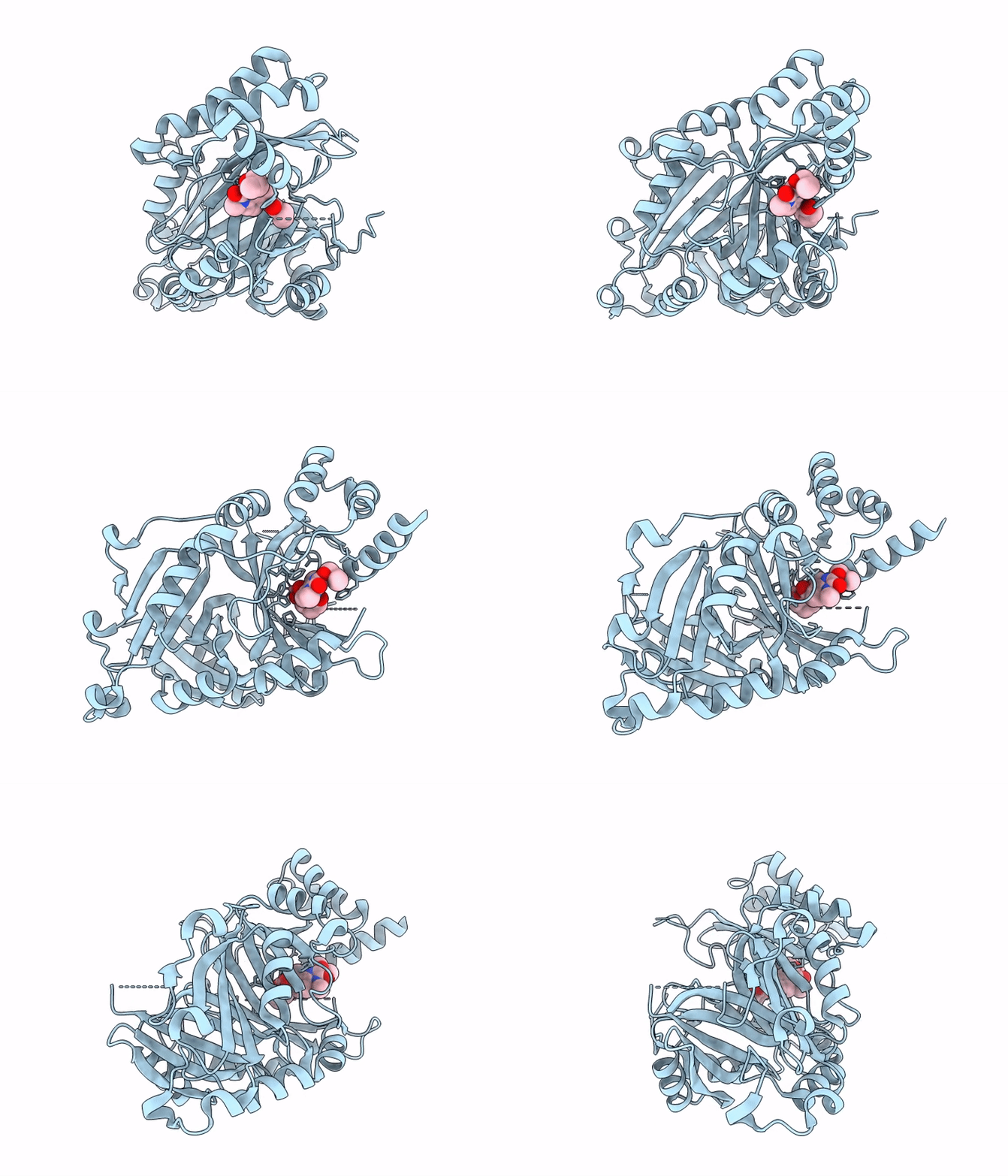
9JS2 image
Deposition Date 2024-09-30
Release Date 2025-10-08
Last Version Date 2026-04-22
Entry Detail
PDB ID:
9JS2
Title:
Complex structure of AtHPPD with inhibitor YH23570
Biological Source:
Source Organism(s):
Expression System(s):
Method Details:
Experimental Method:
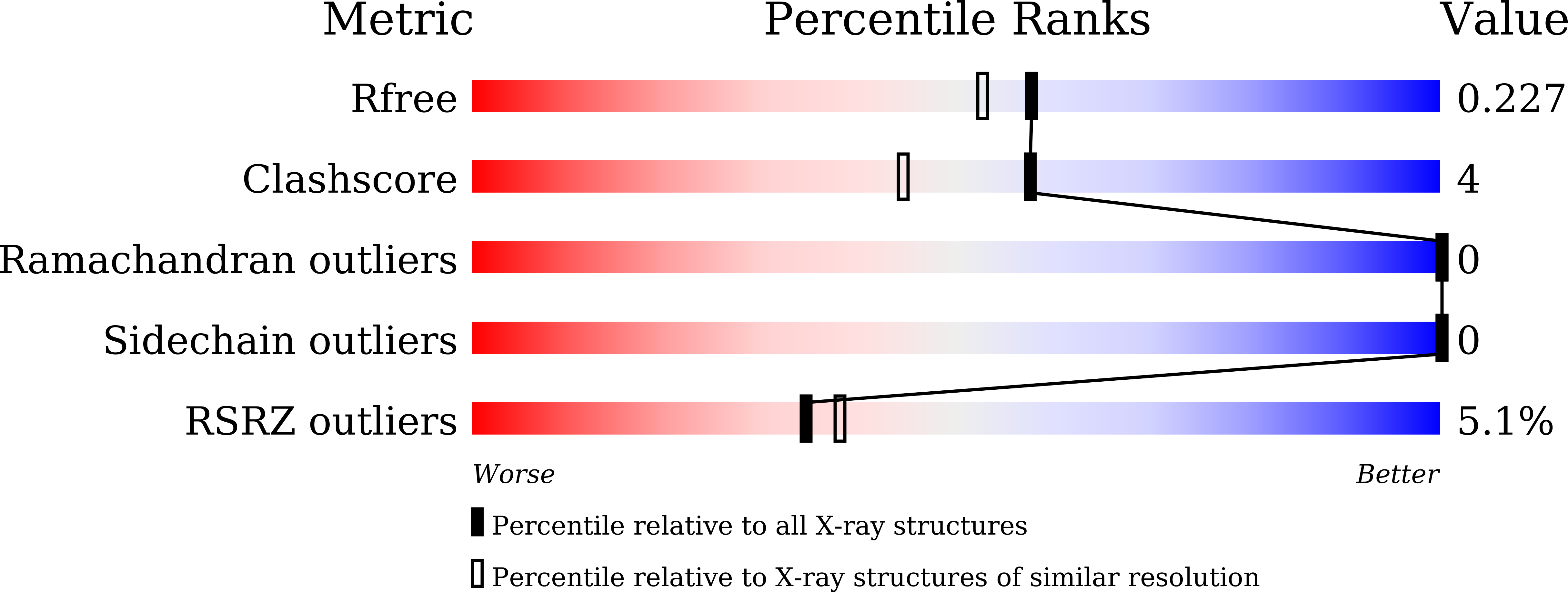
Resolution:
1.94 Å
R-Value Free:
0.22
R-Value Work:
0.19
R-Value Observed:
0.19
Space Group:
C 1 2 1
Macromolecular Entities
Structures with similar UniProt ID
Protein Blast
Polymer Type:polypeptide(L)
Molecule:4-hydroxyphenylpyruvate dioxy
Gene (Uniprot):HPD
Chain IDs:A
Chain Length:402
Number of Molecules:1
Biological Source:Arabidopsis thaliana
Primary Citation
Design, Synthesis, and Bioactivity of Triketone-quinoxalin-2-ones as a Novel HPPD Inhibition Herbicide.
J. Agric. Food Chem. 73 27328 27337 (2025)
PMID: 41100756 DOI: 10.1021/acs.jafc.5c08188

Abstact

4-Hydroxyphenylpyruvate dioxygenase (HPPD) is recognized as one of the most promising herbicide targets for sustainable weed control in modern agricultural practices. To address agricultural demands, we designed and synthesized a novel series of triketone-quinoxalin-2-ones as potent HPPD inhibitors. In vitro evaluation revealed that the newly synthesized compounds demonstrated remarkable Arabidopsis thaliana HPPD (AtHPPD) inhibitory activity. Significantly, compound 23, 3-(4-chloro-2-fluorophenyl)-6-(2-hydroxy-6-oxocyclohex-1-ene-1-carbonyl)-1,5-dimethylquinoxalin-2(1H)-one, showed the strongest AtHPPD inhibition with an IC(50) value of 0.034 muM, 10-fold more potent than mesotrione (IC(50) = 0.350 muM). Furthermore, the postemergence herbicidal activity evaluation showed that compound 35 exhibited 100% inhibition of Digitaria sanguinalis, Amaranthus retroflexus, Chenopodium serotinum, and Abutilon theophrasti at 150 g ai/ha, and 90% inhibition of Setaria viridis, showing enhanced activity compared to mesotrione. The crystal structure of the AtHPPD-35 complex demonstrated that compound 35 engaged in a key bidentate chelating interaction with the metal ion in the catalytic active site and a pi-pi interaction with Phe381 and Phe424. Moreover, 35 established hydrophobic interactions with Leu427, Leu368, and Met335. These results indicate that the triketone-quinoxalin-2-one hybrid is a promising scaffold and 35 can be considered a viable lead compound for the development of HPPD inhibitors.

Legend

Protein

Chemical

Disease

Primary Citation of related structures
Feedback Form
Name
Email
Institute
Feedback