

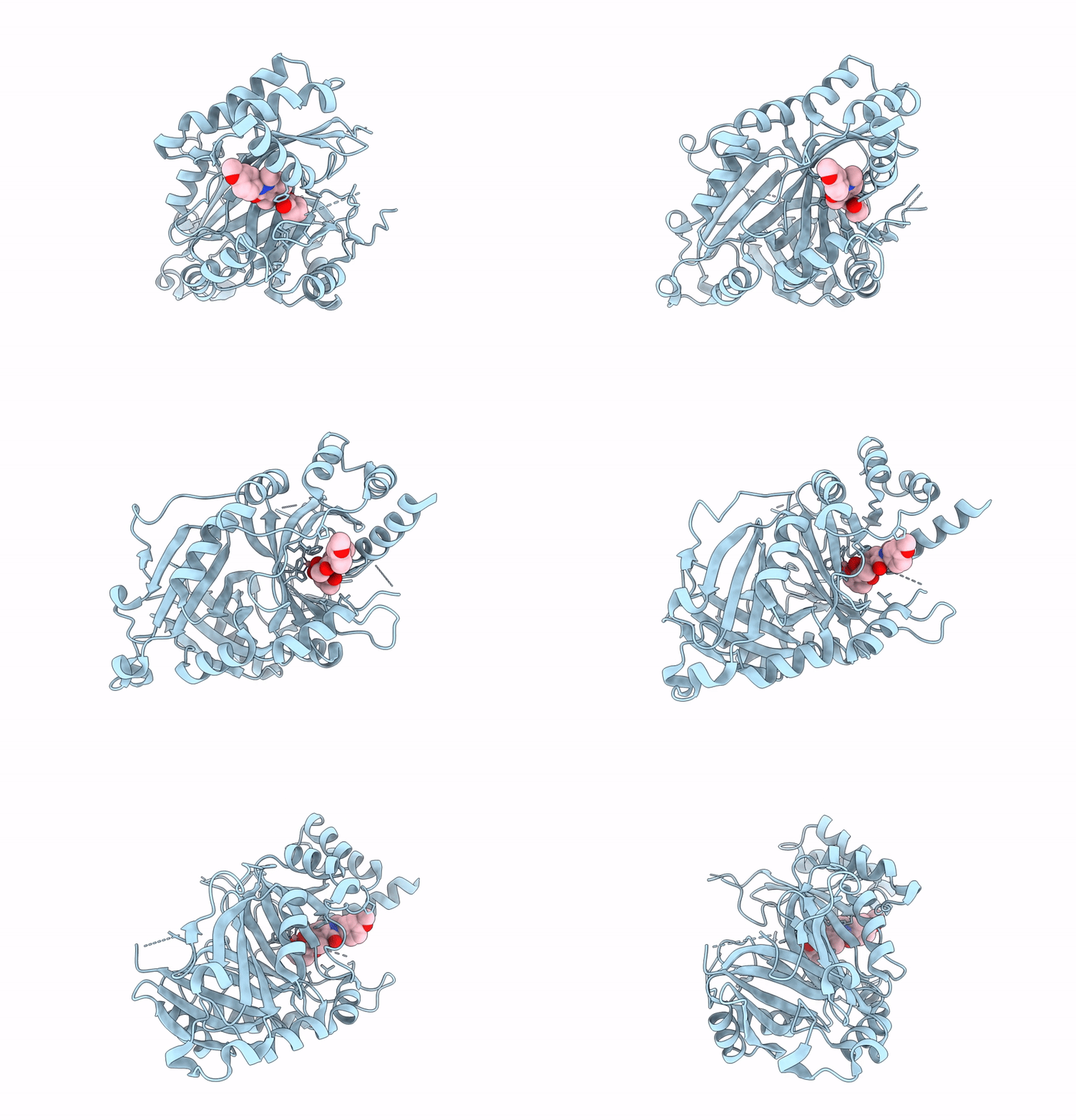
9JHU image
Deposition Date 2024-09-10
Release Date 2025-09-17
Last Version Date 2026-04-22
Entry Detail
PDB ID:
9JHU
Keywords:
Title:
Complex structure of AtHPPD with inhibitor CLJ788
Biological Source:
Source Organism(s):
Expression System(s):
Method Details:
Experimental Method:
Resolution:
2.00 Å
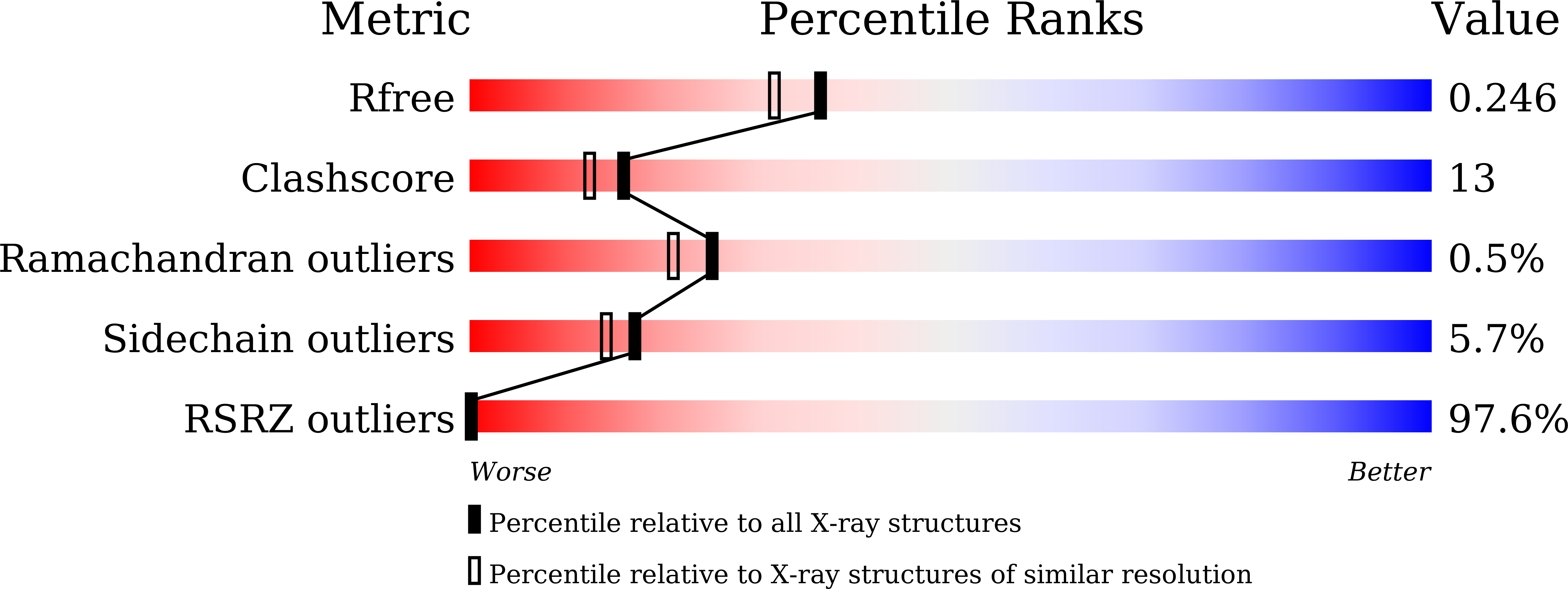
R-Value Free:
0.24
R-Value Work:
0.21
R-Value Observed:
0.21
Space Group:
C 1 2 1
Macromolecular Entities
Structures with similar UniProt ID
Protein Blast
Polymer Type:polypeptide(L)
Molecule:4-hydroxyphenylpyruvate dioxy
Gene (Uniprot):HPD
Chain IDs:A
Chain Length:402
Number of Molecules:1
Biological Source:Arabidopsis thaliana
Primary Citation
Discovery of Triketone-Indazolones as Novel 4-Hydroxyphenylpyruvate Dioxygenase Inhibiting-Based Herbicides.
J. Agric. Food Chem. 73 1112 1121 (2025)
PMID: 39811931 DOI: 10.1021/acs.jafc.4c08544

Abstact

4-Hydroxyphenylpyruvate dioxygenase (HPPD) is a crucial herbicide target in current research, playing an important role in the comprehensive management of resistant weeds. However, the limited crop selectivity and less effectiveness against grass weeds of many existing HPPD inhibitors, limit their further application. To address these issues, a series of novel HPPD inhibitors with fused ring structures were designed and synthesized by introducing an electron-rich indazolone ring and combining it with the classical triketone pharmacophore structure. The cocrystal structure of representative compound III-7 complexed with Arabidopsis thaliana HPPD (AtHPPD) was obtained at 2.0 A resolution to guide the optimization of the designed inhibitor. The optimization results showed that 5-(2-hydroxy-6-oxocyclohex-1-ene-1-carbonyl)-1,4-dimethyl-2-(3-(methylthio)phenyl)-1,2-dihydro-3H-indazol-3-one, III-15, was the most active AtHPPD inhibitor, with an IC(50) value of 12 nM, nearly 30 times higher efficacy than mesotrione. Greenhouse herbicidal activity tests demonstrated that compound III-15 exhibited excellent herbicidal potency at 30-120 g ai/ha. Notably, it maintained high safety for peanuts even at 120 g ai/ha. Our results showed that compound III-15 is promising as a new candidate HPPD herbicide for use in the peanut fields.

Legend

Protein

Chemical

Disease

Primary Citation of related structures
Feedback Form
Name
Email
Institute
Feedback