

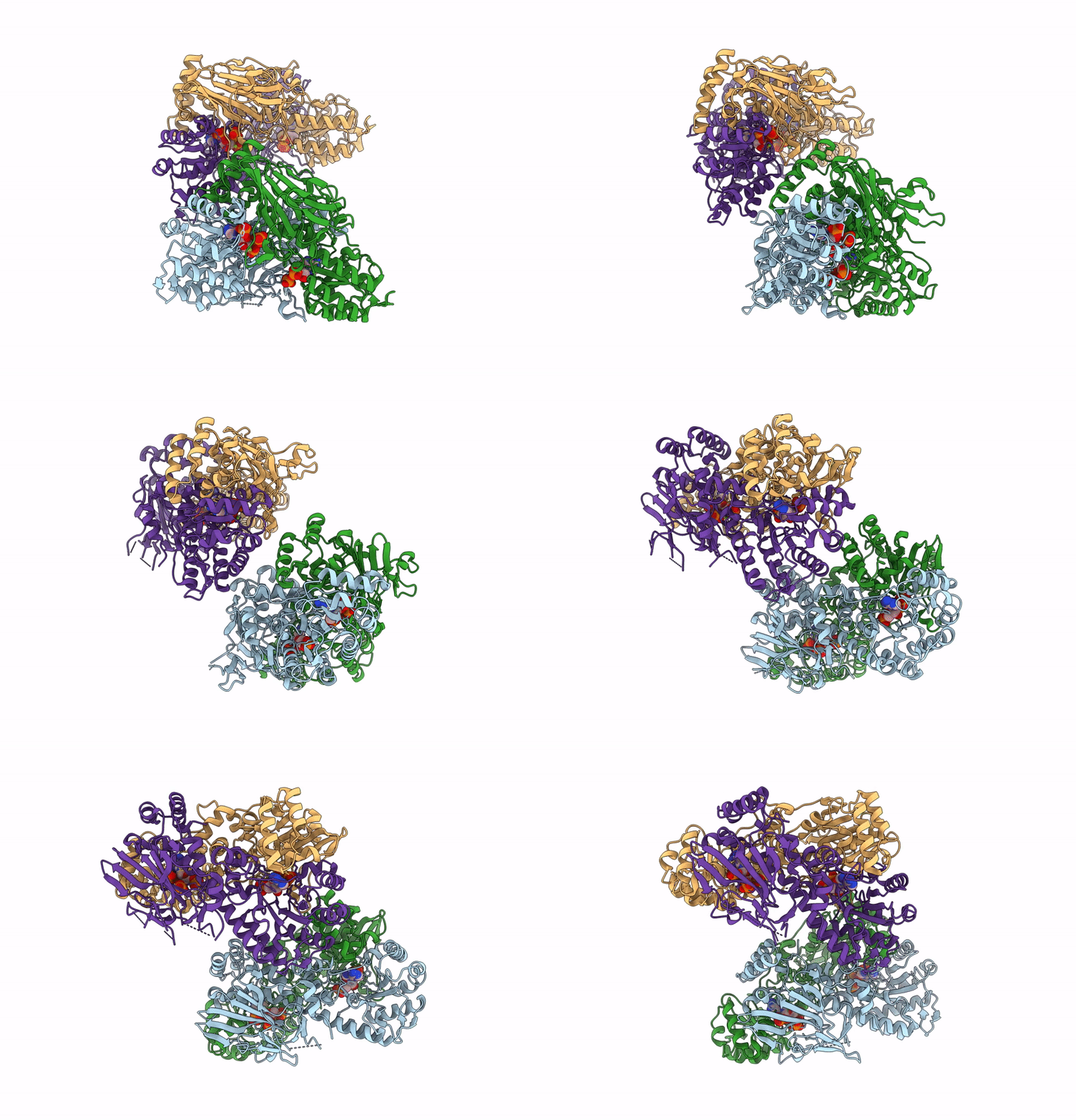
9IWT image
Deposition Date 2024-07-26
Release Date 2025-06-11
Last Version Date 2026-06-24
Entry Detail
PDB ID:
9IWT
Keywords:
Title:
Crystal structure of human NAMPT complexed with AMP
Biological Source:
Source Organism(s):
Homo sapiens (Taxon ID: 9606)
Expression System(s):
Method Details:
Experimental Method:
Resolution:
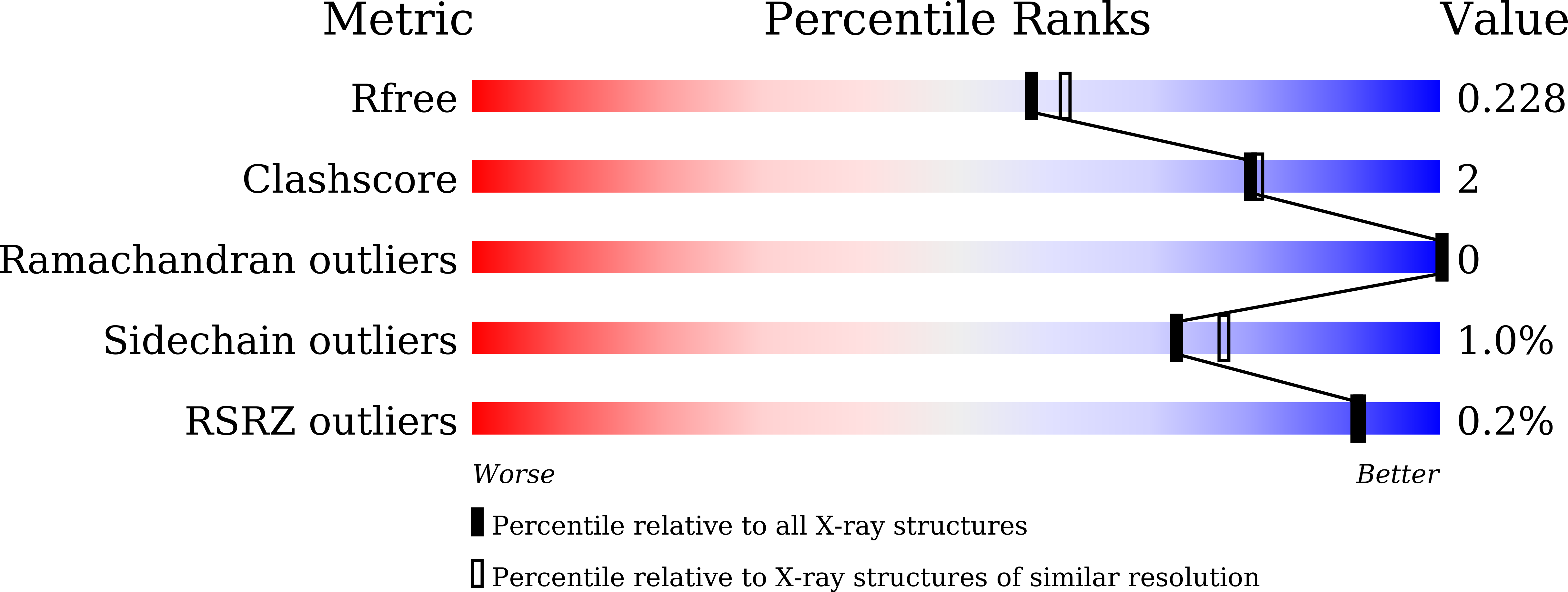
2.02 Å
R-Value Free:
0.22
R-Value Work:
0.18
R-Value Observed:
0.18
Space Group:
P 21 21 21
Macromolecular Entities
Structures with similar UniProt ID
Protein Blast
Polymer Type:polypeptide(L)
Molecule:Nicotinamide phosphoribosyltr
Gene (Uniprot):NAMPT
Chain IDs:A, B, C, D
Chain Length:497
Number of Molecules:4
Biological Source:Homo sapiens
Primary Citation
The NAMPT enzyme employs a switch that directly senses AMP/ATP and regulates cellular responses to energy stress.
Mol.Cell 85 2271 2286.e6 (2025)
PMID: 40505662 DOI: 10.1016/j.molcel.2025.05.022

Abstact

Nicotinamide adenine dinucleotide (NAD(+)) is a crucial compound in energy metabolism and cell signaling. Nicotinamide phosphoribosyltransferase (NAMPT) is the rate-limiting enzyme responsible for NAD(+) biosynthesis from nicotinamide (NAM). Here, we report that NAMPT activity is inhibited by adenosine monophosphate (AMP) in response to energy stress. Our global metabolite-protein interaction mapping reveals that NAMPT differentially interacts with AMP from fasted mouse livers. Crystal structures of NAMPT-AMP show that AMP binds similarly to the NAMPT reaction product, nicotinamide mononucleotide (NMN). The inhibition of NAMPT by AMP can be relieved by NAMPT activators or adenosine triphosphate (ATP), likely in a competitive manner. Based on these findings, we further investigated upstream factors contributing to AMP accumulation and found that activation of purine synthesis unexpectedly promotes the rise of AMP during fasting. Notably, an increased AMP/ATP ratio correlates with NAD(+) decline in ischemic stroke models, in which NAMPT activators can otherwise confer protection.

Legend

Protein

Chemical

Disease

Primary Citation of related structures
Feedback Form
Name
Email
Institute
Feedback