

9IHH image
Deposition Date 2025-02-21
Release Date 2026-03-04
Last Version Date 2026-05-06
Entry Detail
PDB ID:
9IHH
Keywords:
Title:
Ex vivo spore-silk A-ENA fibers
Biological Source:
Method Details:
Experimental Method:
Resolution:
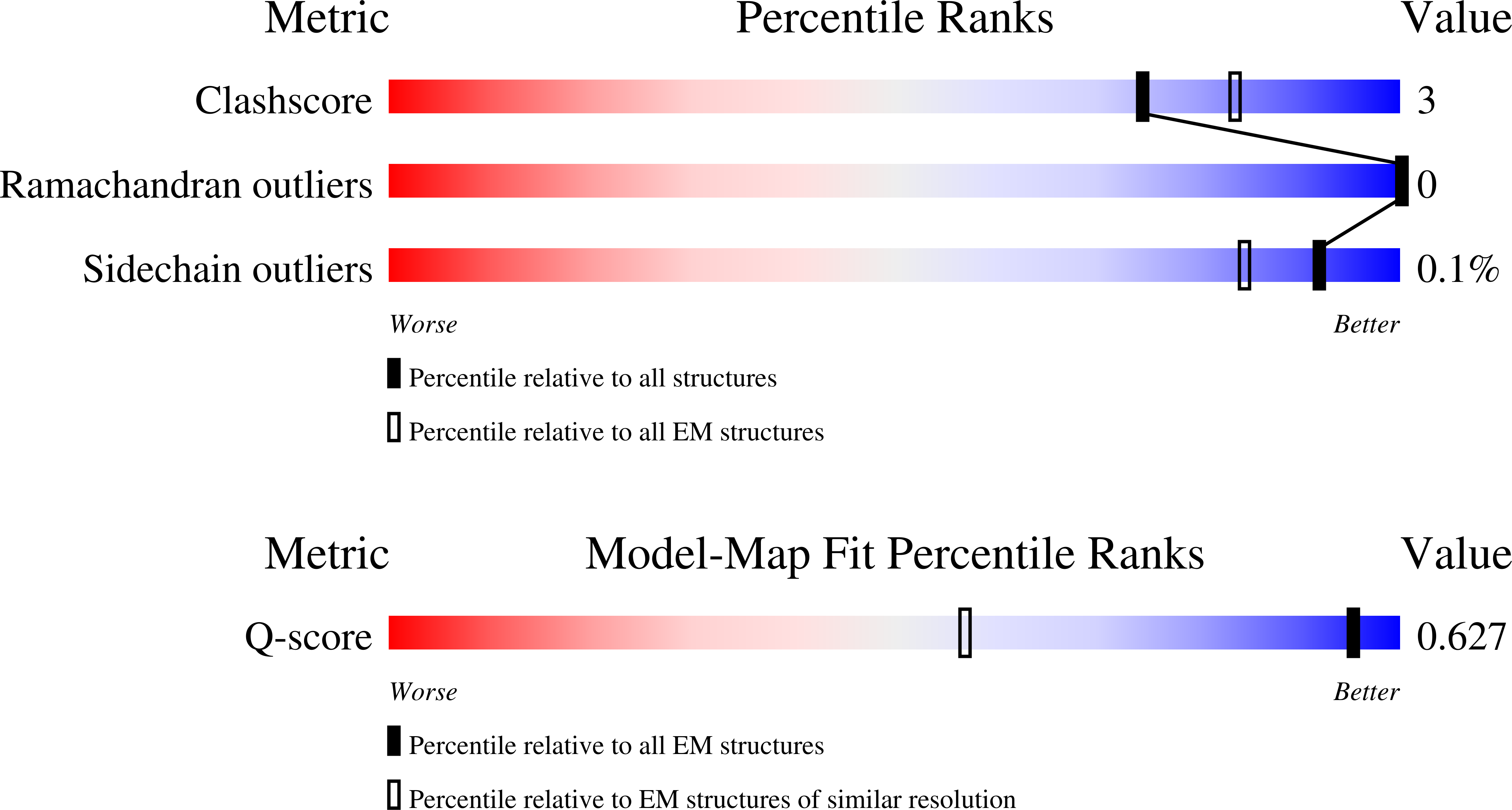
2.10 Å
Aggregation State:
FILAMENT
Reconstruction Method:
HELICAL
Macromolecular Entities
Structures with similar UniProt ID
Protein Blast
Polymer Type:polypeptide(L)
Molecule:Ex vivo spore-silk A-ENA fibe
Chain IDs:A, B, C, D, E, F, G, H, I, J, K, L, M, N, O, P (auth: a), Q (auth: b), R (auth: c), S (auth: d), T (auth: e), U (auth: f), V (auth: g), W (auth: h), X (auth: i), Y (auth: j), Z (auth: k), AA (auth: l), BA (auth: m), CA (auth: n)
Chain Length:101
Number of Molecules:29
Biological Source:Bacillus thuringiensis serovar israelensis
Primary Citation
Auto-crosslinking sporesilk fibers promote endospore and Cry toxin clustering.
Nat Commun 17 ? ? (2026)
PMID: 41813682 DOI: 10.1038/s41467-026-70495-z

Abstact

Bacillus thuringiesis infects and kills insect larvae via its spores and associated entomotoxin-containing parasporal bodies (PSBs). We show that endospores and PSBs of B. thuringiensis Sv. Israelensis are covered in a 'sporesilk' matrix that consist of 8 nm wide fibers with a double helical symmetry, formed by protofilaments of stacked alphahelical hairpins. These alpha endospore appendages ('A-ENA') are stabilized by up to ten autocatalytic and proximity-induced intermolecular isopeptide bonds per subunit, forming a continuous covalent polymer with remarkable chemical and physical robustness. We show A-ENA functions as B. thuringiensis virulence factor, increasing insecticidal activity by clustering spores and PSBs into an infectious clumps. Moreover, we demonstrate the recombinant production and self-assembly of A-ENA nanofibers, and show that the exogenic addition of A-ENA fibers to B. thuringiensis strains natively lacking sporesilks results in spore-PSB clustering and gain of virulence, enabling the rational, non-GMO functionalization of these biological pest control agents.

Legend

Protein

Chemical

Disease

Primary Citation of related structures
Feedback Form
Name
Email
Institute
Feedback