

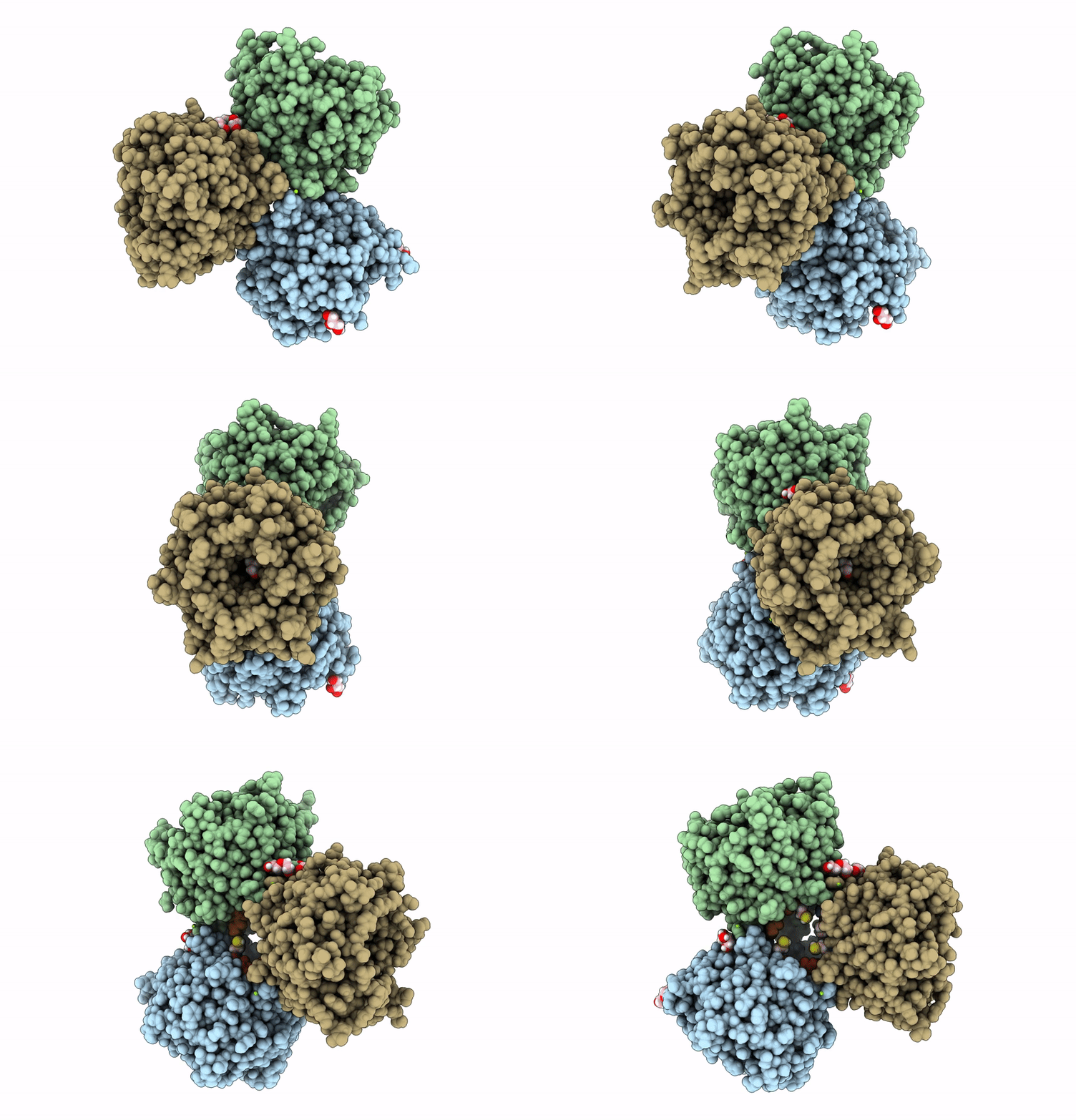
9IH9 image
Deposition Date 2025-02-20
Release Date 2026-03-04
Last Version Date 2026-06-10
Entry Detail
PDB ID:
9IH9
Title:
KEAP1 complexed to linear peptide 6
Biological Source:
Source Organism(s):
Expression System(s):
Method Details:
Experimental Method:
Resolution:
1.70 Å
R-Value Free:
0.20
R-Value Work:
0.16
R-Value Observed:
0.16
Space Group:
C 1 2 1
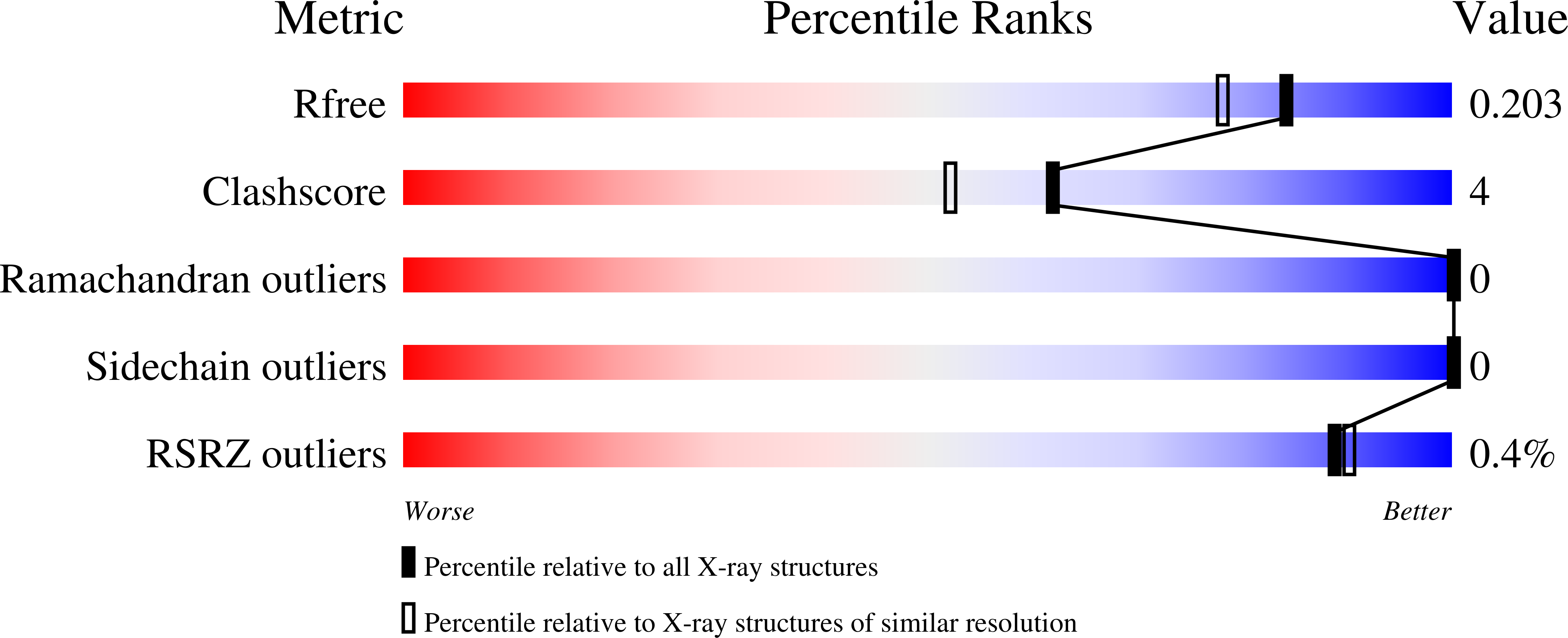
Macromolecular Entities
Structures with similar UniProt ID
Protein Blast
Polymer Type:polypeptide(L)
Molecule:Kelch-like ECH-associated pro
Gene (Uniprot):KEAP1
Chain IDs:C (auth: A)
Chain Length:290
Number of Molecules:1
Biological Source:Homo sapiens
Structures with similar UniProt ID
Protein Blast
Polymer Type:polypeptide(L)
Molecule:Kelch-like ECH-associated pro
Gene (Uniprot):KEAP1
Chain IDs:B
Chain Length:290
Number of Molecules:1
Biological Source:Homo sapiens
Structures with similar UniProt ID
Protein Blast
Polymer Type:polypeptide(L)
Molecule:Kelch-like ECH-associated pro
Gene (Uniprot):KEAP1
Chain IDs:A (auth: C)
Chain Length:290
Number of Molecules:1
Biological Source:Homo sapiens
Protein Blast
Polymer Type:polypeptide(L)
Molecule:Designed peptide
Chain IDs:D (auth: X), E (auth: Y), F (auth: Z)
Chain Length:4
Number of Molecules:3
Biological Source:synthetic construct
Modified Residue
Compound ID Chain ID Parent Comp ID Details 2D Image
CME C CYS modified residue
CSO A CYS modified residue
Primary Citation
Generation of membrane-permeable cyclic peptides inhibiting protein-protein interaction.
Nat.Chem.Biol. ? ? ? (2026)
PMID: 42225940 DOI: 10.1038/s41589-026-02237-7

Abstact

Small, nonpolar cyclic peptides can both bind challenging targets and cross cell membranes, making them attractive for addressing currently undruggable targets such as many protein-protein interactions (PPIs). However, developing such compounds de novo without prior information about lead structures such as natural ligands or fragments remains a notable challenge. Here we show that functional screening of structurally highly diverse cyclic peptide libraries synthesized at nanomole scale allows identification of sub-kDa inhibitors of a PPI. By screening 15,360 fully random cyclic peptides, we were able to identify an inhibitor of the E3 ligase adaptor Keap1 and its substrate Nrf2. Optimization by rapid design-build-test cycles produced a membrane-permeable compound active in live cells. This study demonstrates that large, diverse cyclic peptide libraries can enable the discovery of cell-permeable PPI inhibitors from the ground up, providing a way to harness the powerful modality of small cyclic peptides to address often difficult-to-target intracellular interactions.

Legend

Protein

Chemical

Disease

Primary Citation of related structures
Feedback Form
Name
Email
Institute
Feedback