

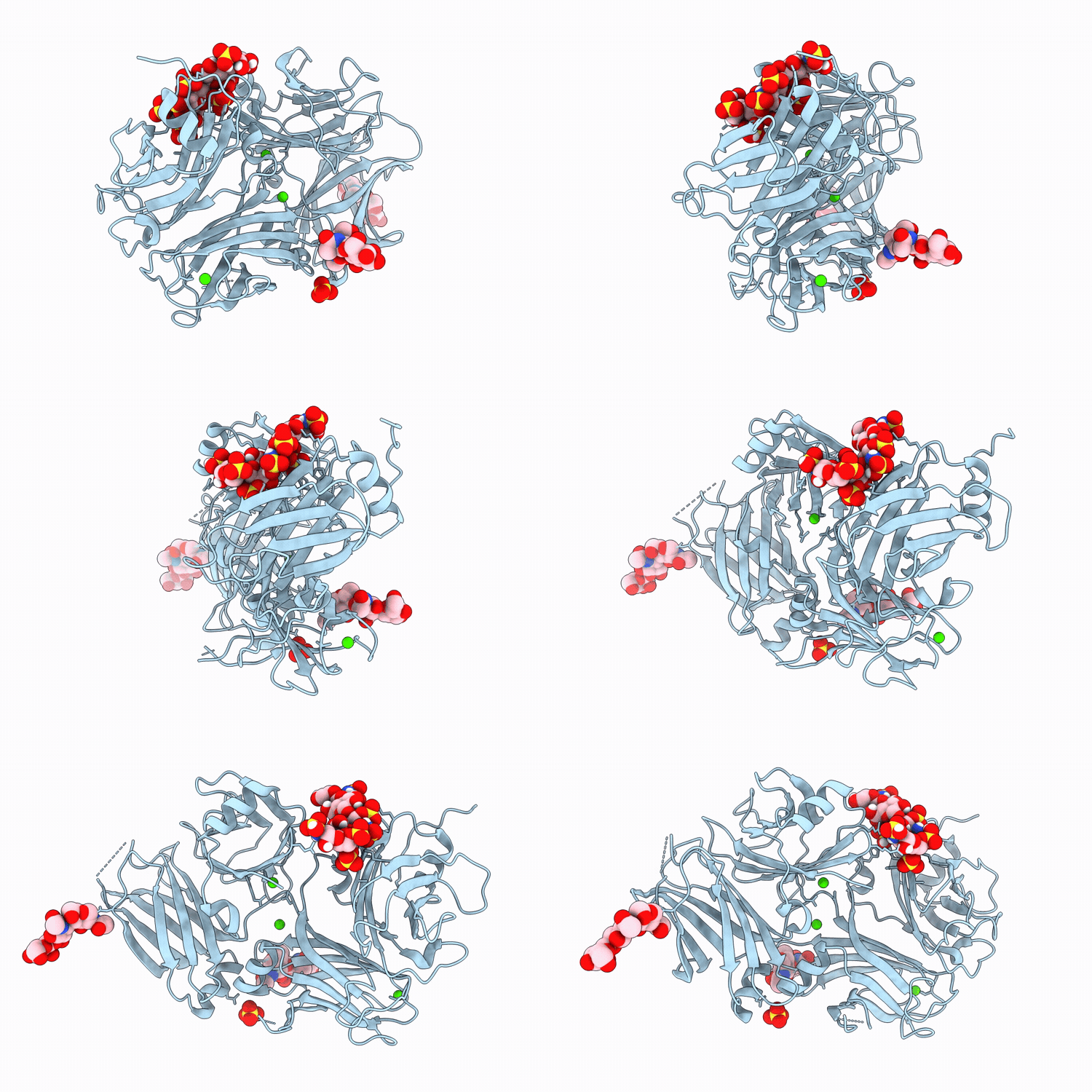
9IGM image
Deposition Date 2025-02-19
Release Date 2026-06-24
Last Version Date 2026-06-24
Entry Detail
PDB ID:
9IGM
Title:
Structure of the 4-CHRD domain of human Chordin in complex with a Heparin Oligosaccharide
Biological Source:
Source Organism(s):
Homo sapiens (Taxon ID: 9606)
Expression System(s):
Method Details:
Experimental Method:
Resolution:
2.92 Å
R-Value Free:
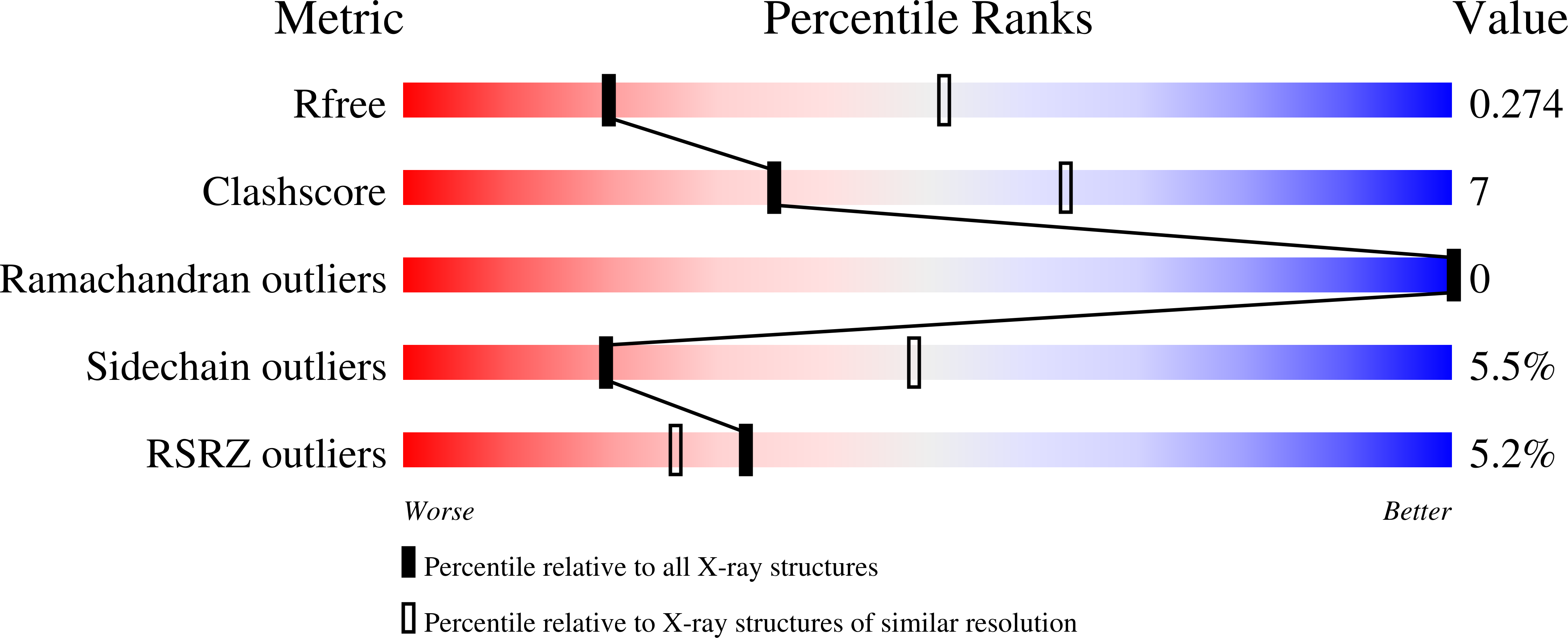
0.27
R-Value Work:
0.23
R-Value Observed:
0.24
Space Group:
P 62 2 2
Macromolecular Entities
Structures with similar UniProt ID
Protein Blast
Polymer Type:polypeptide(L)
Molecule:Chordin
Gene (Uniprot):CHRD
Chain IDs:A
Chain Length:501
Number of Molecules:1
Biological Source:Homo sapiens
Primary Citation
Structural and biophysical analysis of the four CHRD domains of human chordin reveals a novel binding site for glycosaminoglycans.
J.Biol.Chem. ? 113248 113248 (2026)
PMID: 42285510 DOI: 10.1016/j.jbc.2026.113248

Abstact

Chordin is a cysteine-rich protein which acts as a regulator of bone morphogenetic protein (BMP) signalling in the extracellular matrix. Acting in concert with twisted gastrulation (TWSG1), chordin works as an antagonist of BMP signalling by binding tightly to the growth factor and is a vital component of the network of interactions that establish developmental signalling gradients. Chordin is known to interact with BMP ligands via its four von-Willebrand factor type C domains, but the function of the large central four CHRD domains were previously unknown. Here we show that these domains interact strongly with sulphated glycosaminoglycans (GAGs) and provide evidence for the location of the binding site using X-ray crystallographic analysis combined with mutagenesis and biophysical techniques. Additionally, we report the first recombinant expression and purification of the complete functional chordin, TWSG1, BMP2, BMP7 complex which was used to demonstrate that the four CHRD domains are largely redundant with respect to the role of chordin as an inhibitor of BMP ligands. We therefore propose that the four CHRD domains of chordin have relevance in the diffusion and localisation of chordin-TWSG1-BMP complexes at the tissue and organismal level, mediated by their interaction with GAGs or proteoglycans.

Legend

Protein

Chemical

Disease

Primary Citation of related structures
Feedback Form
Name
Email
Institute
Feedback