

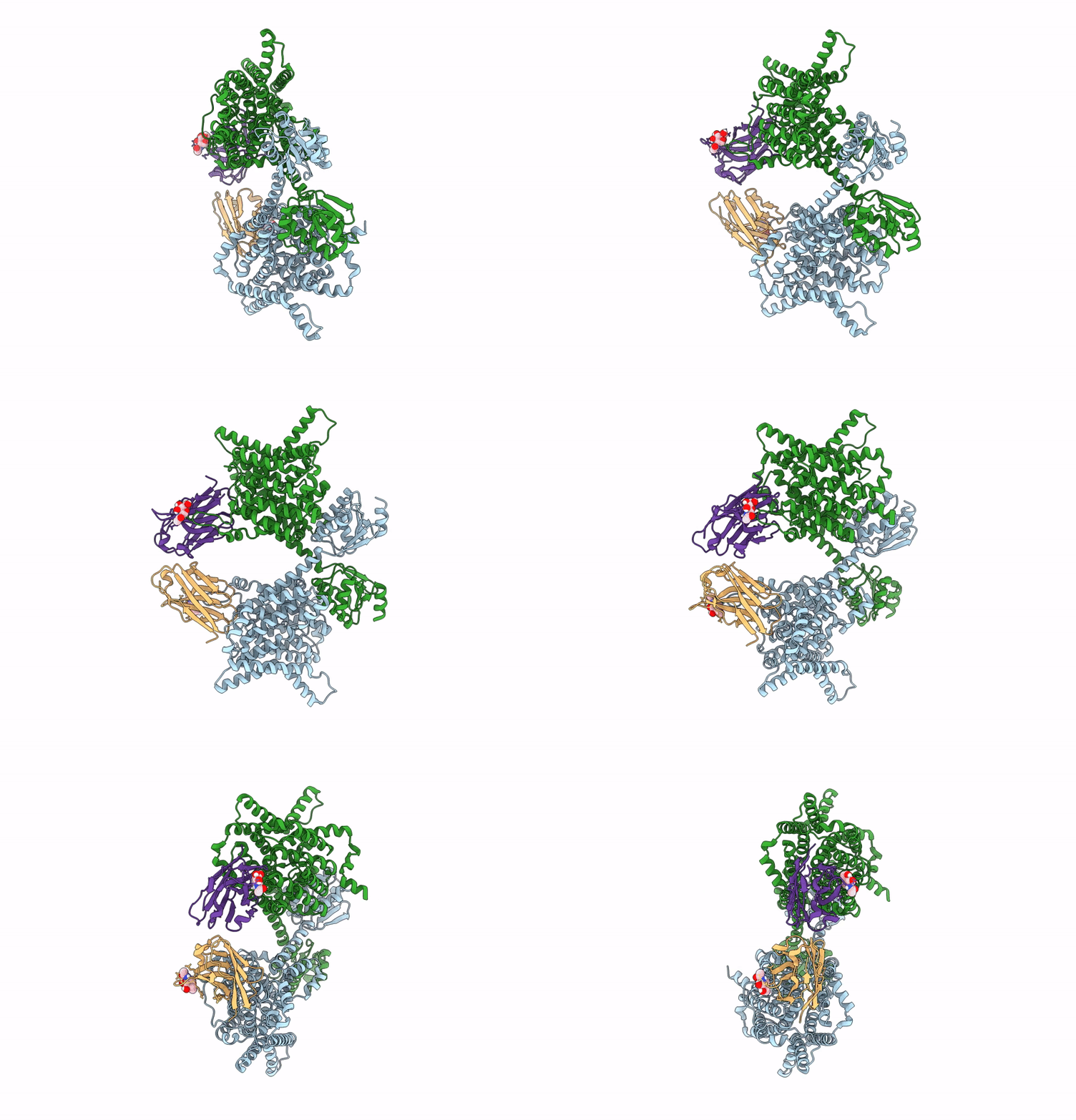
9IAR image
Deposition Date 2025-02-11
Release Date 2026-03-04
Last Version Date 2026-09-16
Entry Detail
PDB ID:
9IAR
Title:
Sulfate transporter SLC26A11 in nanodiscs with nanobody Nb11
Biological Source:
Source Organism(s):
Homo sapiens (Taxon ID: 9606)
Vicugna pacos (Taxon ID: 30538)
Expression System(s):
Method Details:
Experimental Method:
Resolution:
3.20 Å
Aggregation State:
PARTICLE
Reconstruction Method:
SINGLE PARTICLE
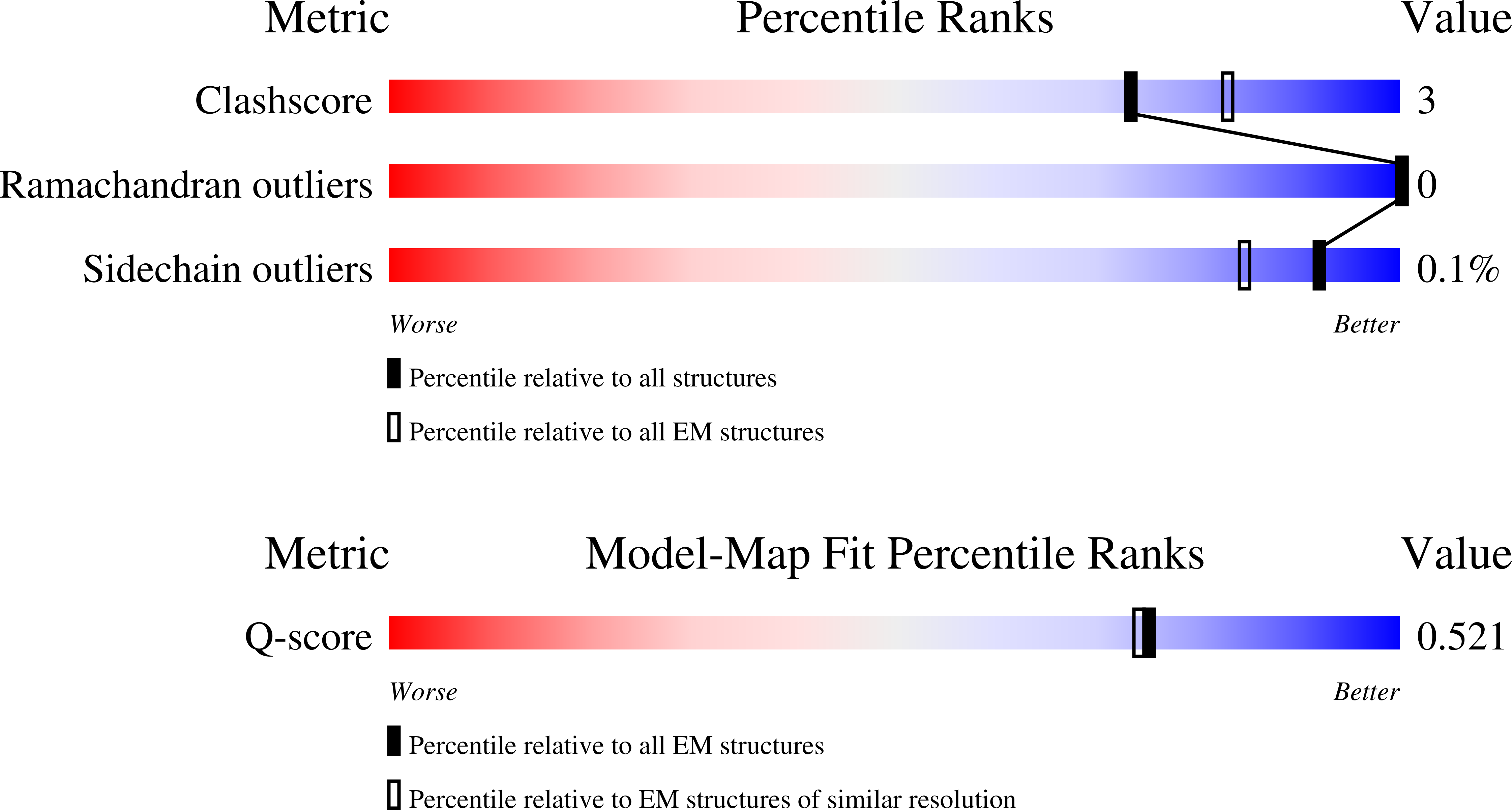
Macromolecular Entities
Polymer Type:polypeptide(L)
Molecule:Sodium-independent sulfate an
Gene (Uniprot):SLC26A11
Chain IDs:A (auth: B), C (auth: A)
Chain Length:583
Number of Molecules:2
Biological Source:Homo sapiens
Polymer Type:polypeptide(L)
Molecule:nanobody Nb11
Chain IDs:B (auth: C), D
Chain Length:144
Number of Molecules:2
Biological Source:Vicugna pacos
Primary Citation
SLC26A11 is an atypical solute carrier with dual transport-channel function mediating lysosomal sulfate transport.
Nat Commun 17 ? ? (2026)
PMID: 42509233 DOI: 10.1038/s41467-026-75749-4

Abstact

Membrane transporters and channels are generally assumed to be based on distinct structural and functional principles. SLC26A11, a solute carrier with high expression levels in the brain, has been proposed to function as either an anion transporter or a channel. Here, we resolve this apparent discrepancy by demonstrating that SLC26A11 is a dual-function protein capable of operating as both a sulfate transporter and a chloride channel. By resolving its structure and combining biochemical studies and molecular dynamics simulations, we show that SLC26A11 exhibits all the hallmarks of a secondary transporter. The mechanistic basis for its selective ion transport identifies the protein as the elusive lysosomal sulfate exporter. Additionally, we demonstrate that SLC26A11 exhibits an uncoupled, channel-like chloride conductance gated by proton:sulfate symport. Our finding that the chloride-conducting state arises from the transport cycle may contribute to the development of therapeutic strategies for treating brain edema, and the identification of its role in lysosome sulfate efflux may provide new approaches to study and treat lysosomal storage diseases.

Legend

Protein

Chemical

Disease

Primary Citation of related structures
Feedback Form
Name
Email
Institute
Feedback