

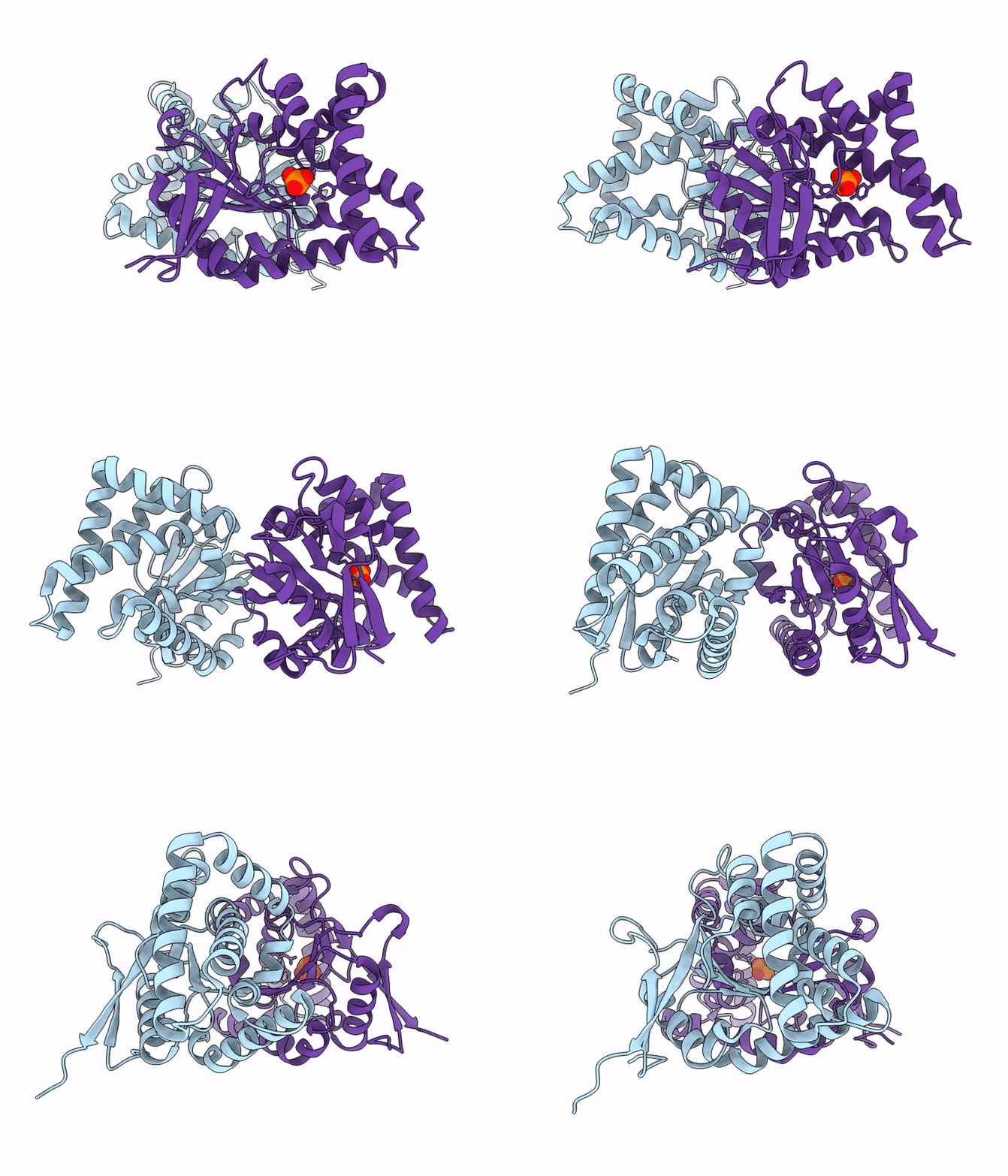
9I5M image
Deposition Date 2025-01-28
Release Date 2026-02-18
Last Version Date 2026-04-22
Entry Detail
PDB ID:
9I5M
Title:
Structure of cyclodipeptide synthase from Nocardia brasiliensis (Nbra-CDPS)
Biological Source:
Source Organism(s):
Expression System(s):
Method Details:
Experimental Method:
Resolution:
1.73 Å
R-Value Free:
0.23
R-Value Work:
0.21
R-Value Observed:
0.21
Space Group:
P 21 21 2
Macromolecular Entities
Structures with similar UniProt ID
Protein Blast
Polymer Type:polypeptide(L)
Molecule:Cyclodipeptide synthase
Gene (Uniprot):O3I_025450
Chain IDs:A, B
Chain Length:242
Number of Molecules:2
Biological Source:Nocardia brasiliensis ATCC 700358
Ligand Molecules
Primary Citation
The tRNA moieties of both aminoacyl-tRNA substrates of a cyclodipeptide synthase share a common binding site, as revealed by RNA microhelices mimicking tRNA acceptor arms.
Nucleic Acids Res. 54 ? ? (2026)
PMID: 41954980 DOI: 10.1093/nar/gkag307

Abstact

Cyclodipeptide synthases (CDPSs) sequentially use two aminoacyl-tRNAs (AA-tRNAs) as substrates to catalyze cyclodipeptide formation. We previously showed that microhelices (miHxs), which mimic the tRNAs acceptor arms, are as efficient as full-length AA-tRNAs as substrates when aminoacylated by flexizymes. We generated a diverse set of miHxs (acylated, unacylated, misacylated, mutated, or shortened miHxs) and analyzed their interactions with CDPSs. We studied the Nocardia brasiliensis CDPS (Nbra-CDPS), which synthesizes cyclo(l-Ala-l-Glu) using Ala-tRNAAla and Glu-tRNAGlu as its first and second substrates, respectively. We determined the crystal structure of Nbra-CDPS bound to two analogues of its first substrate, unacylated miHxAla and acylated miHxAla, in which alanine is attached via an amide bond. We showed by cryoEM that the miHxAla mimics well the acceptor stem of the full-length tRNAAla. We determined the crystal structure of Nbra-CDPS bound to unacylated miHxGlu, an analogue of its second substrate, and showed that, despite sequence differences, it superimposes well with miHxAla. This result, combined with the use of misacylated substrates, indicates that the RNA stem moieties of both substrates share a common binding mode. Together, our findings establish miHxs as powerful tools for dissecting CDPS substrate recognition and provide a framework for studying other AA-tRNA-utilizing enzymes.

Legend

Protein

Chemical

Disease

Primary Citation of related structures
Feedback Form
Name
Email
Institute
Feedback