

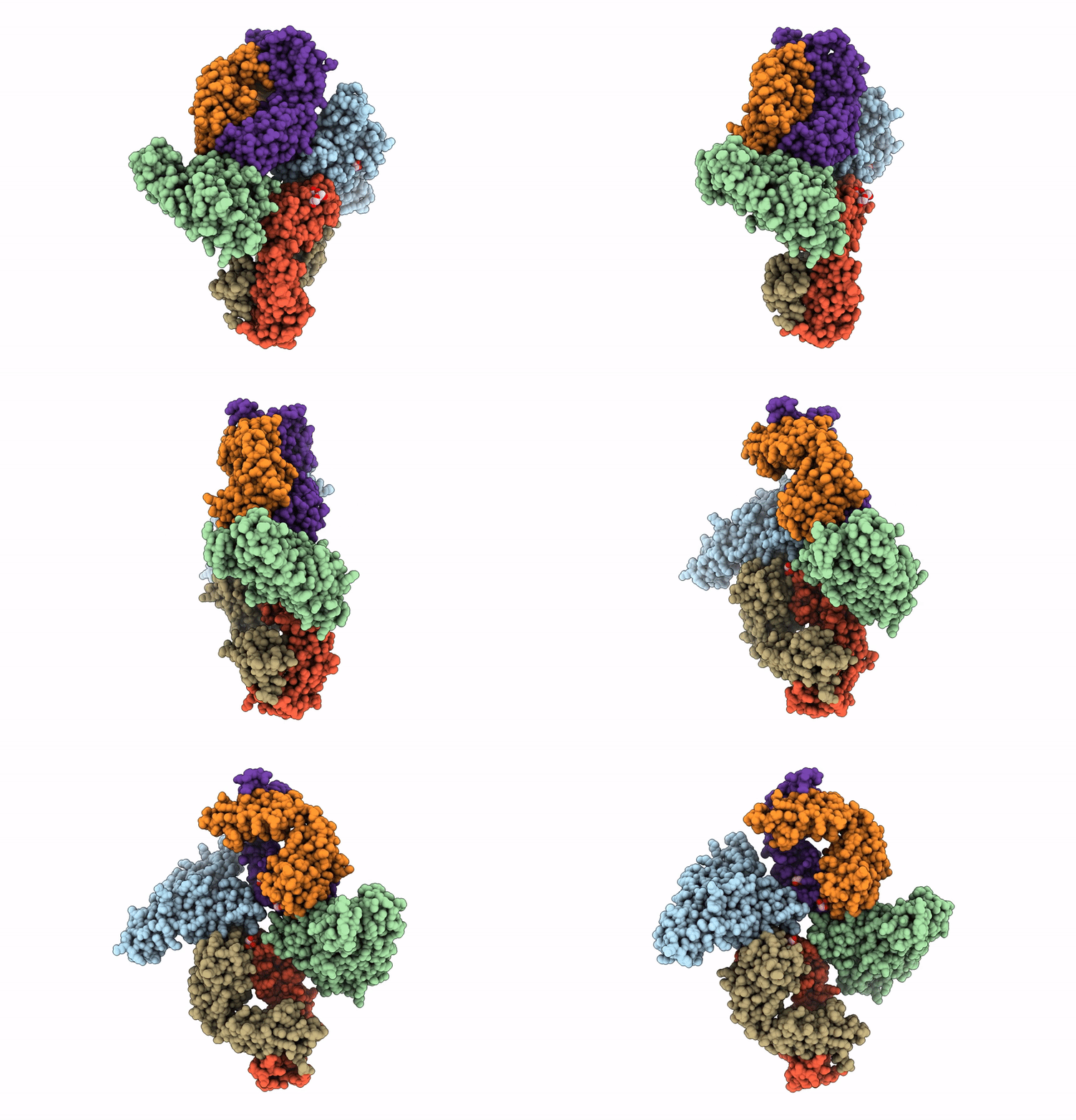
9I59 image
Deposition Date 2025-01-27
Release Date 2025-11-26
Last Version Date 2026-03-04
Entry Detail
PDB ID:
9I59
Keywords:
Title:
RVFV GnH complexed with RVFV-379 Fab
Biological Source:
Source Organism(s):
Expression System(s):
Method Details:
Experimental Method:
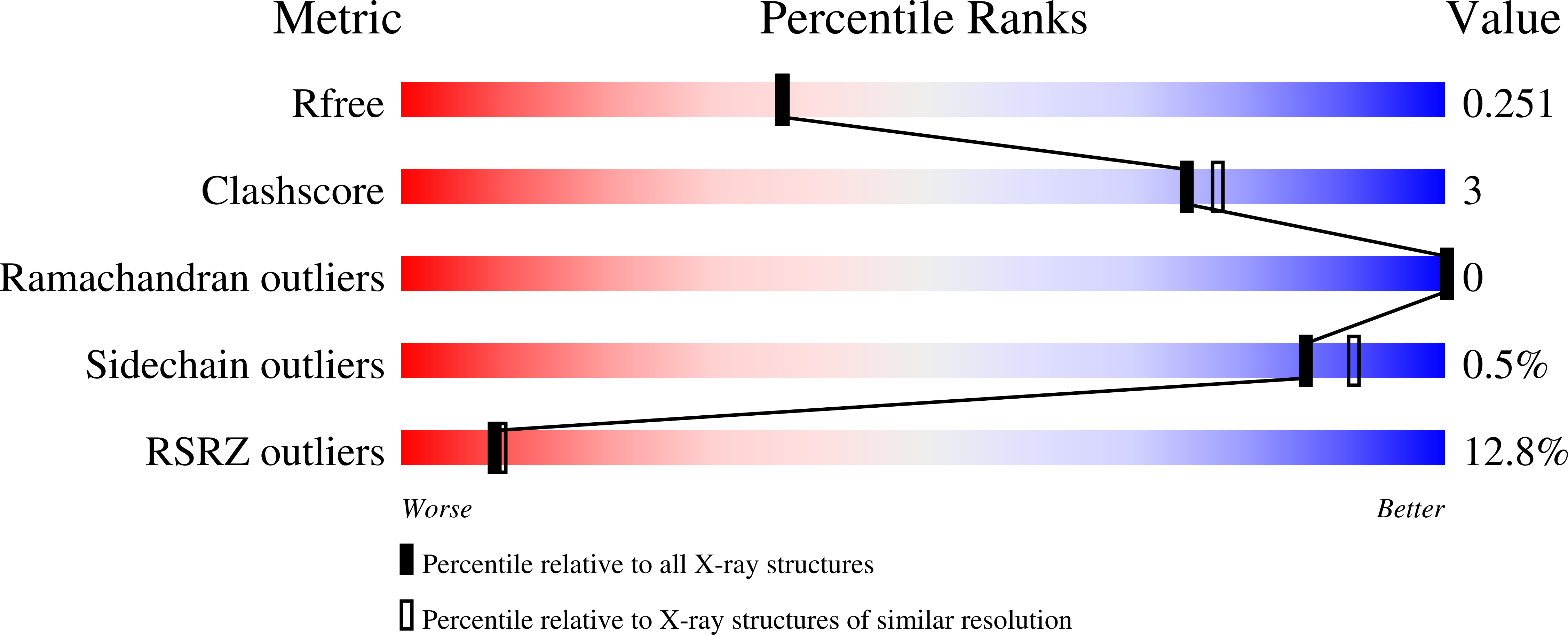
Resolution:
2.09 Å
R-Value Free:
0.25
R-Value Work:
0.21
R-Value Observed:
0.21
Space Group:
C 2 2 21
Macromolecular Entities
Structures with similar UniProt ID
Protein Blast
Polymer Type:polypeptide(L)
Molecule:Envelopment polyprotein
Chain IDs:A, B
Chain Length:345
Number of Molecules:2
Biological Source:Rift Valley fever virus
Protein Blast
Polymer Type:polypeptide(L)
Molecule:Heavy chain of Fab
Chain IDs:C (auth: H), E (auth: X)
Chain Length:223
Number of Molecules:2
Biological Source:Homo sapiens
Protein Blast
Polymer Type:polypeptide(L)
Molecule:Light chain of Fab
Chain IDs:D (auth: L), F (auth: Y)
Chain Length:215
Number of Molecules:2
Biological Source:Homo sapiens
Primary Citation
Structural basis for recognition of Rift Valley fever virus Gn protein by a human neutralizing monoclonal antibody with a kappa light chain.
PLoS Pathog. 22 e1013926 e1013926 (2026)
PMID: 41701720 DOI: 10.1371/journal.ppat.1013926

Abstact

Rift Valley fever virus (RVFV) poses a continued threat to human health and animal husbandry. Two neutralizing and protective human monoclonal antibodies (mAbs), RVFV-268 and RVFV-379, exhibit similar affinities and epitope footprints on the Gn glycoprotein component of the RVFV Gn-Gc capsomeric lattice. Here, we define fine details of the biophysical determinants of Gn recognition used by RVFV human monoclonal antibodies through studying an antibody encoded by a set of recombined genes not previously identified in RVFV antibodies. We find that RVFV-379 exhibits a larger footprint than that observed for RVFV-268 and other antibodies targeting the same region, which involves major contributions of both the light and heavy chains. RVFV-379 also uses an oblique angle of approach towards the virion surface that contrasts with the perpendicular angle of engagement observed for some other potently neutralizing human mAbs. Further, consistent with amino acid sequence variation within and proximal to the RVFV-379 epitope, in vitro neutralization screening reveals a limited degree of neutralization breadth across prevalent RVFV strains, suggesting that RVFV has fewer functional constraints at this region of the virus envelope. By dissecting the molecular determinants of mAb recognition of Gn, this integrated analysis refines strategies needed for the rational design of vaccines that can elicit a potent and species-wide protective antibody immune response to this important re-emerging pathogen.

Legend

Protein

Chemical

Disease

Primary Citation of related structures
Feedback Form
Name
Email
Institute
Feedback