

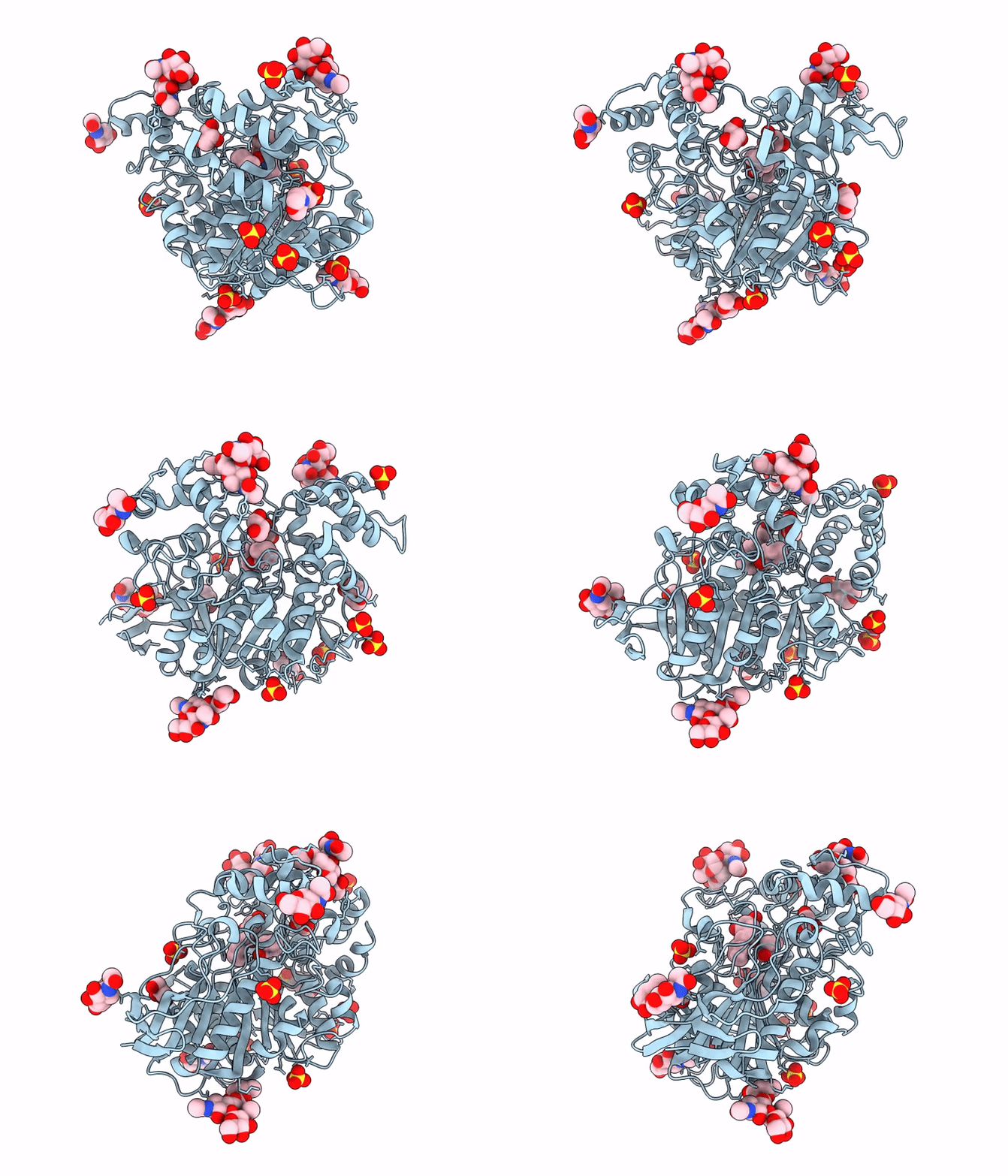
9I4W image
Deposition Date 2025-01-27
Release Date 2026-02-04
Last Version Date 2026-06-03
Entry Detail
PDB ID:
9I4W
Keywords:
Title:
Structure of carbamoylated recombinant human butyrylcholinesterase by the biscarbamte 5-(1-hydroxy-2-(piperidin-1-yl)ethyl)-1,3-phenylene bis(piperidine-1-carboxylate)
Biological Source:
Source Organism(s):
Homo sapiens (Taxon ID: 9606)
Expression System(s):
Method Details:
Experimental Method:
Resolution:
2.44 Å
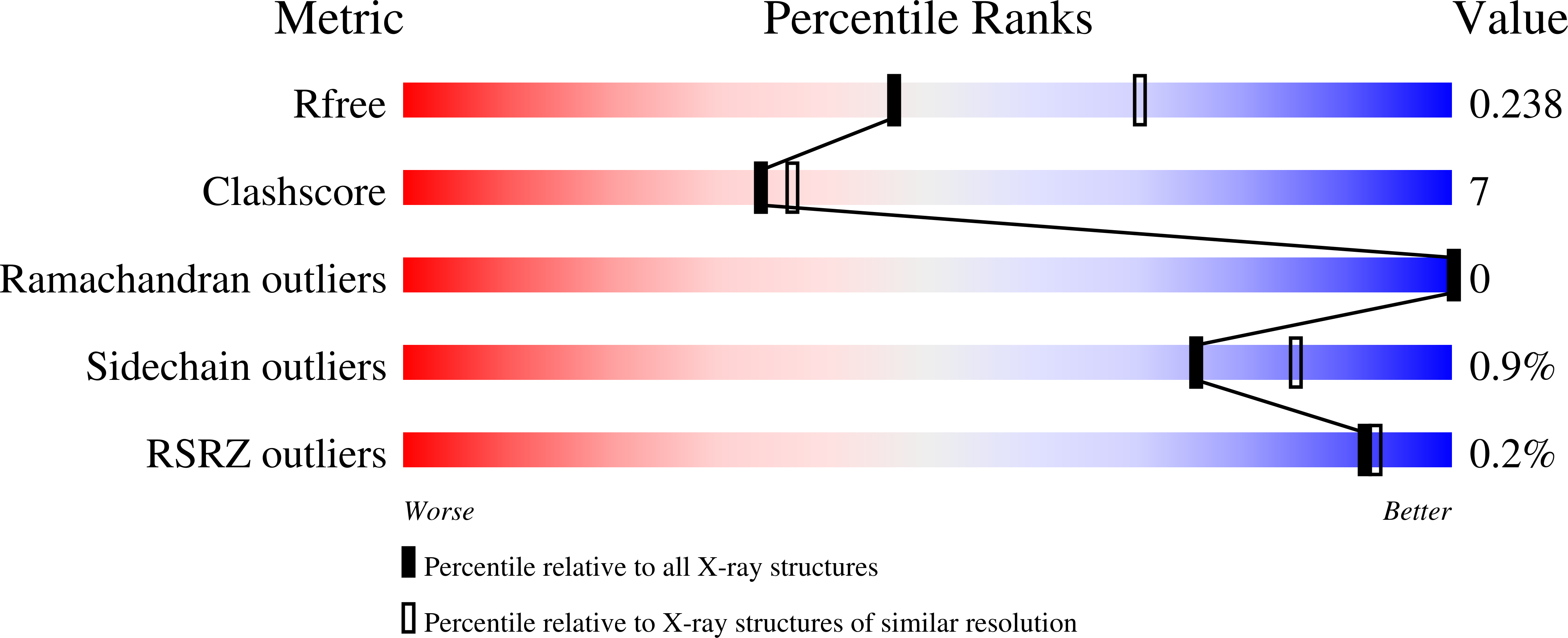
R-Value Free:
0.23
R-Value Work:
0.18
R-Value Observed:
0.18
Space Group:
I 4 2 2
Macromolecular Entities
Polymer Type:polypeptide(L)
Molecule:Cholinesterase
Gene (Uniprot):BCHE
Mutagens:N17Q, N455Q, N481Q, N486Q mutations compared to mature wild type sequence to avoid too much N-glycozylation. Numeration on the maturated enzyme (devoid of the signal peptide)
Chain IDs:A
Chain Length:529
Number of Molecules:1
Biological Source:Homo sapiens
Primary Citation
Integrative structural and kinetic analysis of the molecular basis for reduced carbamate inhibition in atypical butyrylcholinesterase.
Chem.Biol.Interact. 435 112134 112134 (2026)
PMID: 42097478 DOI: 10.1016/j.cbi.2026.112134

Abstact

Butyrylcholinesterase (BChE) plays a key role in cholinergic transmission and the metabolism of various drugs, making its regulation a promising therapeutic strategy for several diseases, including Alzheimer's disease. Selective inhibition of BChE helps regulate brain acetylcholine levels. However, genetic polymorphisms in the BCHE gene, particularly the Asp70Gly mutation in atypical BChE, can impact treatment outcomes. This study compares the inhibitory potency of 13 carbamates against atypical and usual BChE. Using molecular docking, quantum chemical cluster calculations, and crystallization of wild-type BChE with the most potent carbamate, we identified key differences in carbamylation mechanisms. Atypical BChE shows a less favorable enzyme-inhibitor complex orientation, lacking the hydrogen bond stabilization of the reactive carbonyl oxygen. Additionally, Asp70 in usual BChE contributes to stabilizing the non-reactive carbamate group, whereas Gly70 in atypical BChE is too distant to form such interactions.

Legend

Protein

Chemical

Disease

Primary Citation of related structures
Feedback Form
Name
Email
Institute
Feedback