

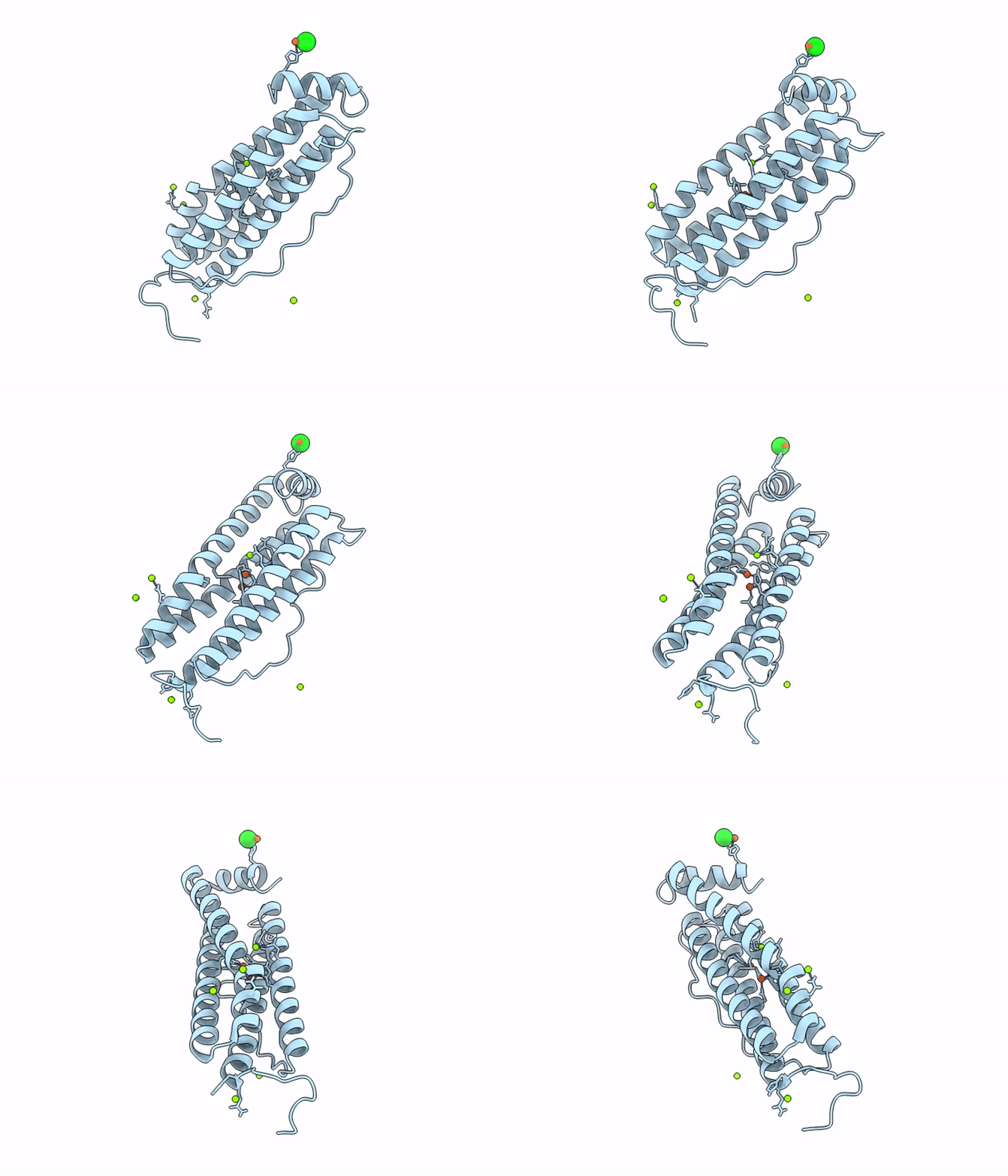
9I1E image
Deposition Date 2025-01-16
Release Date 2026-01-28
Last Version Date 2026-08-12
Entry Detail
PDB ID:
9I1E
Title:
Iron loaded human H-chain ferritin D131N mutant 20 minute oxygen soak
Biological Source:
Source Organism(s):
Homo sapiens (Taxon ID: 9606)
Expression System(s):
Method Details:
Experimental Method:
Resolution:
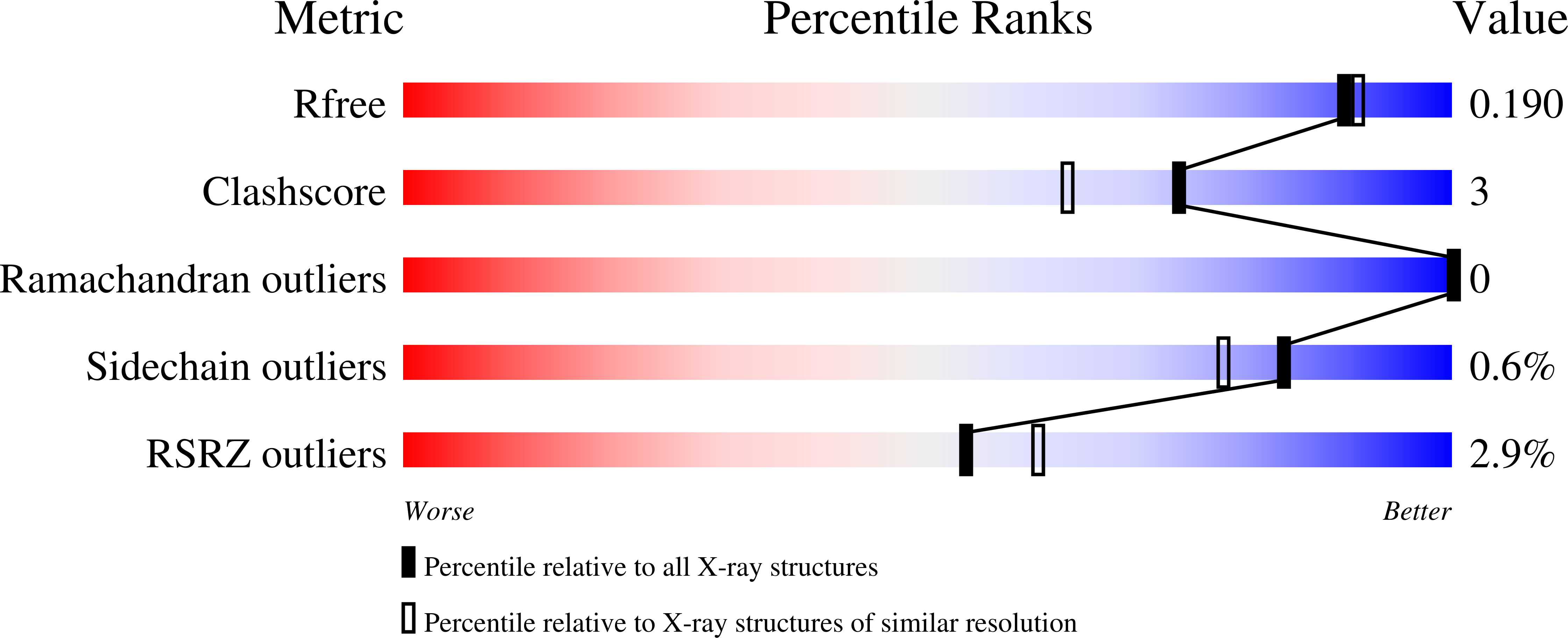
1.76 Å
R-Value Free:
0.19
R-Value Work:
0.15
R-Value Observed:
0.15
Space Group:
F 4 3 2
Macromolecular Entities
Polymer Type:polypeptide(L)
Molecule:Ferritin heavy chain
Gene (Uniprot):FTH1
Chain IDs:A
Chain Length:183
Number of Molecules:1
Biological Source:Homo sapiens
Primary Citation
Impact of the three-fold channel substitution D131N on kinetics of translocation of Fe 2+ across the protein coat is more severe for human cytosolic H-chain ferritin than for human mitochondrial ferritin.
Dalton Trans 55 6844 6853 (2026)
PMID: 41995066 DOI: 10.1039/d5dt02739j

Abstact

Ferritins play a key role in iron management in organisms from all kingdoms of life. Excess iron is sequestered in mineral form within the hollow protein shell and can be liberated when supply becomes restricted. The protein consists of 24 isostructural monomeric units that pack with 4-, 3-, and 2-fold symmetry. Channels through the protein coat at the 3-fold axes of ferritins localised in the cytosol of animal cells contain a strictly conserved LCDFXEX 'twin carboxylate' motif, and have been shown to be the major iron entry route to animal ferritins, facilitating access to the H-chain intra-subunit catalytic ferroxidase centre. In the ferritin localised to the mitochondria of animals, there is natural variation within the residues lining this channel, such that the Asp residue of the twin carboxylate motif (Asp131) is not strictly conserved. Here we report X-ray crystallographic and solution kinetic studies of the properties of D131N variants of H-chain and mitochondrial ferritins. X-ray structures revealed significant perturbation of metal binding at the three-fold channels and ferroxidase centres of H-chain ferritin, but a relatively minor effect on mitochondrial ferritin. Likewise, kinetic data showed that rapid Fe(2+) uptake was abolished in the D131N variant of H-chain ferritin, but less severely impacted in the equivalent variant of mitochondrial ferritin. Differences were also observed in rates of mineralisation and extent of iron release in the D131N variants of the two ferritins. The implications for the physiological role of mitochondrial versus cytosolic ferritin are discussed.

Legend

Protein

Chemical

Disease

Primary Citation of related structures
Feedback Form
Name
Email
Institute
Feedback