

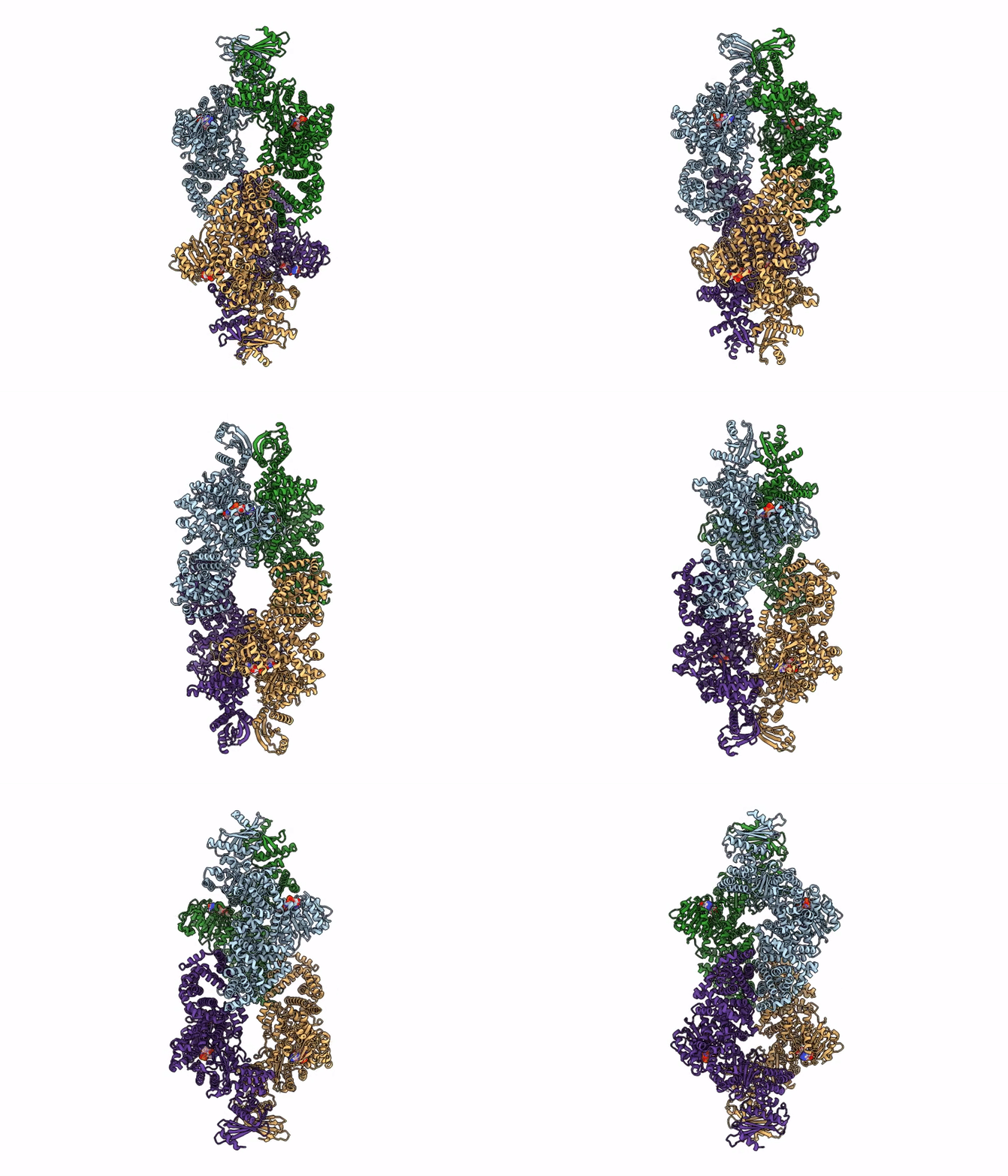
9HUZ image
Deposition Date 2024-12-23
Release Date 2026-01-14
Last Version Date 2026-04-08
Entry Detail
PDB ID:
9HUZ
Keywords:
Title:
CryoEM map of the large glutamate dehydrogenase composed of 180 kDa subunits from Mycobacterium smegmatis obtained in the presence of NAD+ and L-glutamate. Closed2 tetramer
Biological Source:
Source Organism(s):
Expression System(s):
Method Details:
Experimental Method:
Resolution:
3.57 Å
Aggregation State:
PARTICLE
Reconstruction Method:
SINGLE PARTICLE
Macromolecular Entities
Structures with similar UniProt ID
Protein Blast
Polymer Type:polypeptide(L)
Molecule:NAD-specific glutamate dehydr
Gene (Uniprot):gdh
Chain IDs:A, B, C, D
Chain Length:1611
Number of Molecules:4
Biological Source:Mycolicibacterium smegmatis
Ligand Molecules
Primary Citation
Tertiary and quaternary structure remodeling by occupancy of the substrate binding pocket in a large glutamate dehydrogenase.
Protein Sci. 35 e70544 e70544 (2026)
PMID: 41877587 DOI: 10.1002/pro.70544

Abstact

Glutamate dehydrogenases (GDHs) catalyze the oxidative deamination of L-glutamate to 2-oxoglutarate using NAD(P)(+) as a cofactor. The large type of GDHs (L-GDHs) displays a dynamic homotetrameric architecture that alternates between open and closed states. However, the catalytic mechanism and the functional relevance of the large conformational changes in L-GDHs remain poorly understood. Here, we use cryo-EM to investigate the structure and the conformational landscape of the mycobacterial L-GDH composed of 180 kDa subunits (mL-GDH(180)) when incubated with L-glutamate and NAD(+). Classification of the heterogeneous population of tetramers reveals opening-closing motions and sorting of individual subunits resolves the occupancy of the cofactor and substrate binding pockets. Cryo-EM maps show that ligand binding to the glutamate binding pocket is accompanied by structural changes in a region approximately two nanometers away from the active site, leading to the formation of a previously undetected interaction between the catalytic domains of neighboring subunits in mL-GDH(180) closed tetrameric states. Our findings indicate that the occupancy of the substrate binding site of mL-GDH(180) is linked to a remodeling of both the tertiary and quaternary structure of the enzyme.

Legend

Protein

Chemical

Disease

Primary Citation of related structures
Feedback Form
Name
Email
Institute
Feedback