

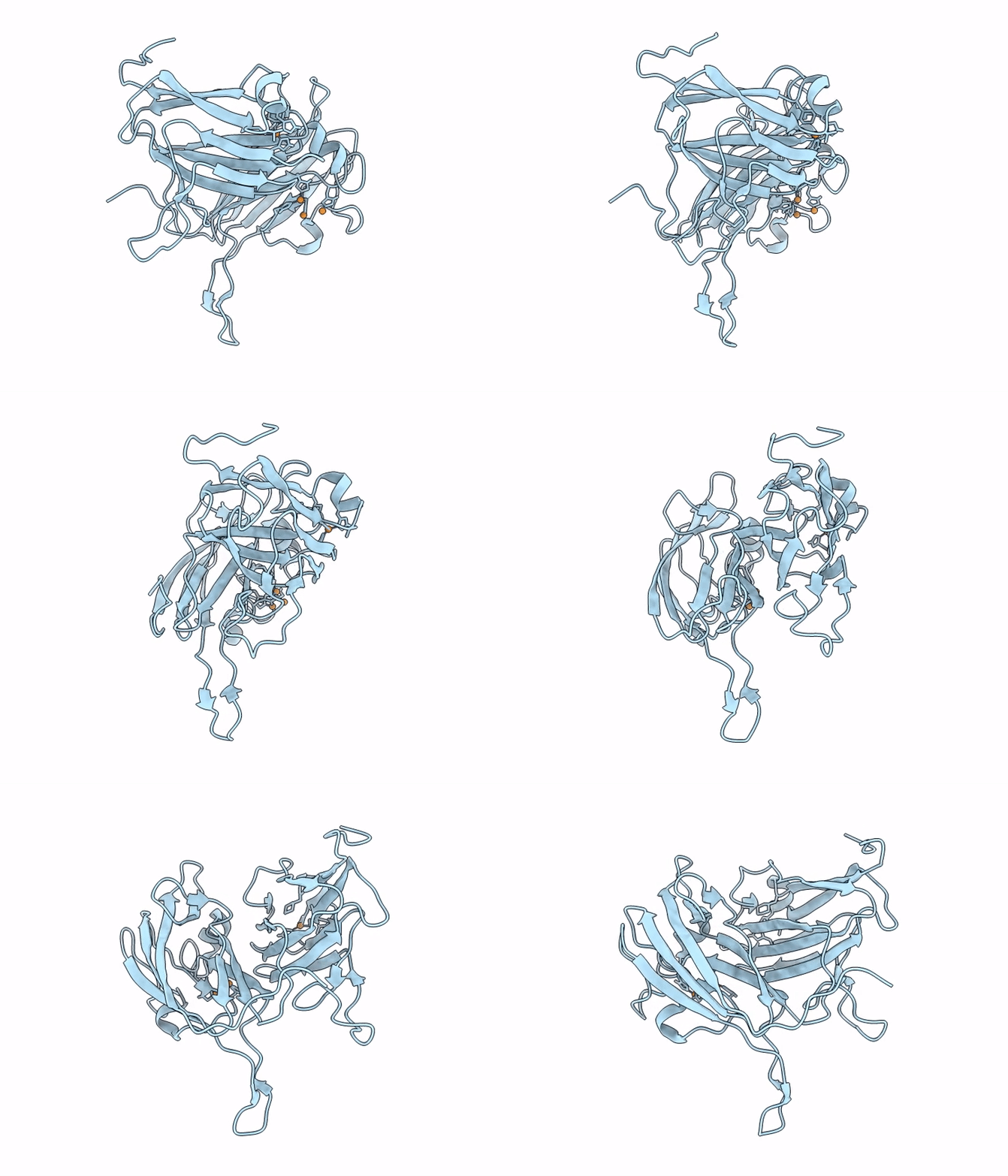
9HU7 image
Deposition Date 2024-12-20
Release Date 2026-01-14
Last Version Date 2026-04-22
Entry Detail
PDB ID:
9HU7
Keywords:
Title:
Mutant M298C6a of the small laccase (SLAC) from Streptomyces coelicolor
Biological Source:
Source Organism(s):
Expression System(s):
Method Details:
Experimental Method:
Resolution:
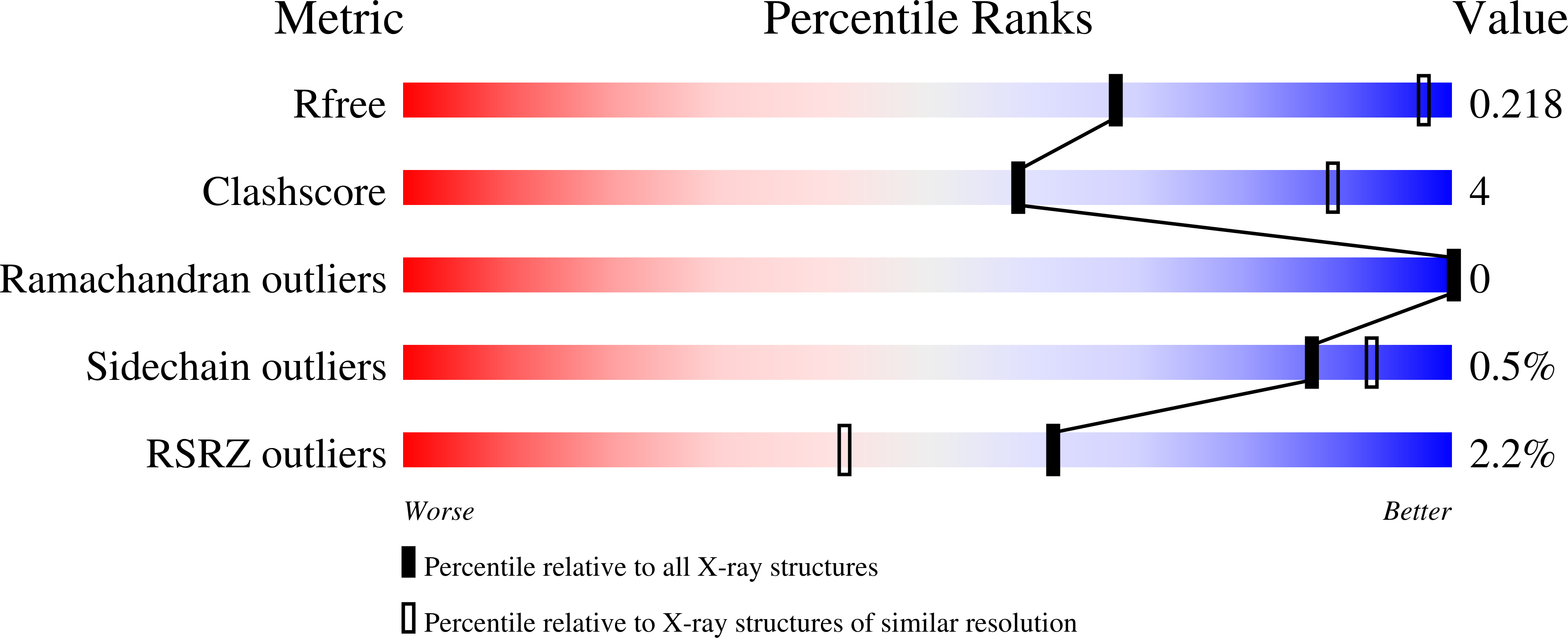
3.51 Å
R-Value Free:
0.21
R-Value Work:
0.20
R-Value Observed:
0.20
Space Group:
P 43 3 2
Macromolecular Entities
Structures with similar UniProt ID
Protein Blast
Polymer Type:polypeptide(L)
Molecule:Copper oxidase
Gene (Uniprot):SC4C6.22
Mutagens:M298C6a
Chain IDs:A
Chain Length:322
Number of Molecules:1
Biological Source:Streptomyces coelicolor
Ligand Molecules
Primary Citation
Hydrophobic tuning with non-canonical amino acids in a copper metalloenzyme.
Nat.Chem. ? ? ? (2026)
PMID: 41974833 DOI: 10.1038/s41557-026-02116-7

Abstact

Hydrophobicity controls many aspects of protein and enzyme function. Although hydrophobic tuning can be somewhat achieved with canonical amino acids, the incorporation of non-canonical amino acids further extends this ability to enable new and improved functionality. Here we engineer an aminoacyl-tRNA synthetase/tRNA pair for the site-specific genetic encoding of a set of bulky, hydrophobic amino acids, namely cyclopentylalanine, cyclohexylalanine and cycloheptylalanine. As a proof of concept, we demonstrate the utility of hydrophobic tuning based on non-canonical amino acids (ncAAs) to engineer a bacterial laccase, which is both a classical metalloenzyme and a high-value catalyst for industrial processes. The resulting mutations substantially improved the catalytic activity, particularly the turnover frequency and total turnover number. To understand this improved functionality, the redox potentials, electronic spectra and structure-function relationships were examined. Combining traditional directed evolution with ncAA-based engineering resulted in further improvements in catalysis, which were contextualized by analysing the changes imparted from these two methods.

Legend

Protein

Chemical

Disease

Primary Citation of related structures
Feedback Form
Name
Email
Institute
Feedback