

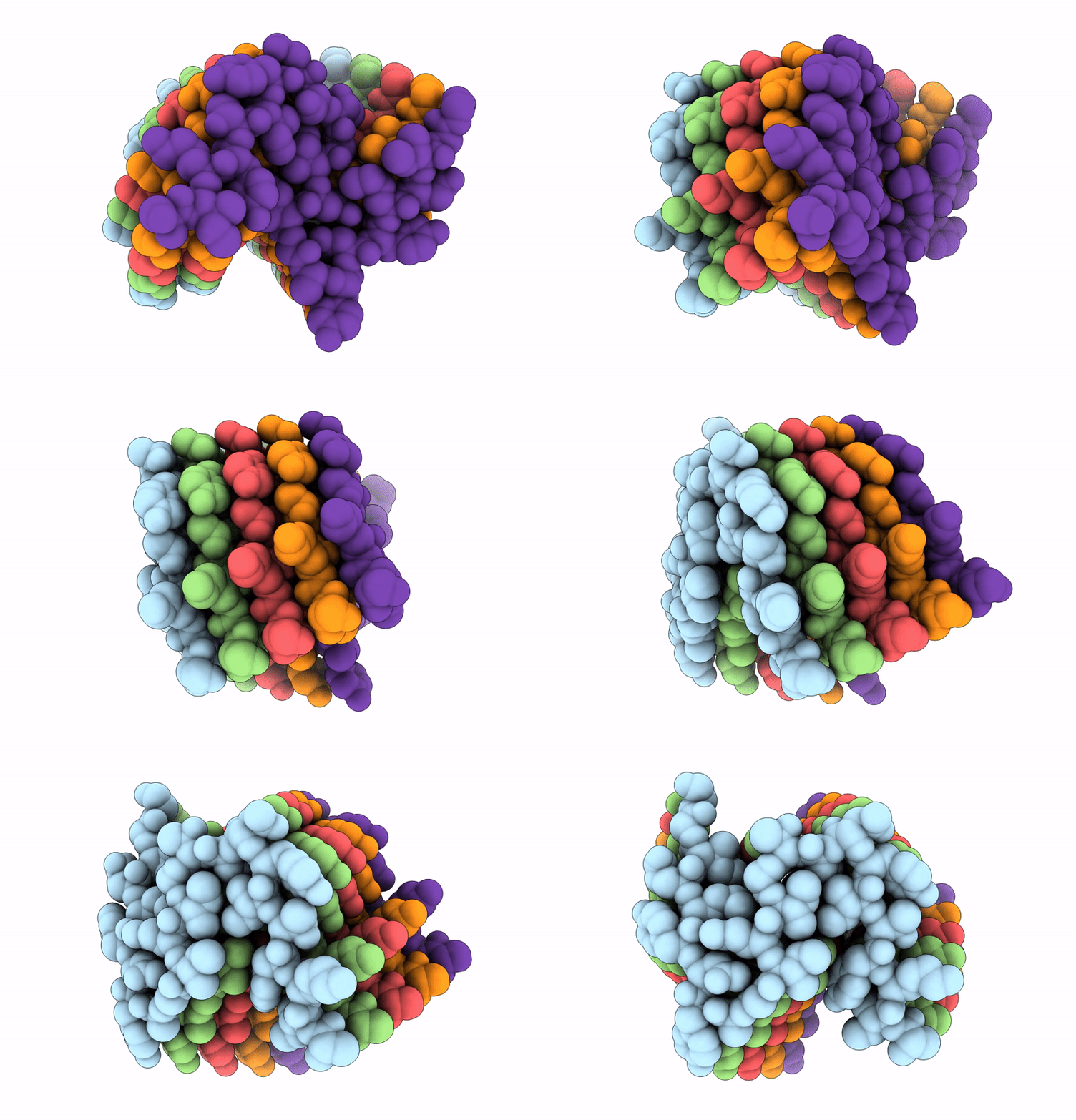
9HR6 image
Deposition Date 2024-12-17
Release Date 2025-09-17
Last Version Date 2026-04-01
Entry Detail
PDB ID:
9HR6
Keywords:
Title:
cryoEM structure of amyloid fibrils formed by human RIPK1
Biological Source:
Source Organism(s):
Homo sapiens (Taxon ID: 9606)
Expression System(s):
Method Details:
Experimental Method:
Resolution:
2.57 Å
Aggregation State:
HELICAL ARRAY
Reconstruction Method:
HELICAL
Macromolecular Entities
Structures with similar UniProt ID
Protein Blast
Polymer Type:polypeptide(L)
Molecule:Receptor-interacting serine/t
Gene (Uniprot):RIPK1
Chain IDs:A, B, C, D, E
Chain Length:88
Number of Molecules:5
Biological Source:Homo sapiens
Ligand Molecules
Primary Citation
Structural basis for amyloid fibril assembly by the master cell-signaling regulator receptor-interacting protein kinase 1.
Nat Commun 16 9607 9607 (2025)
PMID: 41168207 DOI: 10.1038/s41467-025-64621-6

Abstact

Amyloid fibrils can form biologically relevant functional assemblies. The RIP homotypic interaction motifs (RHIMs) in receptor-interacting protein kinases 1 and 3 (RIPK1 and RIPK3) orchestrate the formation of amyloid-like fibrils essential for propagating cell death signals. While the structures of human RIPK3 (hRIPK3) homomeric fibrils and RIPK1-RIPK3 heteromeric fibrils have been elucidated, the atomic structure of human RIPK1 (hRIPK1) homomeric fibrils has remained elusive. We present a high-resolution structure of hRIPK1 RHIM-mediated amyloid fibrils, determined using an integrative approach combining cryoprobe-detected solid-state nuclear magnetic resonance spectroscopy and cryo-electron microscopy. The fibrils adopt an N-shaped fold consisting of three beta-sheets stabilized by hydrophobic interactions and hydrogen bonding. A key hydrogen bond between N545 and G542 closes the beta2-beta3 loop, resulting in denser side-chain packing compared to hRIPK3 homomeric fibrils. These findings provide structural insights into how hRIPK1 homomeric fibrils nucleate hRIPK3 recruitment and fibrillization during necroptosis, offering broader perspectives on the molecular principles governing RHIM-mediated amyloid assembly and functional amyloids.

Legend

Protein

Chemical

Disease

Primary Citation of related structures
Feedback Form
Name
Email
Institute
Feedback