

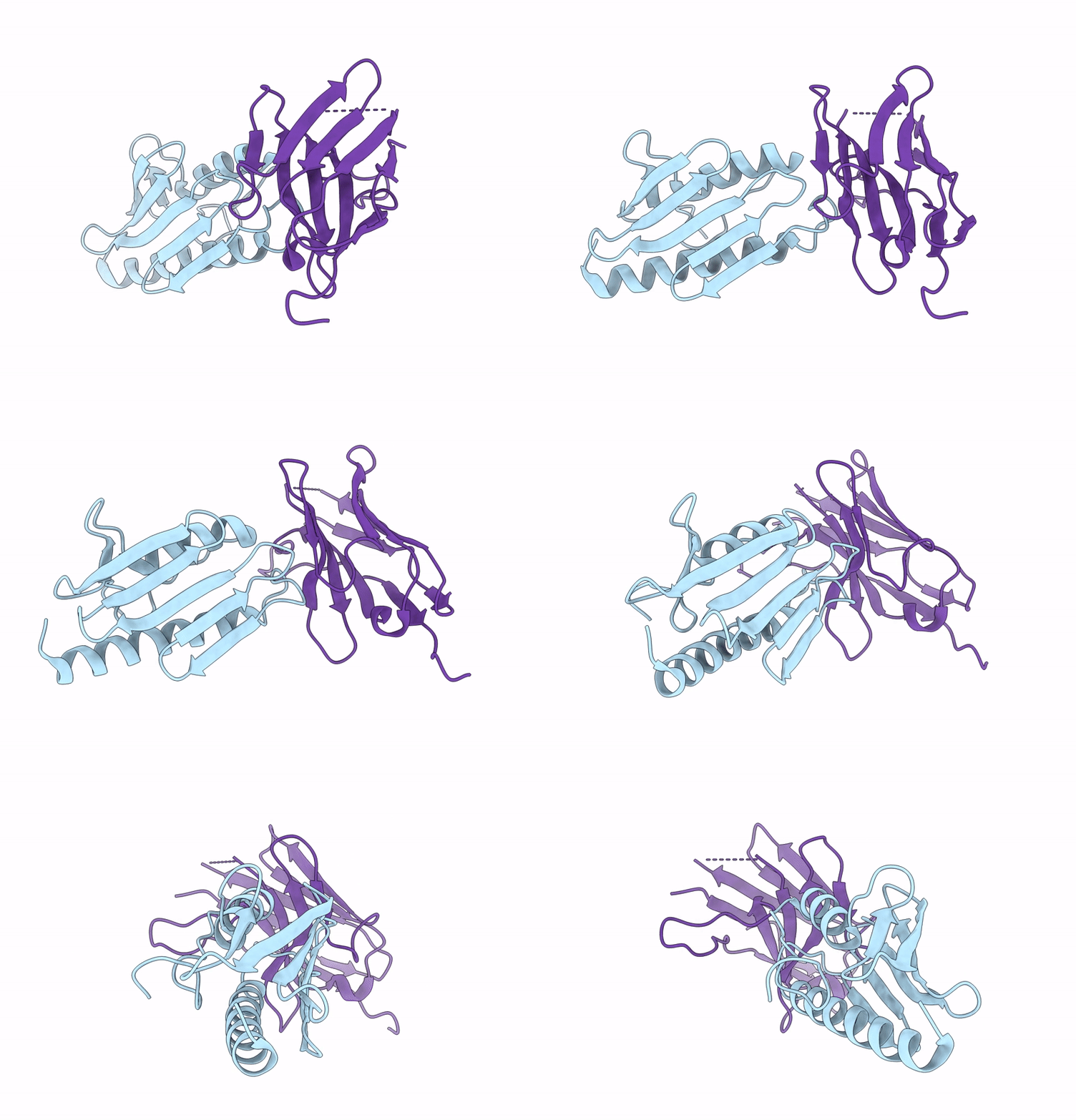
9HO5 image
Deposition Date 2024-12-11
Release Date 2025-12-24
Last Version Date 2026-07-08
Entry Detail
PDB ID:
9HO5
Keywords:
Title:
Crystal Structure of the Human Frataxin protein in complex with a tailored Camelid Nanobody 4A7
Biological Source:
Source Organism(s):
Homo sapiens (Taxon ID: 9606)
Lama glama (Taxon ID: 9844)
Expression System(s):
Method Details:
Experimental Method:
Resolution:
1.50 Å
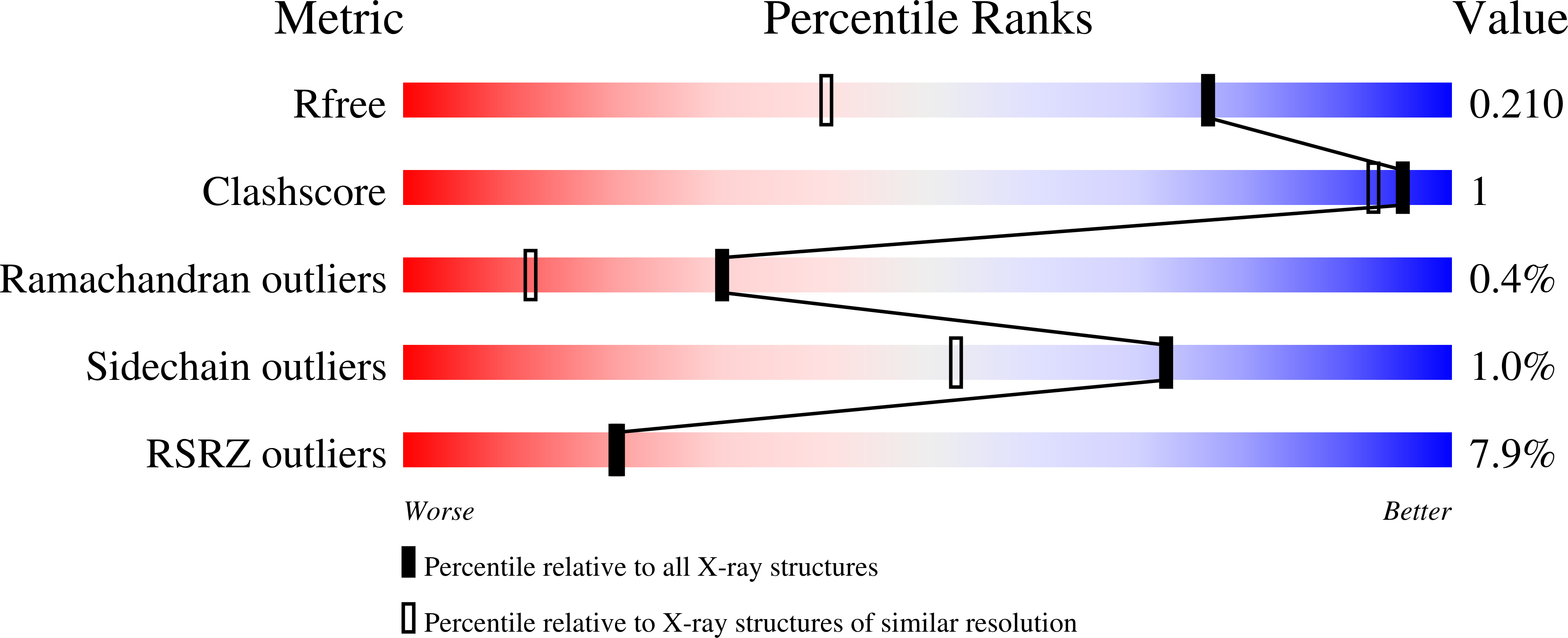
R-Value Free:
0.20
R-Value Work:
0.18
R-Value Observed:
0.18
Space Group:
P 21 21 21
Macromolecular Entities
Polymer Type:polypeptide(L)
Molecule:Frataxin mature form
Gene (Uniprot):FXN
Chain IDs:A
Chain Length:0
Number of Molecules:1
Biological Source:Homo sapiens
Polymer Type:polypeptide(L)
Molecule:Camelid Nanobody 4A7
Chain IDs:B (auth: C)
Chain Length:0
Number of Molecules:1
Biological Source:Lama glama
Primary Citation

Abstact

Iron-sulfur clusters are essential cofactors for the accurate cellular function of many proteins. In eukaryotic cells, the biogenesis of most iron-sulfur clusters occurs in the mitochondria and involves the action of the Cys desulfurase supercomplex, which is activated by the protein frataxin (FXN). The decrease of FXN expression and/or function results in Friedreich's ataxia (FRDA).In this work, several nanobodies specific to human FXN were selected via phage display, demonstrating a wide range of effects on Cys desulfurase activity and a strong interaction with FXN. Nanobody interaction stabilized wild-type and FRDA-related FXN variants in vitro. FXN-nanobody complexes were characterized by NMR, SAXS, and X-ray crystallography. Additionally, Nanobody expression was studied in human cells. The subcellular localization, direct interaction with FXN by in situ proximity ligation assay, effect on cell viability, Fe-S-dependent enzymatic activities, and oxygen consumption rates were analyzed. Significantly, nanobody expression did not alter these key metabolic variables, suggesting that the interaction with FXN did not disrupt the pathway.As a whole, our results suggest that nanobodies can serve as binding partners for mitochondrial FXN. However, the specific effect of the nanobodies on the conformational stability of FRDA-related FXN variants in cells should be investigated.

Legend

Protein

Chemical

Disease

Primary Citation of related structures
Feedback Form
Name
Email
Institute
Feedback