

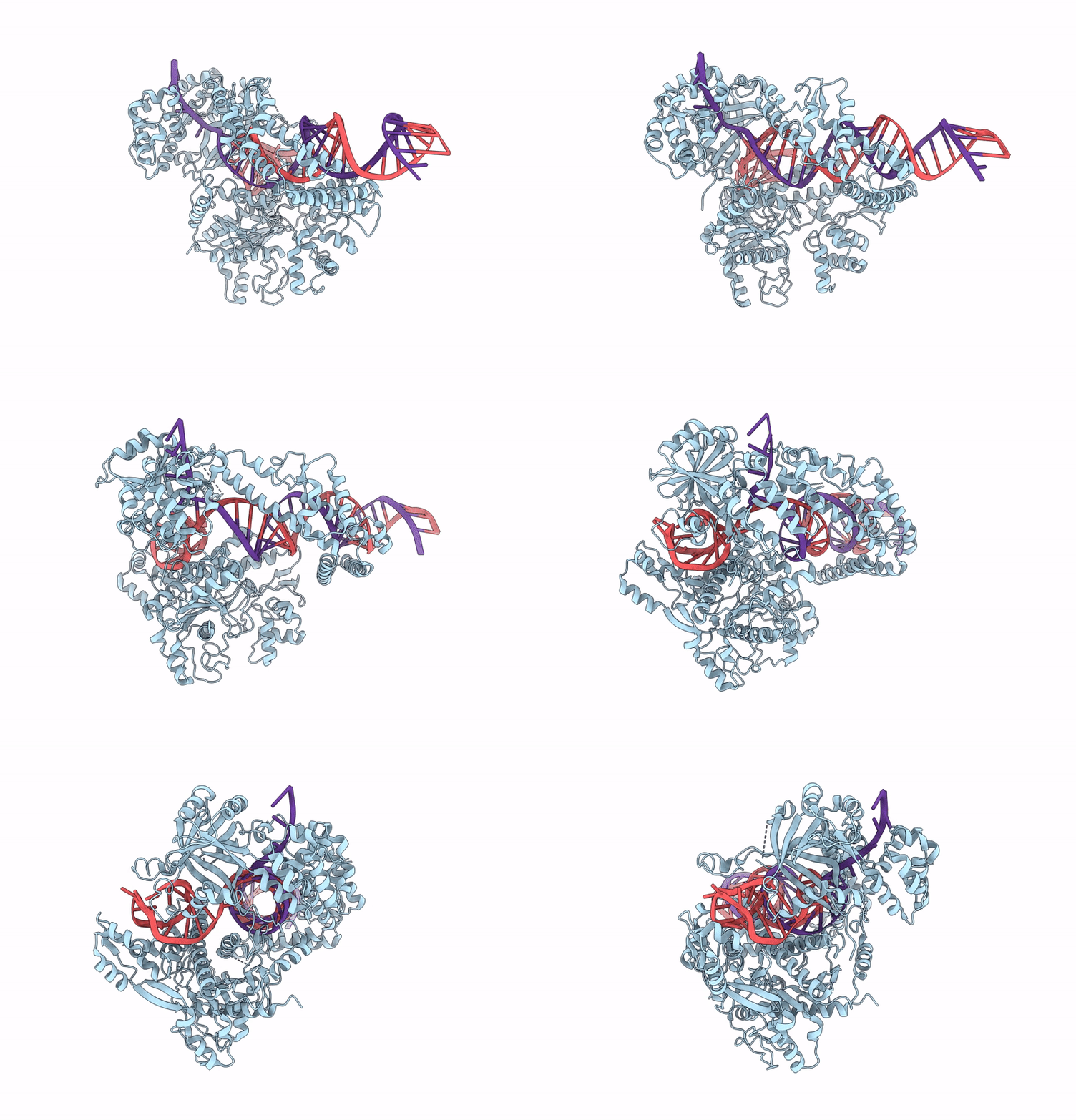
9HM6 image
Deposition Date 2024-12-06
Release Date 2025-12-17
Last Version Date 2026-05-27
Entry Detail
PDB ID:
9HM6
Title:
Structure of Ba1Cas12a3 ternary complex
Biological Source:
Expression System(s):
Method Details:
Experimental Method:
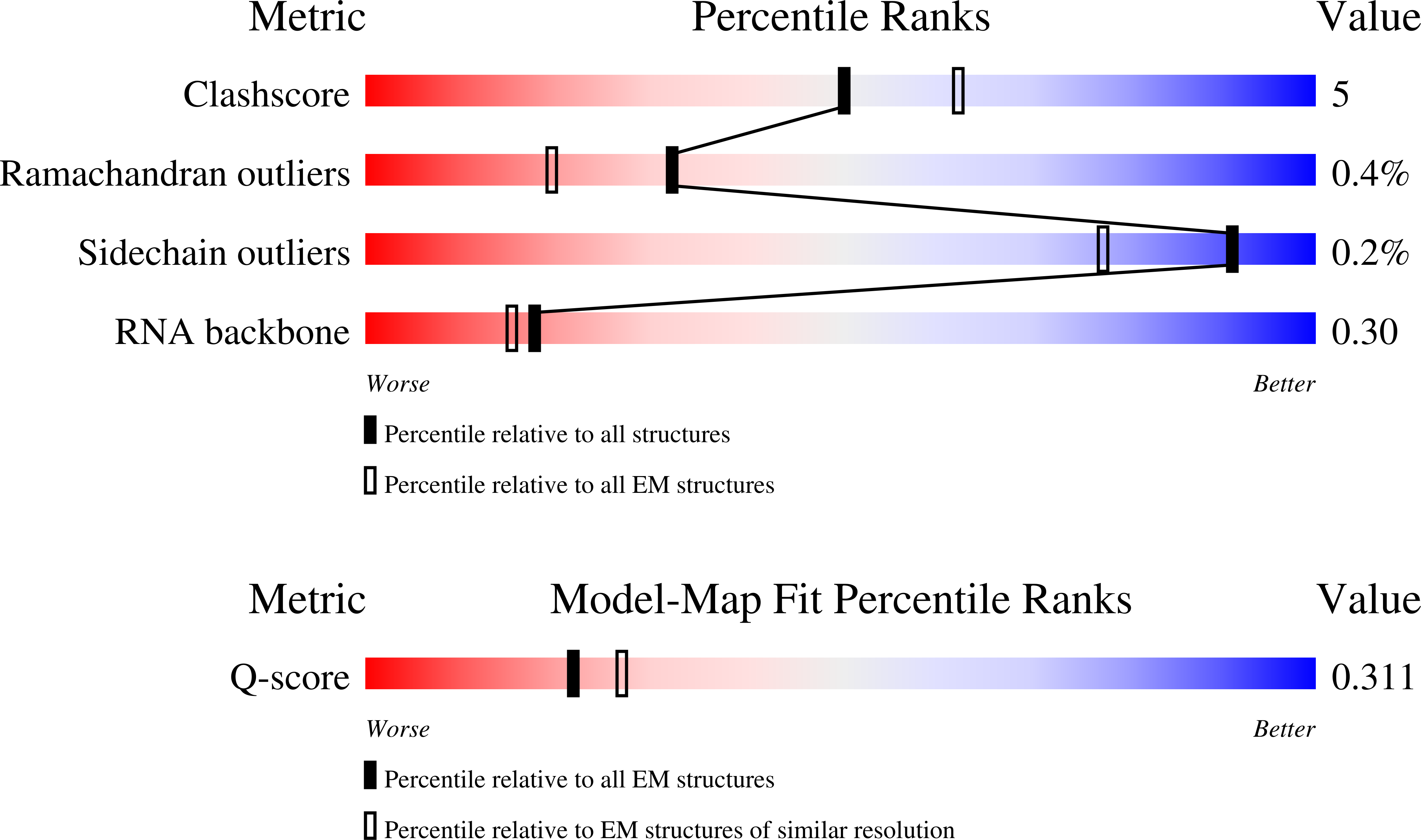
Resolution:
4.00 Å
Aggregation State:
PARTICLE
Reconstruction Method:
SINGLE PARTICLE
Macromolecular Entities
Structures with similar UniProt ID
Protein Blast
Polymer Type:polypeptide(L)
Molecule:Ba1Cas12a3
Chain IDs:A
Chain Length:1168
Number of Molecules:1
Biological Source:Bacteroidetes bacterium HGW-Bacteroidetes-12
Polymer Type:polyribonucleotide
Molecule:crRNA
Chain IDs:B
Chain Length:65
Number of Molecules:1
Biological Source:synthetic construct
Polymer Type:polyribonucleotide
Molecule:target RNA
Chain IDs:C
Chain Length:42
Number of Molecules:1
Biological Source:synthetic construct
Ligand Molecules
Primary Citation

Abstact

In all domains of life, tRNAs mediate the transfer of genetic information from mRNAs to proteins. As their depletion suppresses translation and, consequently, viral replication, tRNAs represent long-standing and increasingly recognized targets of innate immunity(1-5). Here we report Cas12a3 effector nucleases from type V CRISPR-Cas adaptive immune systems in bacteria that preferentially cleave tRNAs after recognition of target RNA. Cas12a3 orthologues belong to one of two previously unreported nuclease clades that exhibit RNA-mediated cleavage of non-target RNA, and are distinct from all other known type V systems. Through cell-based and biochemical assays and direct RNA sequencing, we demonstrate that recognition of a complementary target RNA by the CRISPR RNA triggers Cas12a3 to cleave the conserved 5'-CCA-3' tail of diverse tRNAs to drive growth arrest and anti-phage defence. Cryogenic electron microscopy structures further revealed a distinct tRNA-loading domain that positions the tRNA tail in the RuvC active site of the nuclease. By designing synthetic reporters that mimic the tRNA acceptor stem and tail, we expanded the capacity of current CRISPR-based diagnostics for multiplexed RNA detection. Overall, these findings reveal widespread tRNA inactivation as a previously unrecognized CRISPR-based immune strategy that broadens the application space of the existing CRISPR toolbox.

Legend

Protein

Chemical

Disease

Primary Citation of related structures
Feedback Form
Name
Email
Institute
Feedback