

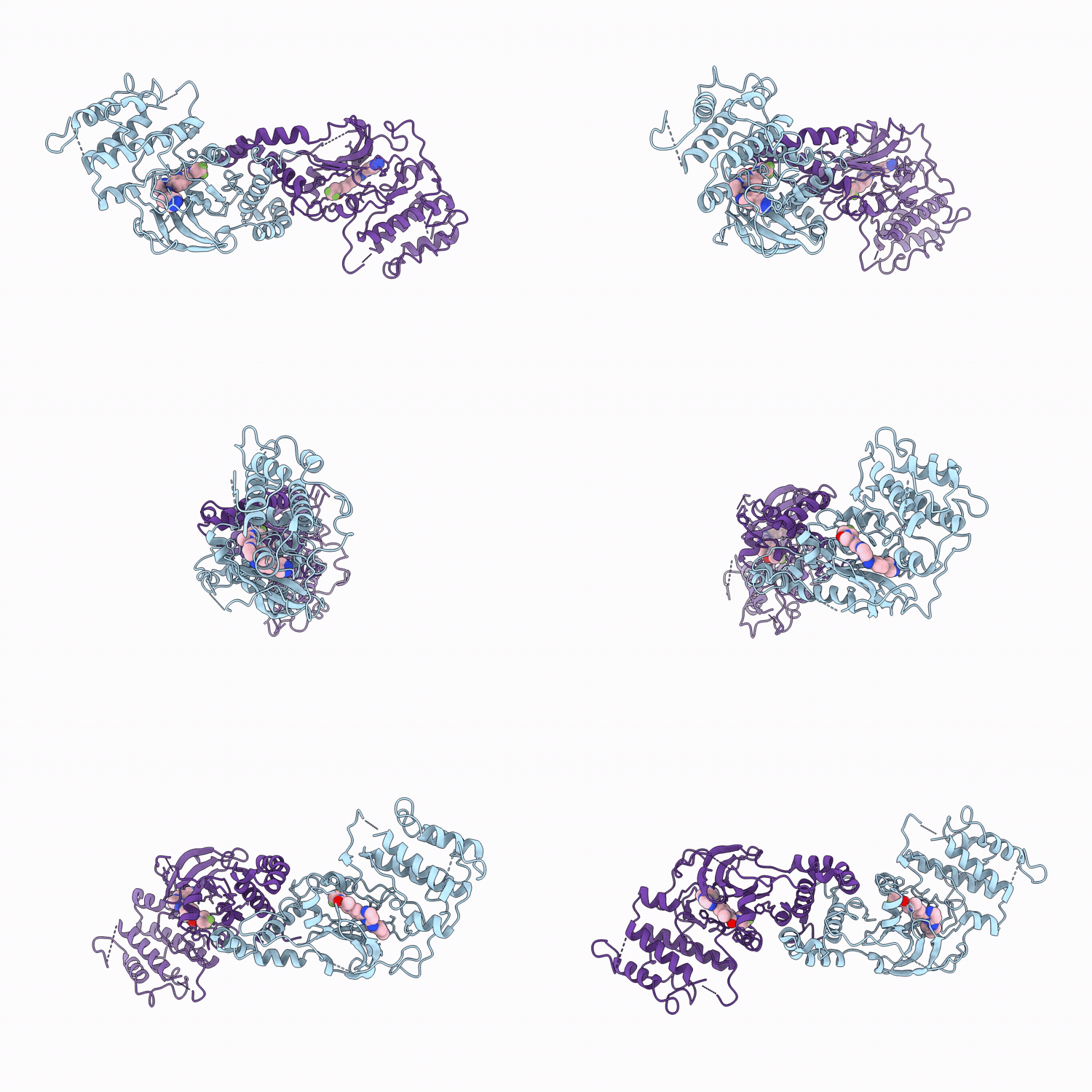
9HJQ image
Deposition Date 2024-11-30
Release Date 2026-06-17
Last Version Date 2026-07-01
Entry Detail
PDB ID:
9HJQ
Title:
ROCK2 bound with TDI01
Biological Source:
Source Organism(s):
Homo sapiens (Taxon ID: 9606)
Expression System(s):
Method Details:
Experimental Method:
Resolution:
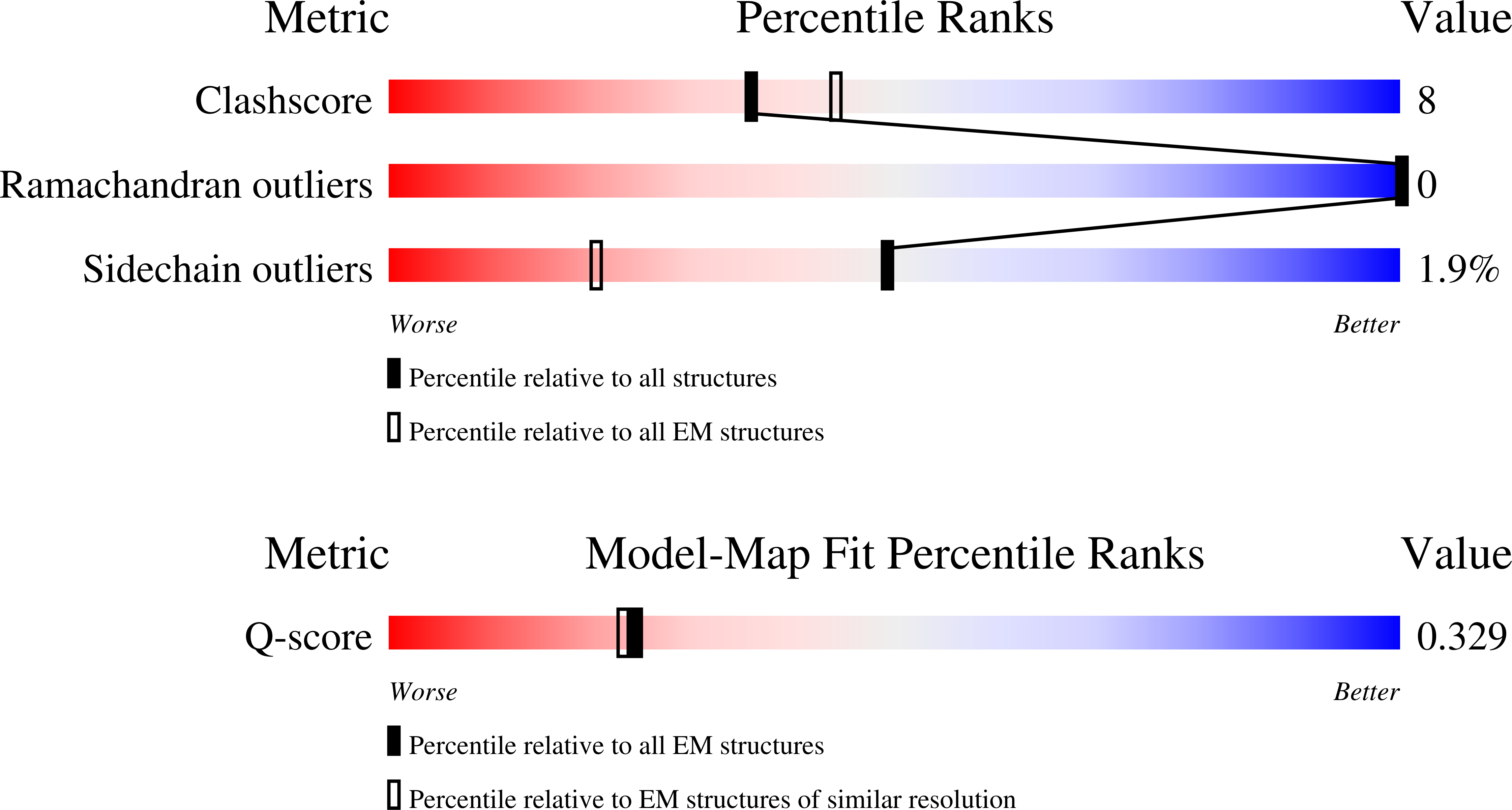
3.80 Å
Aggregation State:
PARTICLE
Reconstruction Method:
SINGLE PARTICLE
Macromolecular Entities
Polymer Type:polypeptide(L)
Molecule:Rho-associated protein kinase
Gene (Uniprot):ROCK2
Chain IDs:A, B
Chain Length:401
Number of Molecules:2
Biological Source:Homo sapiens
Ligand Molecules
Primary Citation
Selective targeting of endothelial and perivascular angiocrine ROCK2 treats liver fibrosis.
Cell 189 2663 2683.e26 (2026)
PMID: 41794026 DOI: 10.1016/j.cell.2026.02.001

Abstact

Liver fibrosis is a prominent pathological process contributing to death from hepatic diseases, including metabolic dysfunction-associated steatohepatitis (MASH). There is limited treatment for liver fibrosis. Here, we find that upregulation of Rho-associated coiled-coil containing kinase 2 (ROCK2) in liver endothelial cells (ECs) and perivascular hepatic stellate cells (HSCs) causes vascular niche dysfunction and triggers pro-fibrotic angiocrine signaling. Based on the vascular druggable target ROCK2, we developed its selective inhibitor showing anti-fibrotic potency in preclinical models and human patients. The ROCK2-selective inhibitor TDI01 restored vascular phenotype and alleviated fibrosis in rodent and minipig MASH models. A phase 1 clinical trial (ChiCTR2200058868) of TDI01 demonstrated its favorable pharmacokinetics and safety in humans. An extended clinical trial (ChiCTR2400082056) showed a trend toward reducing liver fibrosis in five of six patients after TDI01 treatment. Thus, we discover vascular ROCK2 as a pro-fibrotic target, and development of an inhibitor selectively targeting angiocrine ROCK2 may provide a treatment of liver fibrosis in human patients.

Legend

Protein

Chemical

Disease

Primary Citation of related structures
Feedback Form
Name
Email
Institute
Feedback