

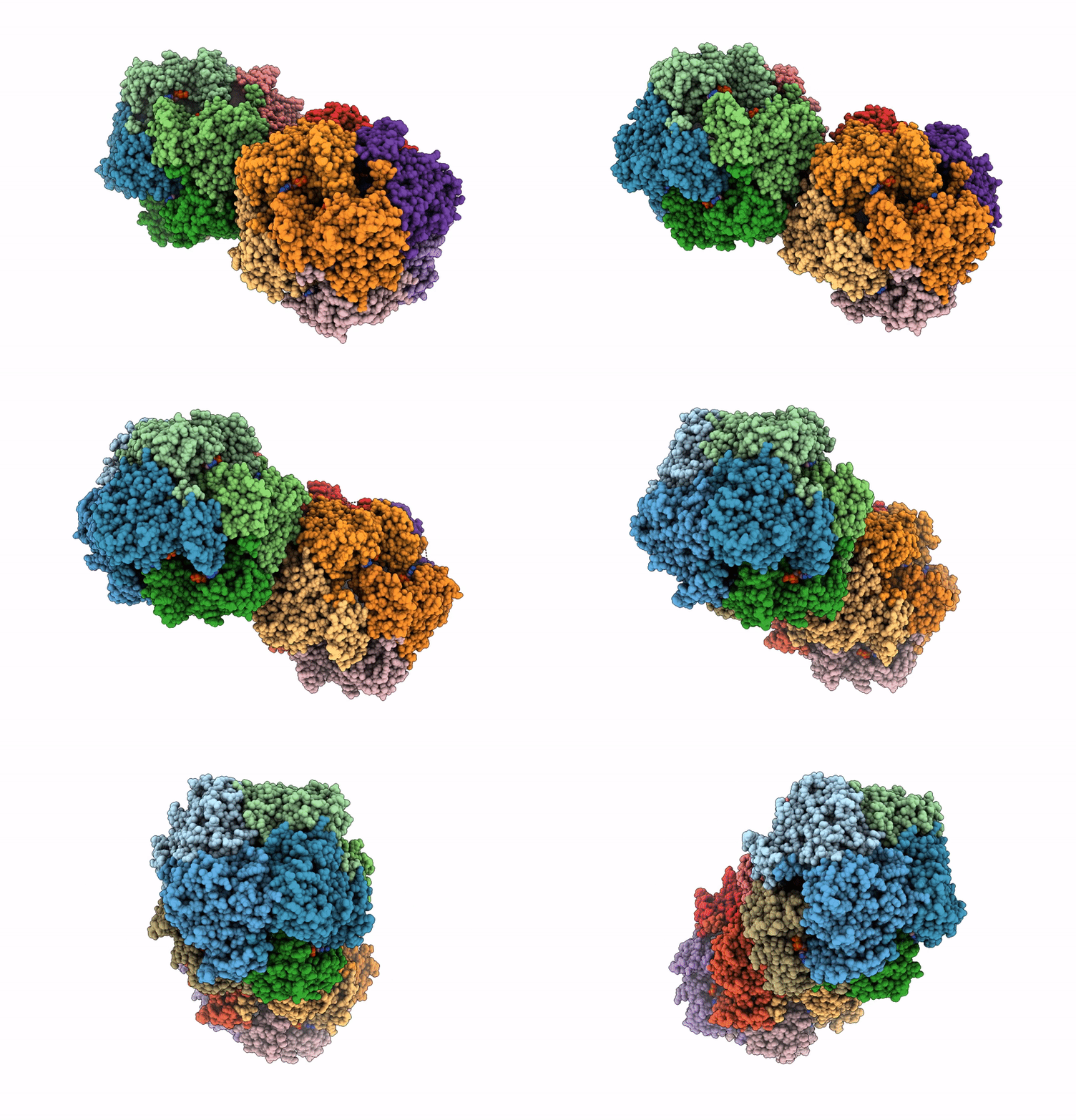
9HG2 image
Deposition Date 2024-11-18
Release Date 2025-08-27
Last Version Date 2026-04-22
Entry Detail
PDB ID:
9HG2
Keywords:
Title:
Crystal structure of M. smegmatis GMP reductase in complex with IMP and ATP.
Biological Source:
Source Organism(s):
Expression System(s):
Method Details:
Experimental Method:
Resolution:
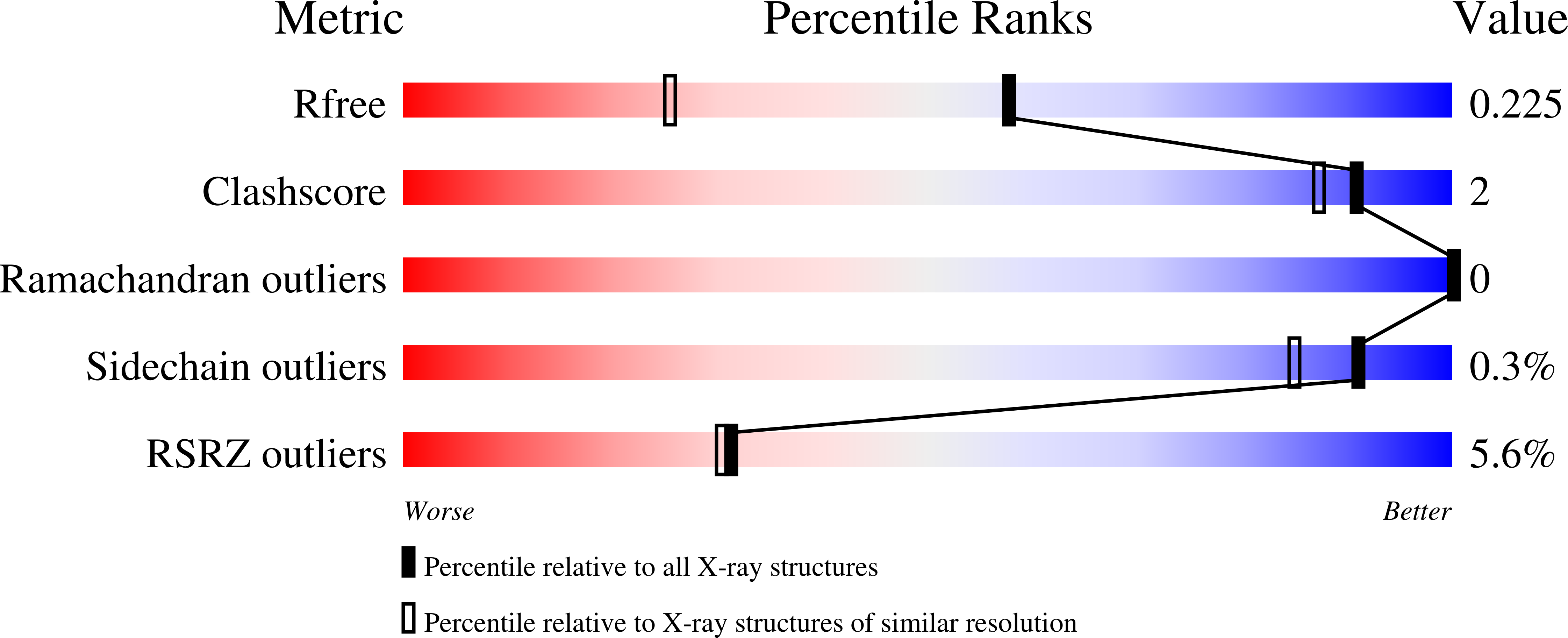
1.60 Å
R-Value Free:
0.22
R-Value Work:
0.20
R-Value Observed:
0.20
Space Group:
P 1
Macromolecular Entities
Structures with similar UniProt ID
Protein Blast
Polymer Type:polypeptide(L)
Molecule:GMP reductase
Gene (Uniprot):guaB1
Chain IDs:A, B, C, D, E, F, G, H, I, J, K, L, M, N, O, P
Chain Length:496
Number of Molecules:16
Biological Source:Mycolicibacterium smegmatis
Primary Citation
Structural basis for allosteric regulation of mycobacterial guanosine 5 ́-monophosphate reductase by ATP and GTP.
Nat Commun ? ? ? (2026)
PMID: 41974687 DOI: 10.1038/s41467-026-71657-9

Abstact

Guanosine 5'-monophosphate reductase (GMPR) is a crucial enzyme in the purine salvage pathway that catalyses the NADPH-dependent conversion of GMP to IMP, thereby contributing to purine nucleotide homeostasis. Mycobacterium smegmatis GMPR (MsmGMPR) contains a regulatory cystathionine beta-synthase (CBS) domain, which mediates allosteric modulation by ATP and GTP. However, MsmGMPR exhibits an atypical tertiary structure that is incompatible with the acknowledged regulatory mechanisms of IMPDH/GMPR family enzymes. Here, we combine X-ray crystallography, cryogenic electron microscopy, and biochemical binding assays to elucidate the molecular basis of MsmGMPR regulation by ATP and GTP. We show that ATP stabilises a compressed conformation that inhibits the enzyme by restricting access to the active site and preventing NADPH binding. In contrast, GTP counteracts ATP binding, promoting an active conformation that enables catalysis. Our results provide insight into how MsmGMPR senses and responds to the purine nucleotide balance, revealing a distinct utilisation of the CBS domain compared with its typical role in IMPDH/GMPR enzymes.

Legend

Protein

Chemical

Disease

Primary Citation of related structures
Feedback Form
Name
Email
Institute
Feedback