

9H0Z image
Deposition Date 2024-10-09
Release Date 2025-10-29
Last Version Date 2026-05-13
Entry Detail
PDB ID:
9H0Z
Title:
Crystal structure of TTL[Nle], thermophilic lipase TTL from Thermoanaerobacter thermohydrosulfuricus containing non-canonical amino acid Nle at the position of Met
Biological Source:
Source Organism(s):
Expression System(s):
Method Details:
Experimental Method:
Resolution:
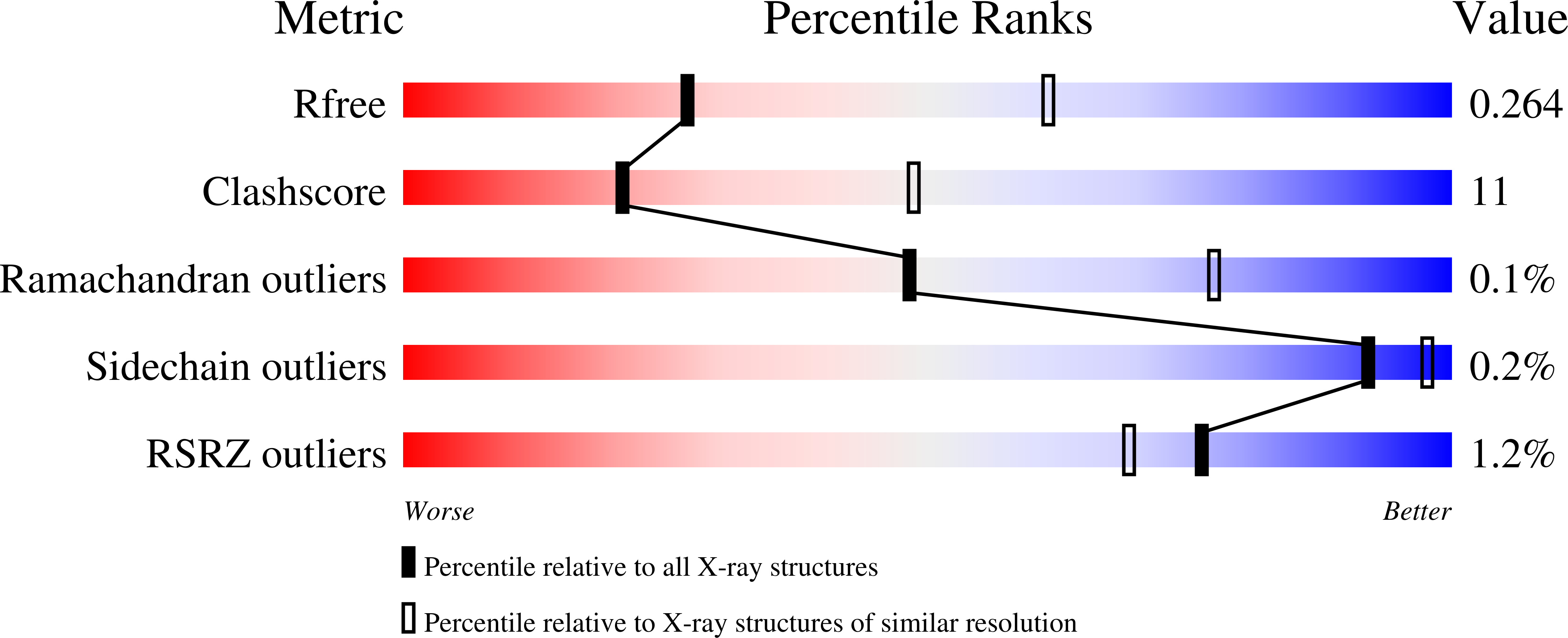
2.79 Å
R-Value Free:
0.26
R-Value Work:
0.21
R-Value Observed:
0.21
Space Group:
P 1 21 1
Macromolecular Entities
Structures with similar UniProt ID
Protein Blast
Polymer Type:polypeptide(L)
Molecule:Serine aminopeptidase S33 dom
Gene (Uniprot):SAMN04244560_02687
Chain IDs:A, B, C, D, E, F
Chain Length:267
Number of Molecules:6
Biological Source:Thermoanaerobacter thermohydrosulfuricus
Ligand Molecules
Primary Citation
A Robust Bioprocess for the Global Incorporation of Noncanonical Amino Acids in Auxotrophic Hosts Produces Labeled Proteins at the Gram Scale.
Chembiochem 27 e202500669 e202500669 (2026)
PMID: 41376136 DOI: 10.1002/cbic.202500669

Abstact

This study presents a robust bioprocess for the global incorporation of noncanonical amino acids (ncAAs) into proteins, enabling gram-scale production in auxotrophic Escherichia coli strains. The two-phase approach adapts from shake flask to bioreactor cultures and relies on cost-effective synthetic minimal media with glucose as the sole carbon source and yeast extract as an amino acid supply. It supports both external ncAA supplementation and in situ biosynthesis. A versatile E. coli BL21(DE3) auxotroph platform ensures broad ncAA and protein compatibility. Model proteins, such as a thermophilic lipase (TTL) and an oxidoreductase are labeled with biosynthesized norleucine (Nle), synthetic fluoroprolines, and fluorophenylalanine. Under optimal conditions, we achieved titers of up to 2 g L(-) (1) with near-quantitative incorporation. To demonstrate the utility of the bioprocess for applications that require substantial amounts of proteins, the crystal structure of Nle-labeled TTL is solved. Future work should optimize media composition and feeding strategies to improve ncAA bioavailability and integrate biosynthesis pathways into the host genome to reduce metabolic burden and eliminate antibiotic use. These advances will make the process a cost-effective industrial platform for designer protein production.

Legend

Protein

Chemical

Disease

Primary Citation of related structures
Feedback Form
Name
Email
Institute
Feedback