

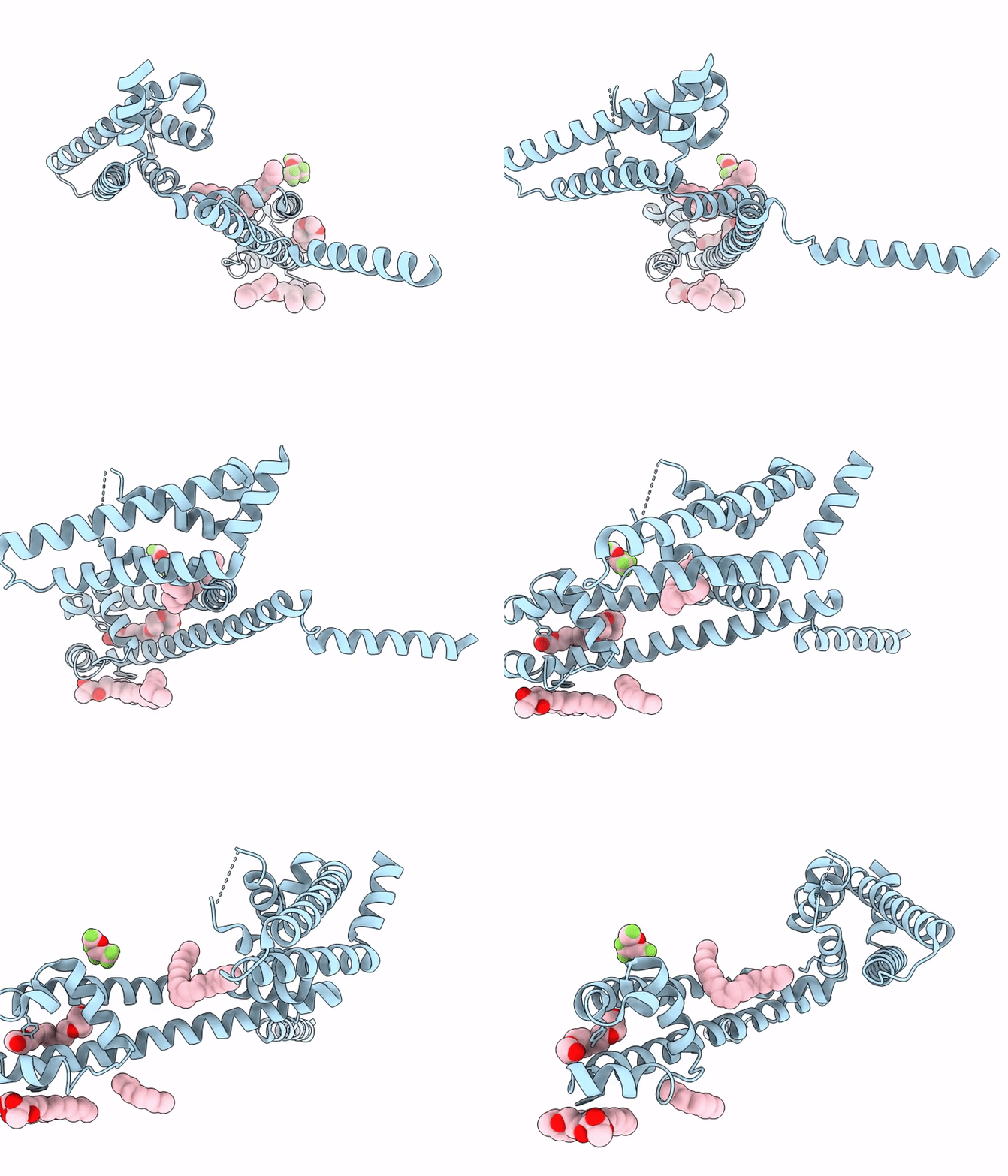
9GV1 image
Deposition Date 2024-09-20
Release Date 2025-10-01
Last Version Date 2026-09-02
Entry Detail
PDB ID:
9GV1
Title:
NavMs F208L bound to sevoflurane
Biological Source:
Source Organism(s):
Expression System(s):
Method Details:
Experimental Method:
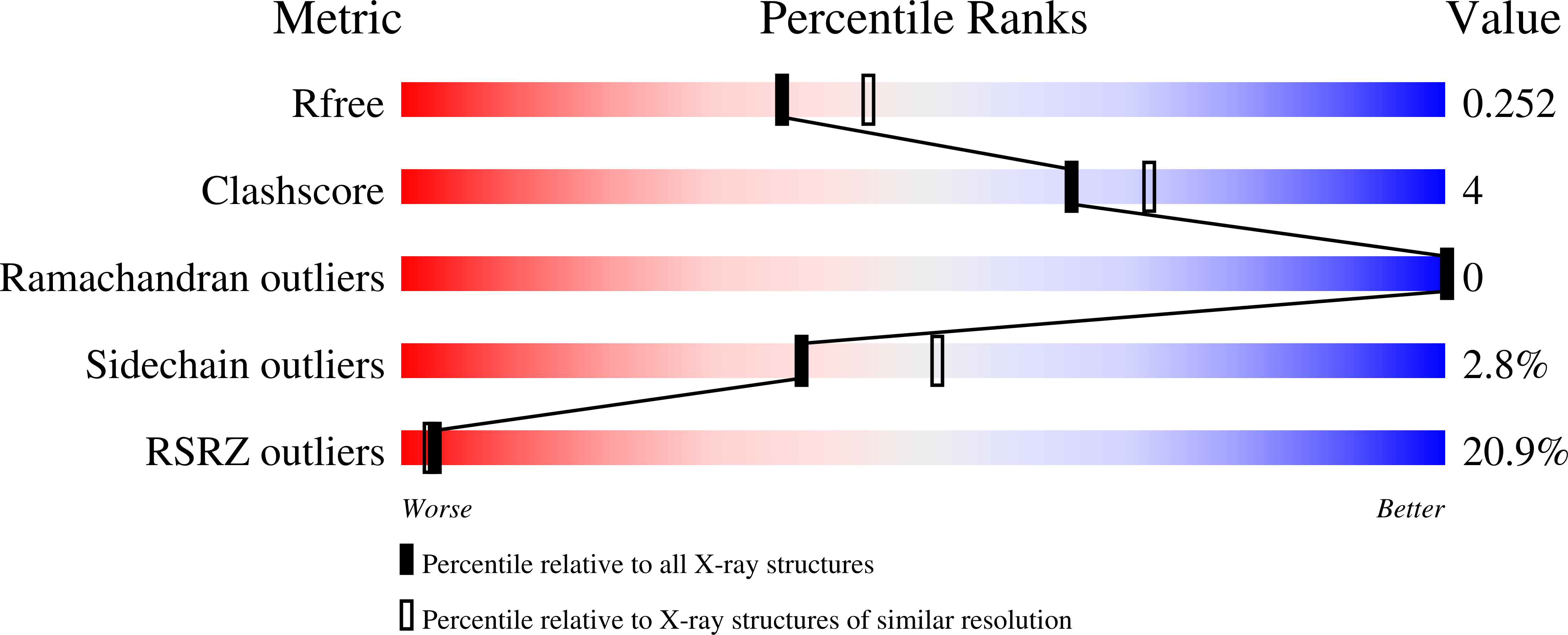
Resolution:
2.20 Å
R-Value Free:
0.25
R-Value Work:
0.22
Space Group:
I 4 2 2
Macromolecular Entities
Polymer Type:polypeptide(L)
Molecule:Ion transport protein
Gene (Uniprot):Mmc1_0798
Mutagens:F208L
Chain IDs:A
Chain Length:276
Number of Molecules:1
Biological Source:Magnetococcus marinus MC-1
Primary Citation
Volatile anaesthetics modulate voltage-gated sodium channel function at a site directly linked to channel gating.
Nat Commun 17 ? ? (2026)
PMID: 42321197 DOI: 10.1038/s41467-026-74518-7

Abstact

Voltage-gated sodium channels (VGSCs) mediate neuronal excitability and synaptic transmission and are functionally relevant targets for volatile anaesthetic (VA) actions. Here, we show that multiple VAs at clinically relevant concentrations share binding sites on NavMs, a prokaryotic VGSC. Sevoflurane, a representative VA, interacts with NavMs and NaChBac with functional effects paralleling those on human VGSCs, including modulation of channel inactivation. X-ray crystallography of purified NavMs reveals an atomic-resolution VA binding site in a VGSC, in which sevoflurane displaces lipid to occupy a membrane-embedded hydrophobic pocket. Alanine substitution of an invariant tyrosine within this binding pocket abolishes sevoflurane binding and eliminates the sevoflurane-induced hyperpolarising shift of steady-state inactivation. Sevoflurane modulates both fast and slow inactivation of human Nav1.1, demonstrating VA modulation of steady-state slow inactivation in a neuronal VGSC. Supporting evidence shows that VAs interact with homologous sites in human VGSCs. These findings define a VA binding site in VGSCs that supports a membrane-assisted pathway for modulating channel gating and neuronal activity in general anaesthesia.

Legend

Protein

Chemical

Disease

Primary Citation of related structures
Feedback Form
Name
Email
Institute
Feedback