

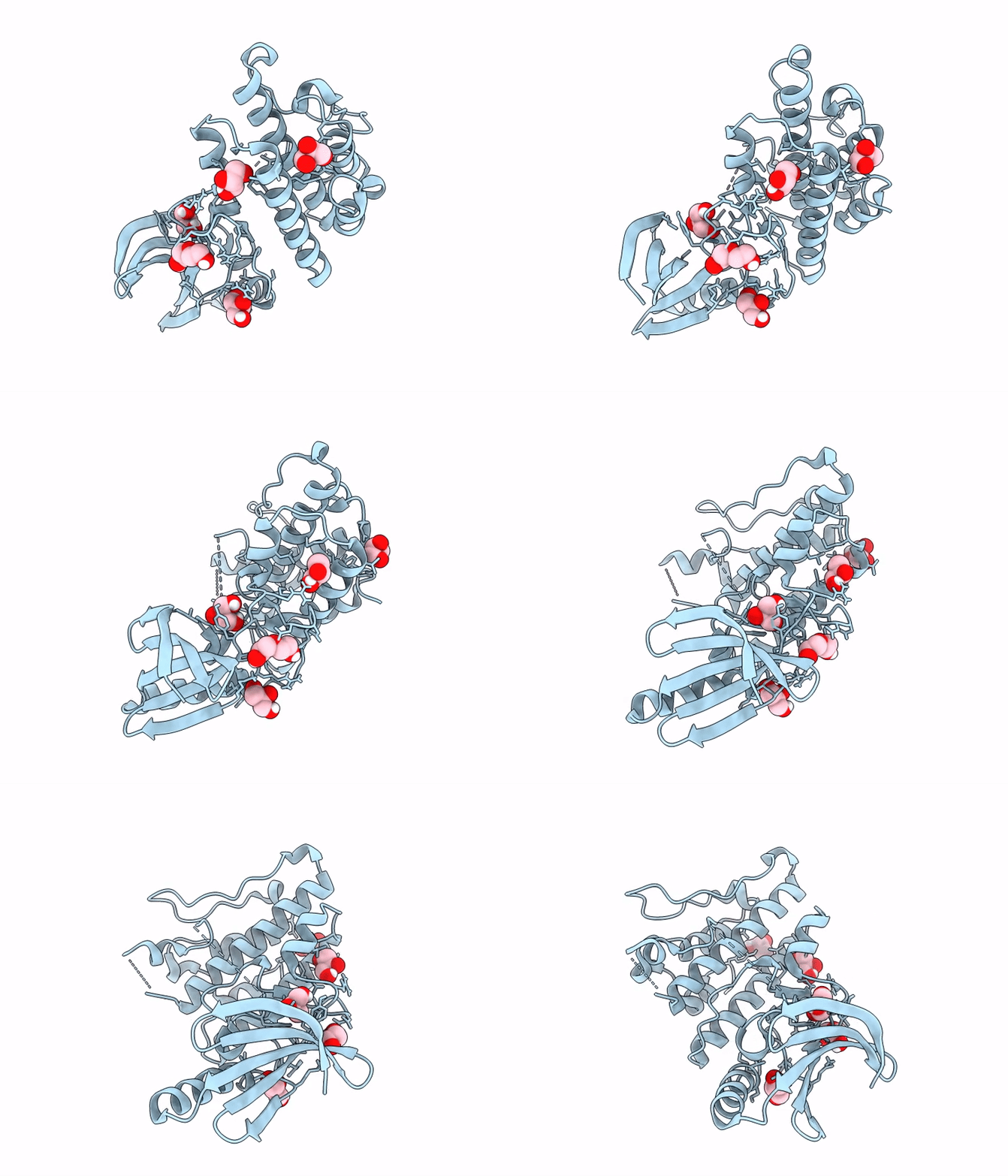
9GMP image
Deposition Date 2024-08-29
Release Date 2025-09-24
Last Version Date 2026-04-08
Entry Detail
PDB ID:
9GMP
Title:
TKUL kinase domain from Leishmania mexicana
Biological Source:
Source Organism(s):
Expression System(s):
Method Details:
Experimental Method:
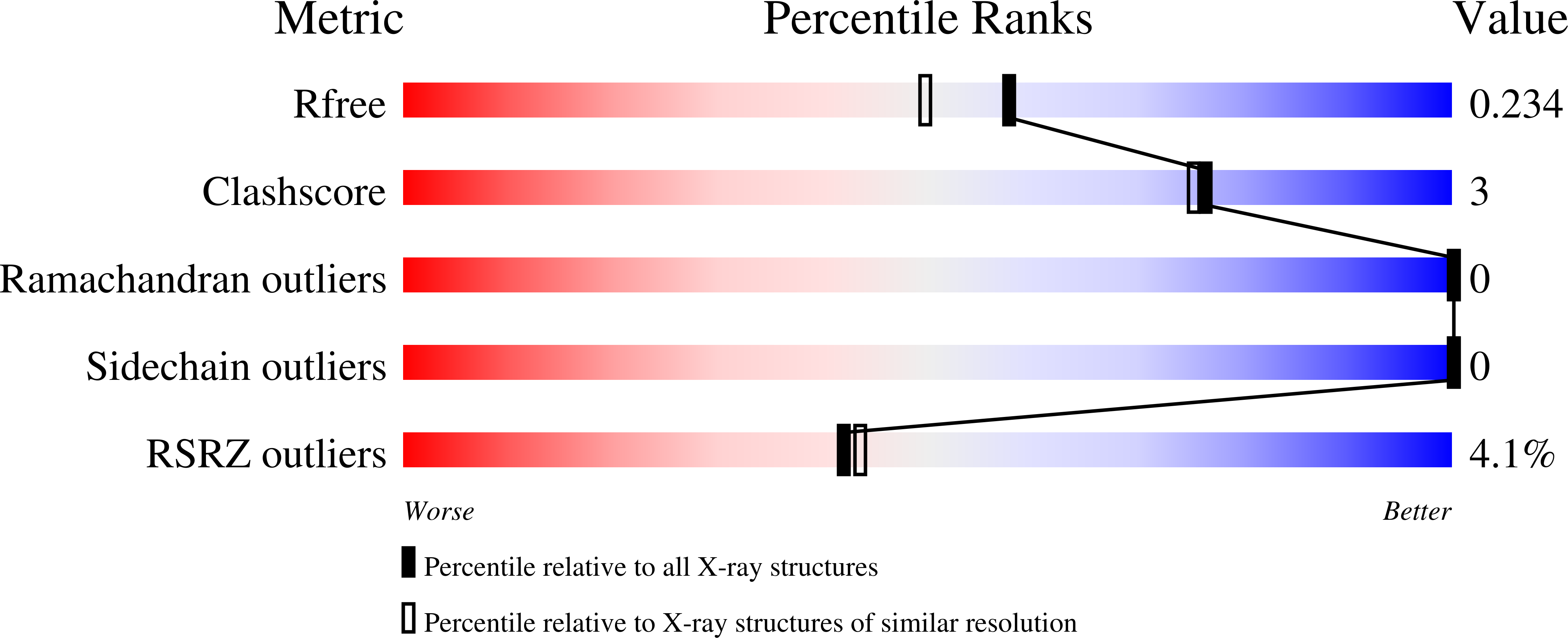
Resolution:
1.89 Å
R-Value Free:
0.23
R-Value Work:
0.18
R-Value Observed:
0.19
Space Group:
P 2 21 21
Macromolecular Entities
Structures with similar UniProt ID
Protein Blast
Polymer Type:polypeptide(L)
Molecule:Uncharacterized protein (Map
Gene (Uniprot):LMXM_34_4000
Chain IDs:A
Chain Length:285
Number of Molecules:1
Biological Source:Leishmania mexicana
Primary Citation
A Leishmania virulence factor harnesses an allosteric kinase switch to regulate its ubiquitin ligase activity.
Mol. Cell 85 3711 3728.e11 (2025)
PMID: 40997810 DOI: 10.1016/j.molcel.2025.09.002

Abstact

Stringent control of ubiquitylation is a central requirement of signaling specificity in eukaryotes. Here, we discover a domain module integrating protein kinase and ubiquitin ligase domains within a single protein. This module is widespread across unicellular eukaryotic lineages and particularly conserved in Leishmania, the causative agents of major neglected tropical diseases with a strong therapeutic need. We reveal that a gene encoding the module, tetratricopeptide repeat (TPR)-kinase-ubiquitin ligase (TKUL), is essential for L. mexicana to sustain macrophage infections and that TKUL can cooperate with parasite heat shock protein 70 (HSP70) to modify unfolded proteins with degradative ubiquitin chains. Intriguingly, the homologous to E6AP C-terminus (HECT)-type ubiquitin ligase activity of TKUL requires its atypical kinase domain, with kinase autophosphorylation triggering activating conformational changes across the catalytic module. Consistent with the ligase domain harnessing the kinase domain for regulation, TKUL-driven ubiquitylation can allosterically be suppressed by small-molecule kinase inhibitors. Together, this work establishes an unprecedented allosteric coupling mechanism in the realms of phosphorylation and ubiquitylation.

Legend

Protein

Chemical

Disease

Primary Citation of related structures
Feedback Form
Name
Email
Institute
Feedback