

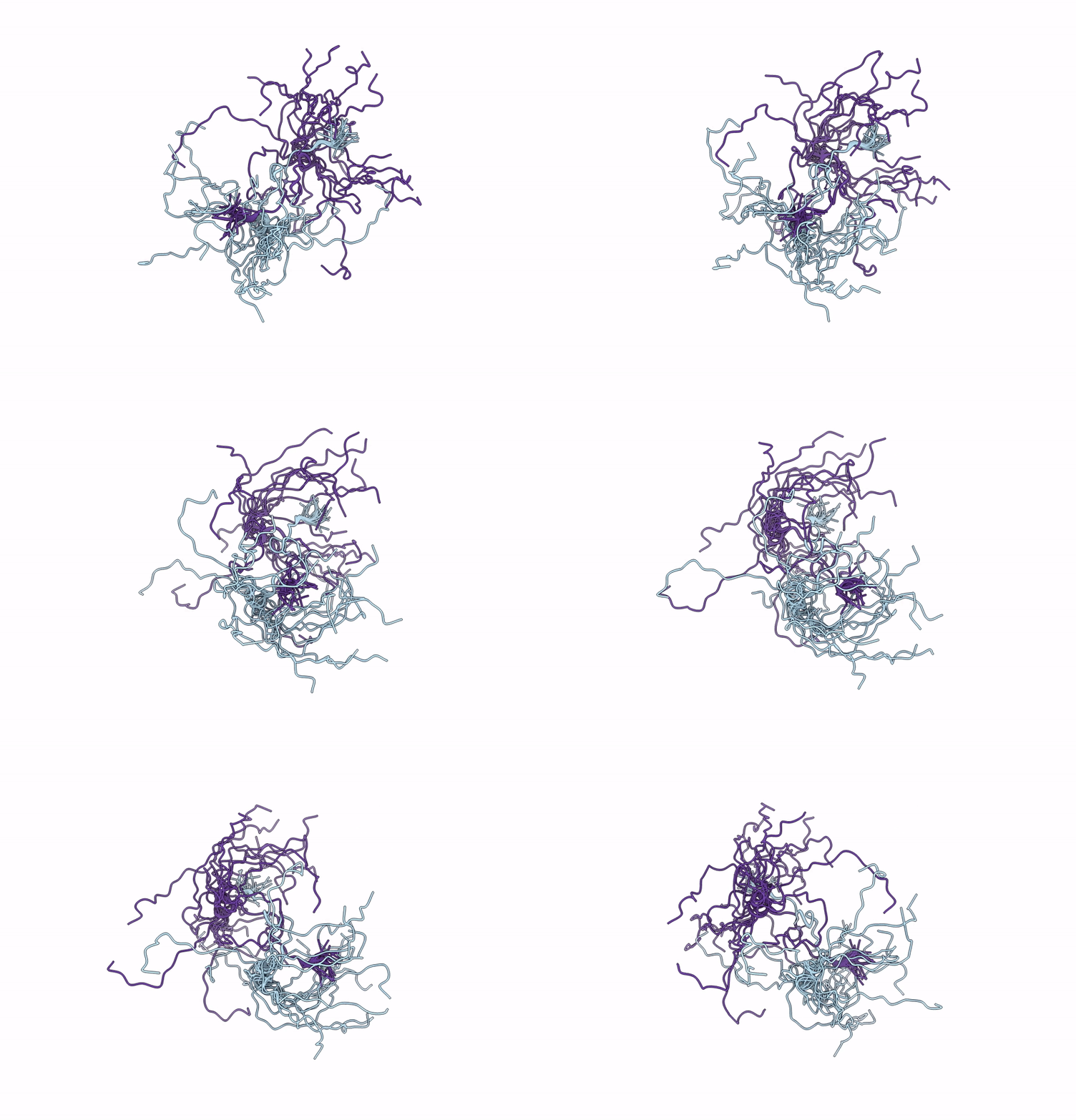
9GI8 image
Deposition Date 2024-08-17
Release Date 2025-11-26
Last Version Date 2026-06-10
Entry Detail
PDB ID:
9GI8
Title:
Solution structure of homodimeric TMEM106B
Biological Source:
Source Organism(s):
Homo sapiens (Taxon ID: 9606)
Method Details:
Experimental Method:
Conformers Calculated:
100
Conformers Submitted:
20
Selection Criteria:
structures with the least restraint violations

Macromolecular Entities
Structures with similar UniProt ID
Protein Blast
Polymer Type:polypeptide(L)
Molecule:Transmembrane protein 106B
Gene (Uniprot):TMEM106B
Chain IDs:A, B
Chain Length:39
Number of Molecules:2
Biological Source:Homo sapiens
Ligand Molecules
Primary Citation
TRIM2 E3 ligase substrate discovery reveals zinc-mediated regulation of TMEM106B in the endolysosomal pathway.
Embo Rep. 27 729 747 (2026)
PMID: 41484378 DOI: 10.1038/s44319-025-00667-3

Abstact

TRIM2 is a mammalian E3 ligase with particularly high expression in Purkinje neurons, where it contributes to neuronal development and homeostasis. The understanding of ubiquitin E3 ligase function hinges on thoroughly identifying their cellular targets, but the transient nature of signaling complexes leading to ubiquitination poses a significant challenge for detailed mechanistic studies. Here, we tailored a recently developed ubiquitin-specific proximity labeling tool to identify substrates of TRIM2 in cells. We show that TRIM2 targets proteins involved in the endolysosomal pathway. Specifically, we demonstrate using biochemical and structural studies, that TRIM2 ubiquitinates TMEM106B at lysine residues located in the cytosolic N-terminal region. Substrate recognition involves a direct interaction between TRIM2 and a newly identified zinc-coordination motif in TMEM106B that mediates homodimerization, is required for specific protein-protein interactions, and lysosomal size regulation. We found that in addition to catalysis, the tripartite motif is involved in substrate recruitment. Our study thus contributes a catalog of TRIM2 effectors and identifies a previously unrecognized regulatory region of TMEM106B crucial to its function.

Legend

Protein

Chemical

Disease

Primary Citation of related structures
Feedback Form
Name
Email
Institute
Feedback