

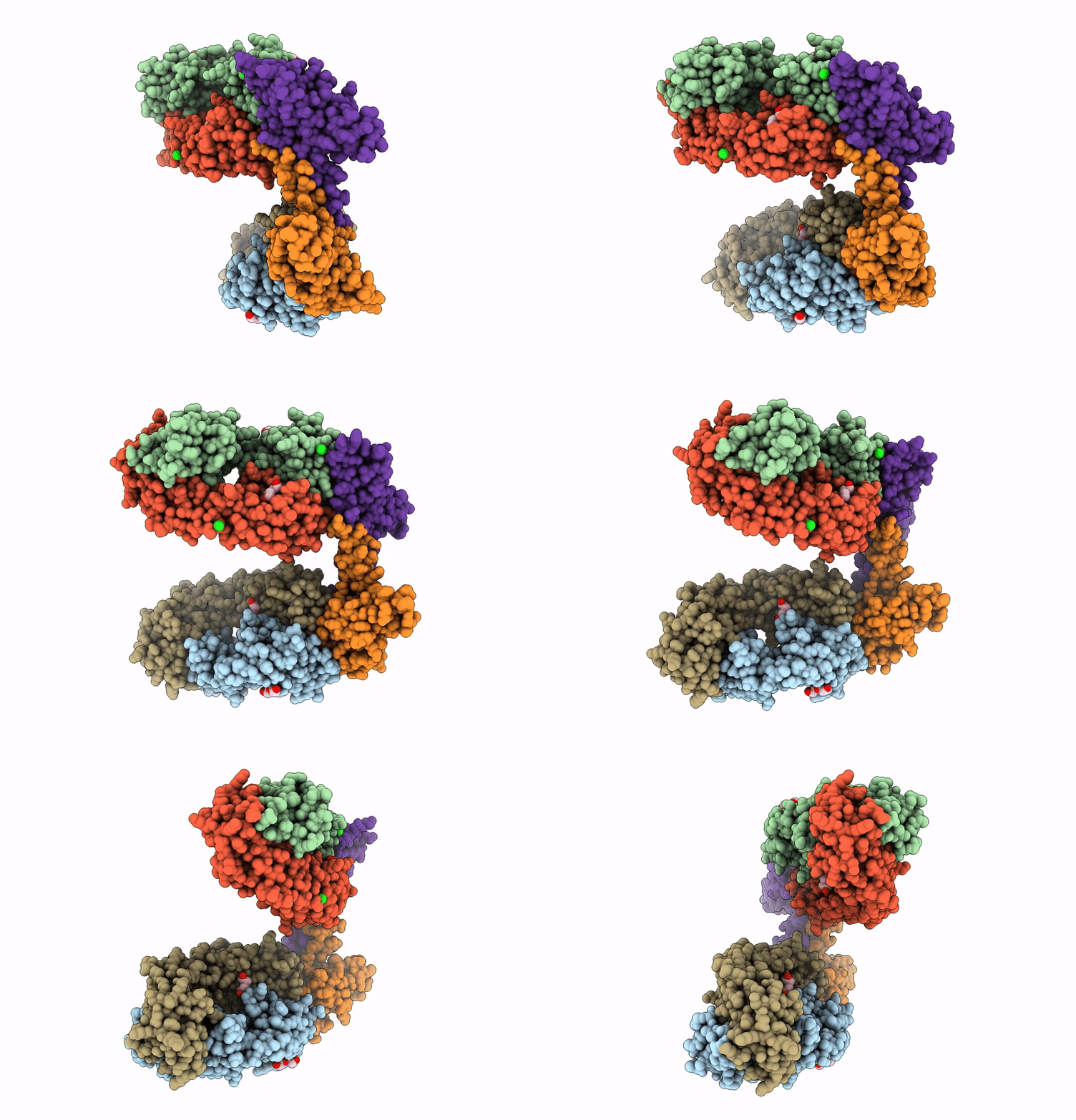
9FM0 image
Deposition Date 2024-06-05
Release Date 2025-06-18
Last Version Date 2026-03-04
Entry Detail
PDB ID:
9FM0
Keywords:
Title:
Human antibody (Fab) and P. aeruginosa (T3SS) protein PcrV-fragment complex
Biological Source:
Source Organism(s):
Method Details:
Experimental Method:
Resolution:
2.56 Å
R-Value Free:
0.23
R-Value Work:
0.20
Space Group:
P 1 21 1
Macromolecular Entities
Protein Blast
Polymer Type:polypeptide(L)
Molecule:Human Fab Heavy Chain (FabHC)
Chain IDs:A, B
Chain Length:225
Number of Molecules:2
Biological Source:Homo sapiens
Protein Blast
Polymer Type:polypeptide(L)
Molecule:Human Fab Light Chain (FabLC)
Chain IDs:C, D
Chain Length:214
Number of Molecules:2
Biological Source:Homo sapiens
Structures with similar UniProt ID
Protein Blast
Polymer Type:polypeptide(L)
Molecule:Type III secretion protein Pc
Gene (Uniprot):pcrV
Chain IDs:E, F
Chain Length:131
Number of Molecules:2
Biological Source:Pseudomonas aeruginosa
Primary Citation
Neutralizing human monoclonal antibodies that target the PcrV component of the type III secretion system of Pseudomonas aeruginosa act through distinct mechanisms.
Elife 14 ? ? (2026)
PMID: 41700594 DOI: 10.7554/eLife.105195

Abstact

Pseudomonas aeruginosa is a major human opportunistic pathogen associated with a high incidence of multi-drug resistance. The antibody-based blockade of P. aeruginosa virulence factors represents a promising alternative strategy to mitigate its infectivity. In this study, we employed single B cell sorting from cystic fibrosis patients to isolate human monoclonal antibodies (mAbs) targeting proteins from the P. aeruginosa Type 3 Secretion System (T3SS) and characterized a panel of mAbs directed at PscF and PcrV. Among those, two mAbs, P5B3 and P3D6, that bind to the injectisome tip protein PcrV, exhibited T3SS blocking activity. We solved the crystal structure of the P3D6 Fab-PcrV complex, which revealed that the Ab binds to the C-terminal region of PcrV. In addition, we compared the T3SS-blocking activity of three PcrV-targeting mAbs, including two from previous independent studies, using two distinct assays to evaluate pore formation and toxin injection. We conducted a mechanistic and structural analysis of their modes of action through modeling based on the known structure of a functional homolog, SipD from Salmonella typhimurium. The analysis suggests that anti-PcrV mAbs may act through different mechanisms, ranging from preventing PcrV oligomerization to disrupting PcrV's scaffolding function, thereby inhibiting the assembly and function of the translocon pore. Our findings provide additional evidence that T3SS-targeting Abs, some capable of inhibiting virulence, are elicited in P. aeruginosa-infected patients. The results offer deeper insights into PcrV recognition by mAbs and their associated mechanisms of action, helping to identify which Abs are more likely to be therapeutically useful based on their mode of action and potency. This paves the way for the development of effective alternatives to traditional antibiotics in the fight against this resilient pathogen.

Legend

Protein

Chemical

Disease

Primary Citation of related structures
Feedback Form
Name
Email
Institute
Feedback