

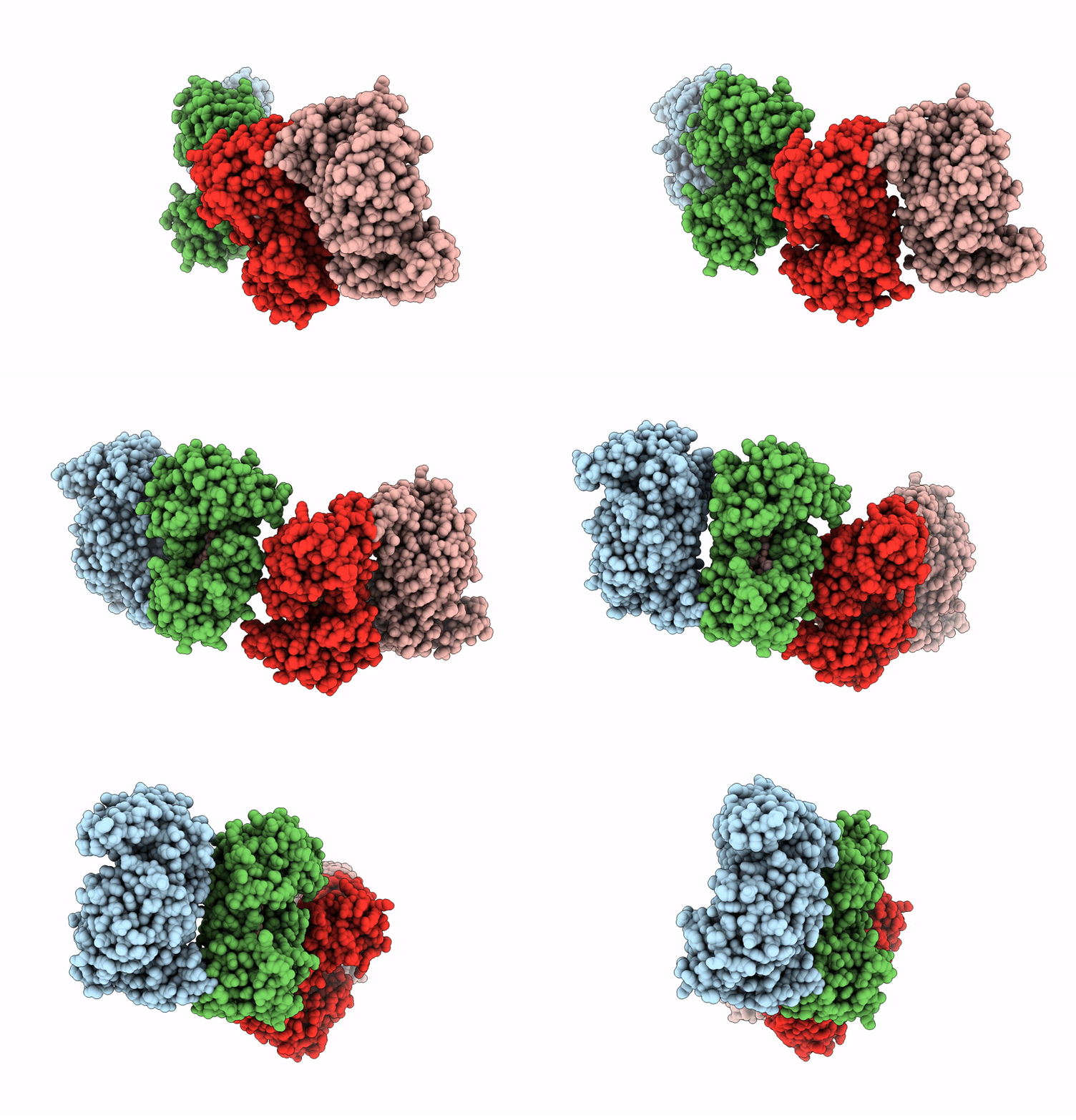
9F9R image
Deposition Date 2024-05-08
Release Date 2025-06-18
Last Version Date 2026-05-27
Entry Detail
PDB ID:
9F9R
Title:
AimR 13952 with non cognate peptide
Biological Source:
Source Organism(s):
Method Details:
Experimental Method:
Resolution:
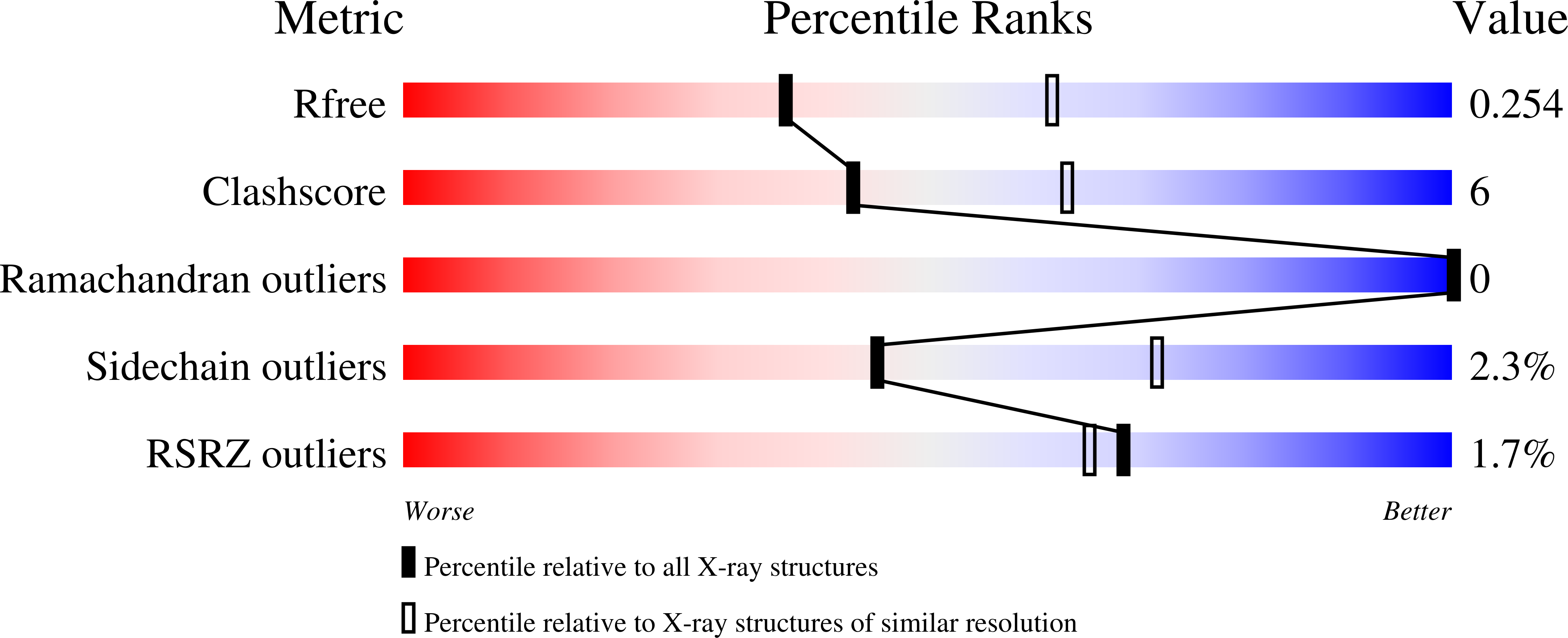
2.50 Å
R-Value Free:
0.25
R-Value Work:
0.20
R-Value Observed:
0.20
Space Group:
P 1
Macromolecular Entities
Protein Blast
Polymer Type:polypeptide(L)
Molecule:AimR 13952
Chain IDs:A, C, E, G
Chain Length:386
Number of Molecules:4
Biological Source:Bacillus amyloliquefaciens
Protein Blast
Polymer Type:polypeptide(L)
Molecule:AimP Goe11
Chain IDs:B, D, F, H
Chain Length:6
Number of Molecules:4
Biological Source:Bacillus subtilis
Primary Citation
Phages communicate across species to shape microbial ecosystems.
Cell 189 3025 3038.e12 (2026)
PMID: 41923642 DOI: 10.1016/j.cell.2026.03.004

Abstact

Arbitrium is a communication system that helps bacteriophages to decide between lysis and lysogeny through secreted peptides. In this system, the arbitrium communication peptide (AimP) binds its cognate arbitrium receptor (AimR) to repress aimX (a negative regulator of lysogeny) expression, promoting lysogeny. It has been assumed that each AimR responds exclusively to its own AimP. Here, we challenge this view by demonstrating cross-communication between arbitrium systems. Using prototypical arbitrium phages, we show that AimP peptides can bind and repress non-cognate AimR receptors, promoting lysogeny and reducing prophage induction. Structural and biochemical analyses reveal conserved receptor features that permit cross-recognition of non-cognate peptides while preserving recognition of cognate partners. In mixed lysogenic cultures, these interactions alter induction outcomes, underscoring their ecological significance. Extending to infection contexts, we demonstrate that crosstalk favors lysogeny of incoming phages in cells harboring compatible systems. These findings establish that phages engage in cross-species communication via peptide signaling, reshaping microbial communities in unexpected ways.

Legend

Protein

Chemical

Disease

Primary Citation of related structures
Feedback Form
Name
Email
Institute
Feedback