

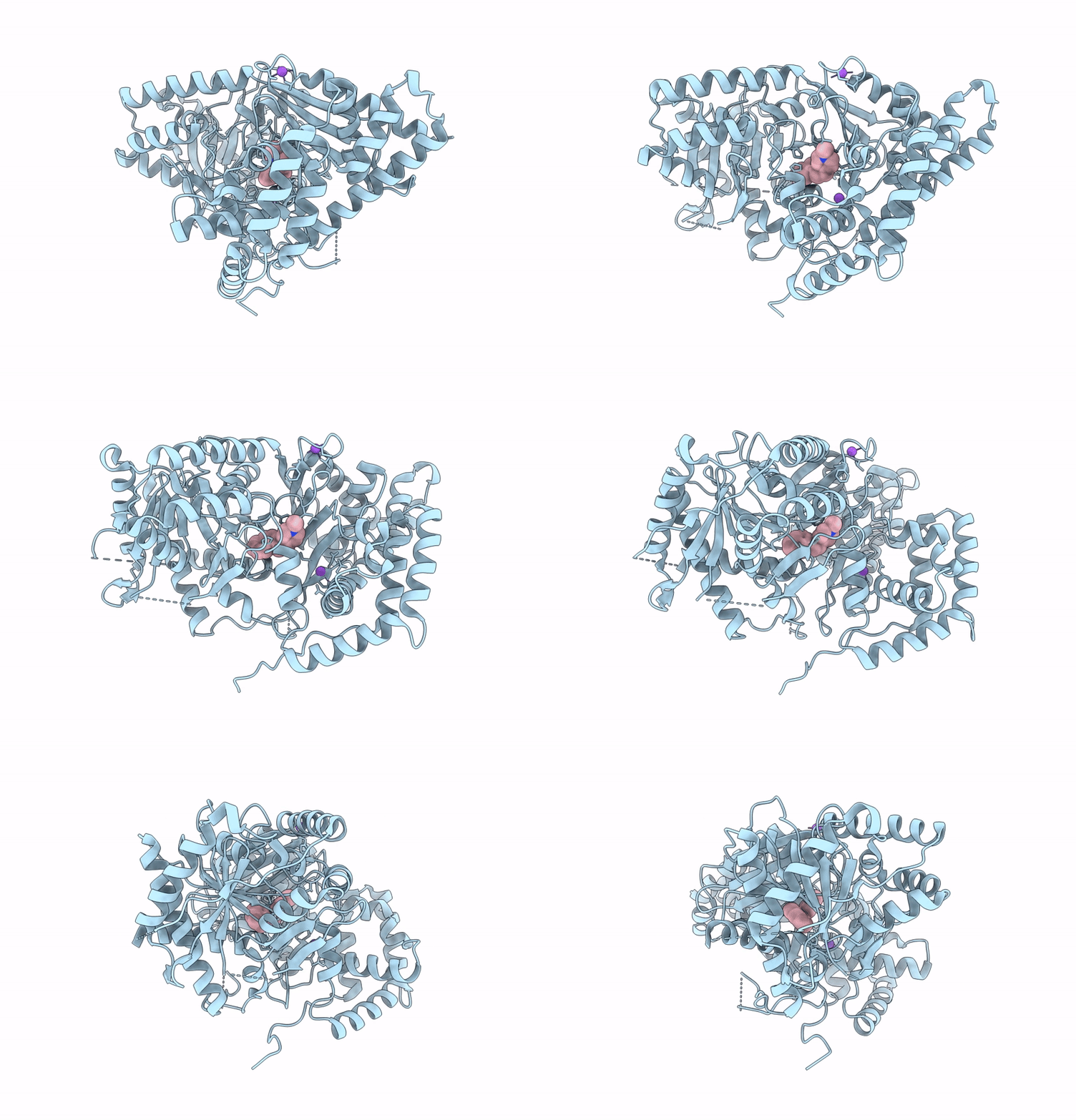
9F85 image
Deposition Date 2024-05-06
Release Date 2025-05-21
Last Version Date 2026-06-10
Entry Detail
PDB ID:
9F85
Keywords:
Title:
Structure of Choline O-acetyltransferase in complex with 1-Methyl-4-[2-(1-naphthyl)ethyl]pyridinium at 1.6 Angstrom resolution
Biological Source:
Source Organism(s):
Homo sapiens (Taxon ID: 9606)
Expression System(s):
Method Details:
Experimental Method:
Resolution:
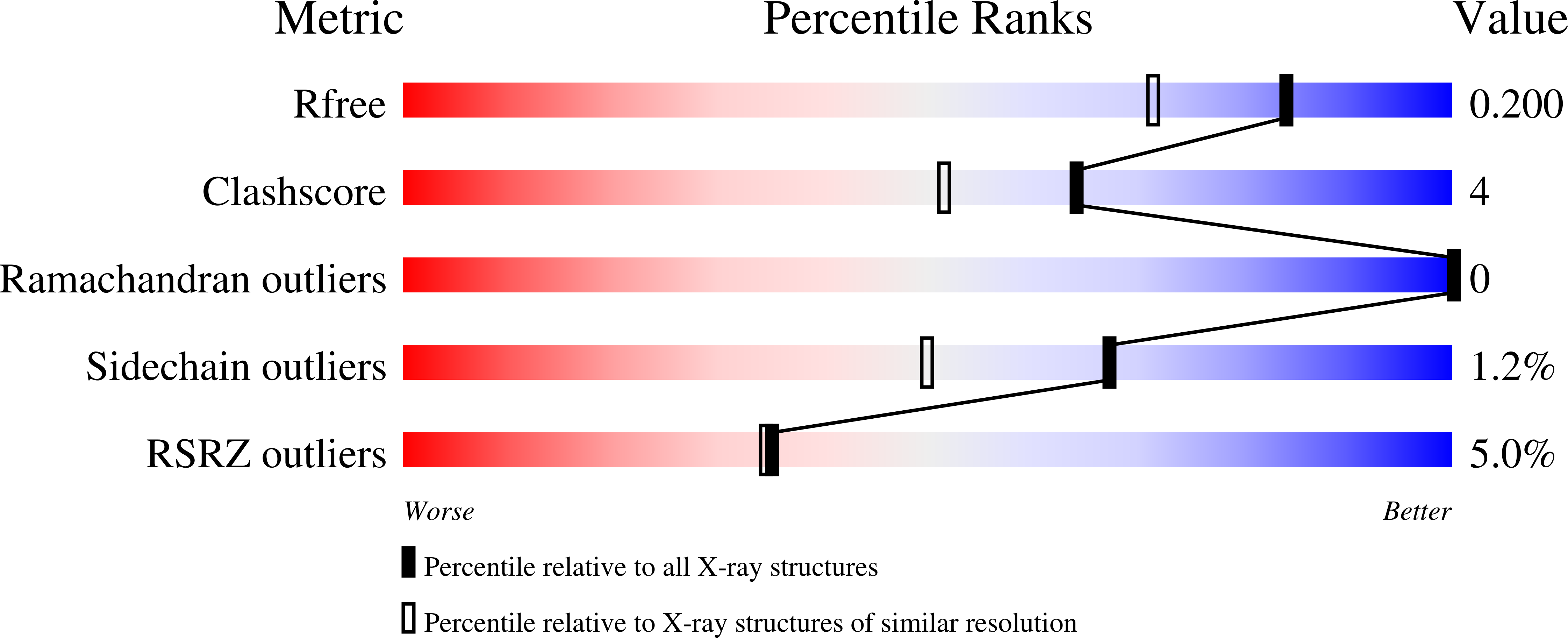
1.60 Å
R-Value Free:
0.20
R-Value Work:
0.17
R-Value Observed:
0.17
Space Group:
P 21 21 21
Macromolecular Entities
Structures with similar UniProt ID
Protein Blast
Polymer Type:polypeptide(L)
Molecule:Choline O-acetyltransferase
Gene (Uniprot):CHAT
Mutagens:E225A,D226A,E227A,K518A,E519A,K582A,E583A
Chain IDs:A
Chain Length:612
Number of Molecules:1
Biological Source:Homo sapiens
Primary Citation
Analysis of ligand recognition by choline O-acetyltransferase reveals thiol-reactive assay interference and weak ligand affinity in solution.
J.Biol.Chem. 302 113115 113115 (2026)
PMID: 42103233 DOI: 10.1016/j.jbc.2026.113115

Abstact

Choline O-acetyltransferase (ChAT) catalyzes the biosynthesis of acetylcholine and is a cysteine-rich enzyme that has been investigated using a range of biochemical, biophysical and structural approaches. Existing ChAT ligands rely on electrophilic or unstable scaffolds that limit their suitability for biological systems. Prior work established that arylvinylpyridiniums (AVPs) are substrate mimics that undergo ChAT-catalyzed hydrothiolation with CoA to form covalent AVP-CoA adducts. Here, we applied a structure-guided strategy to design nonreactive ligands intended to mimic key features of the AVP-CoA binding pose while avoiding covalent reactivity. Nineteen analogs were synthesized and evaluated across complementary biochemical, structural, and biophysical assays. X-ray crystallography confirmed that the new ligands bind within the ChAT tunnel similar to AVP-CoAs. Importantly, the high cysteine content of ChAT, especially within a reactive CXCXXC motif, rendered the enzyme susceptible to modification by the widely used 7-diethylamino-3-(4'-maleimidylphenyl)-4-methylcoumarin (CPM) reagent used for measuring ChAT activity, leading to confounding results in thiol-dependent activity assays. Enzyme-free counter-screens demonstrated that all apparent inhibitory activity arose from interference with assay readout rather than true enzymatic inhibition. Surface plasmon resonance measurements established that none of the designed ligands display detectable reversible affinity for ChAT, despite their crystallographically validated poses, and no selectivity over the related enzyme carnitine O-acetyltransferase (CrAT) was observed. These findings demonstrate that confirmed binding with X-ray crystallography is insufficient to establish functional interaction with ChAT and highlight the susceptibility of this enzyme to thiol-reactive assay artefacts. More broadly, this work underscores the necessity of integrating orthogonal biophysical validation when studying ligand binding to cysteine-rich enzymes.

Legend

Protein

Chemical

Disease

Primary Citation of related structures
Feedback Form
Name
Email
Institute
Feedback