

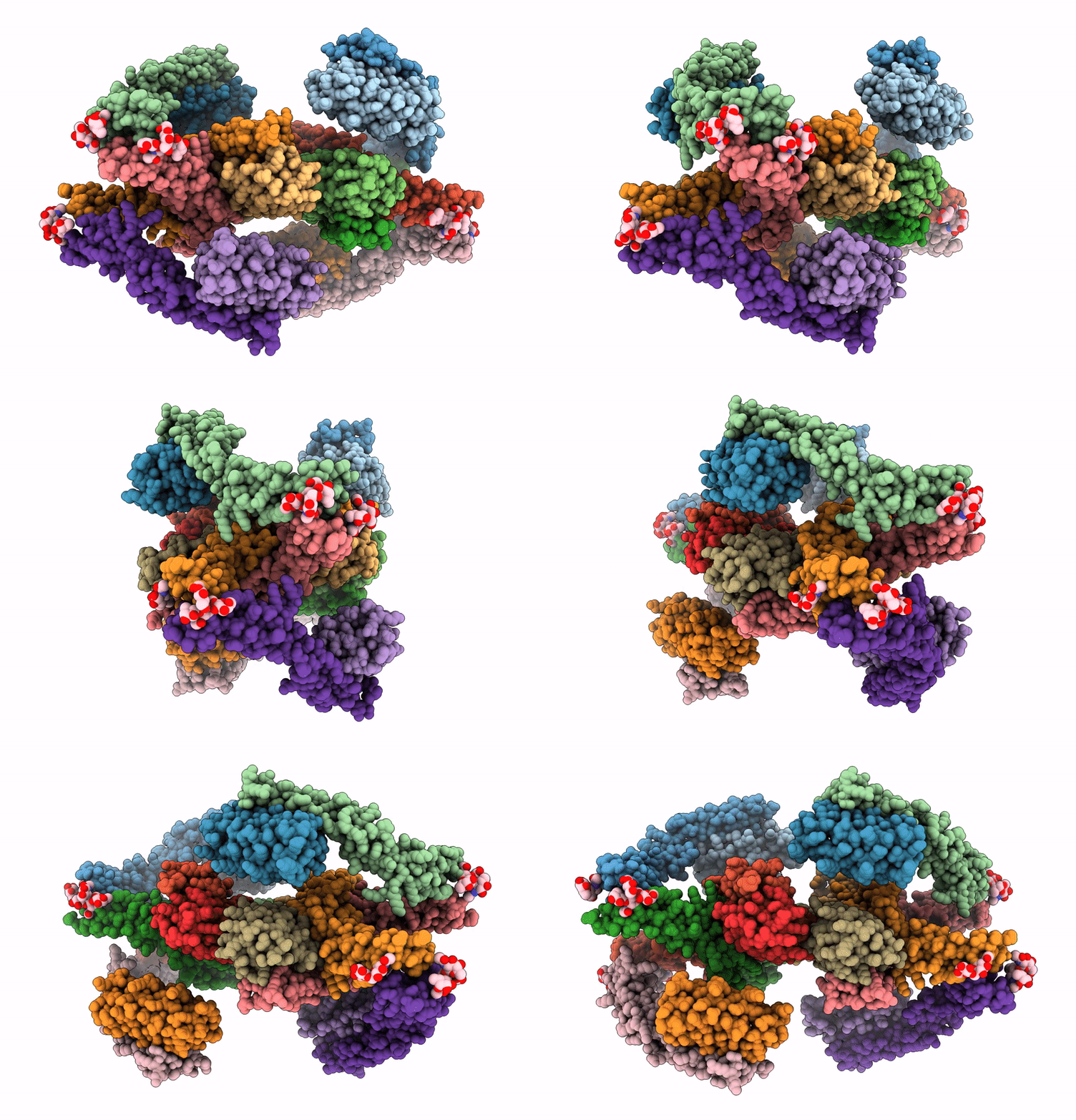
9F7Z image
Deposition Date 2024-05-06
Release Date 2025-05-21
Last Version Date 2026-06-03
Entry Detail
PDB ID:
9F7Z
Keywords:
Title:
Crystal structure of human 4-1BB/TNFRSF9 in complex with the anti-4-1BB DARPin protein
Biological Source:
Source Organism(s):
Method Details:
Experimental Method:
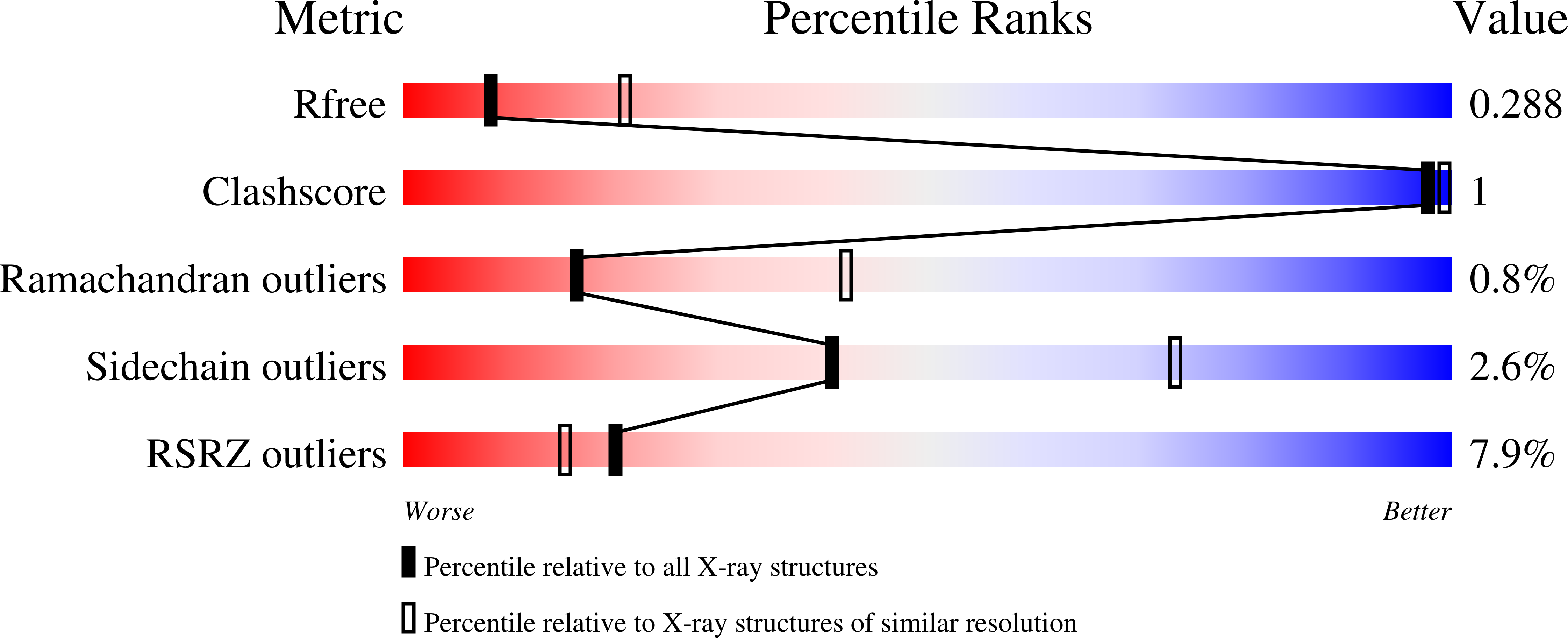
Resolution:
2.81 Å
R-Value Free:
0.29
R-Value Work:
0.24
R-Value Observed:
0.24
Space Group:
C 1 2 1
Macromolecular Entities
Protein Blast
Polymer Type:polypeptide(L)
Molecule:anti-4-1BB DARPin
Chain IDs:A, C, E, G, I, K, M, O
Chain Length:126
Number of Molecules:8
Biological Source:synthetic construct
Structures with similar UniProt ID
Protein Blast
Polymer Type:polypeptide(L)
Molecule:Tumor necrosis factor recepto
Gene (Uniprot):TNFRSF9
Chain IDs:B, D, F, H, J, L, N, P
Chain Length:138
Number of Molecules:8
Biological Source:Homo sapiens
Ligand Molecules
Primary Citation
Improvement of daratumumab- or elotuzumab-mediated NK cell activity by the bi-specific 4-1BB agonist, DARPin alpha-FAPx4-1BB: A preclinical study in multiple myeloma.
Biomed Pharmacother 176 116877 116877 (2024)
PMID: 38850654 DOI: 10.1016/j.biopha.2024.116877

Abstact

Multiple myeloma (MM) progression is closely dependent on cells in the bone marrow (BM) microenvironment, including fibroblasts (FBs) and immune cells. In their BM niche, MM cells adhere to FBs sustaining immune evasion, drug resistance and the undetectable endurance of tumor cells known as minimal residual disease (MRD). Here, we describe the novel bi-specific designed ankyrin repeat protein (DARPin) alpha-FAPx4-1BB (MP0310) with FAP-dependent 4-1BB agonistic activity. The alpha-FAPx4-1BB DARPin simultaneously binds to FAP and 4-1BB overexpressed by activated FBs and immune cells, respectively. Although flow cytometry analysis showed that T and NK cells from MM patients were not activated and did not express 4-1BB, stimulation with daratumumab or elotuzumab, monoclonal antibodies (mAbs) currently used for the treatment of MM, significantly upregulated 4-1BB both in vitro and in MM patients following mAb-based therapy. The mAb-induced 4-1BB overexpression allowed the engagement of alpha-FAPx4-1BB that acted as a bridge between FAP(+)FBs and 4-1BB(+)NK cells. Therefore, alpha-FAPx4-1BB enhanced both the adhesion of daratumumab-treated NK cells on FBs as well as their activation by improving release of CD107a and perforin, hence MM cell killing via antibody-mediated cell cytotoxicity (ADCC). Interestingly, alpha-FAPx4-1BB significantly potentiated daratumumab-mediated ADCC in the presence of FBs, suggesting that it may overcome the BM FBs' immunosuppressive effect. Overall, we speculate that treatment with alpha-FAPx4-1BB may represent a valuable strategy to improve mAb-induced NK cell activity fostering MRD negativity in MM patients through the eradication of latent MRD cells.

Legend

Protein

Chemical

Disease

Primary Citation of related structures
Feedback Form
Name
Email
Institute
Feedback