

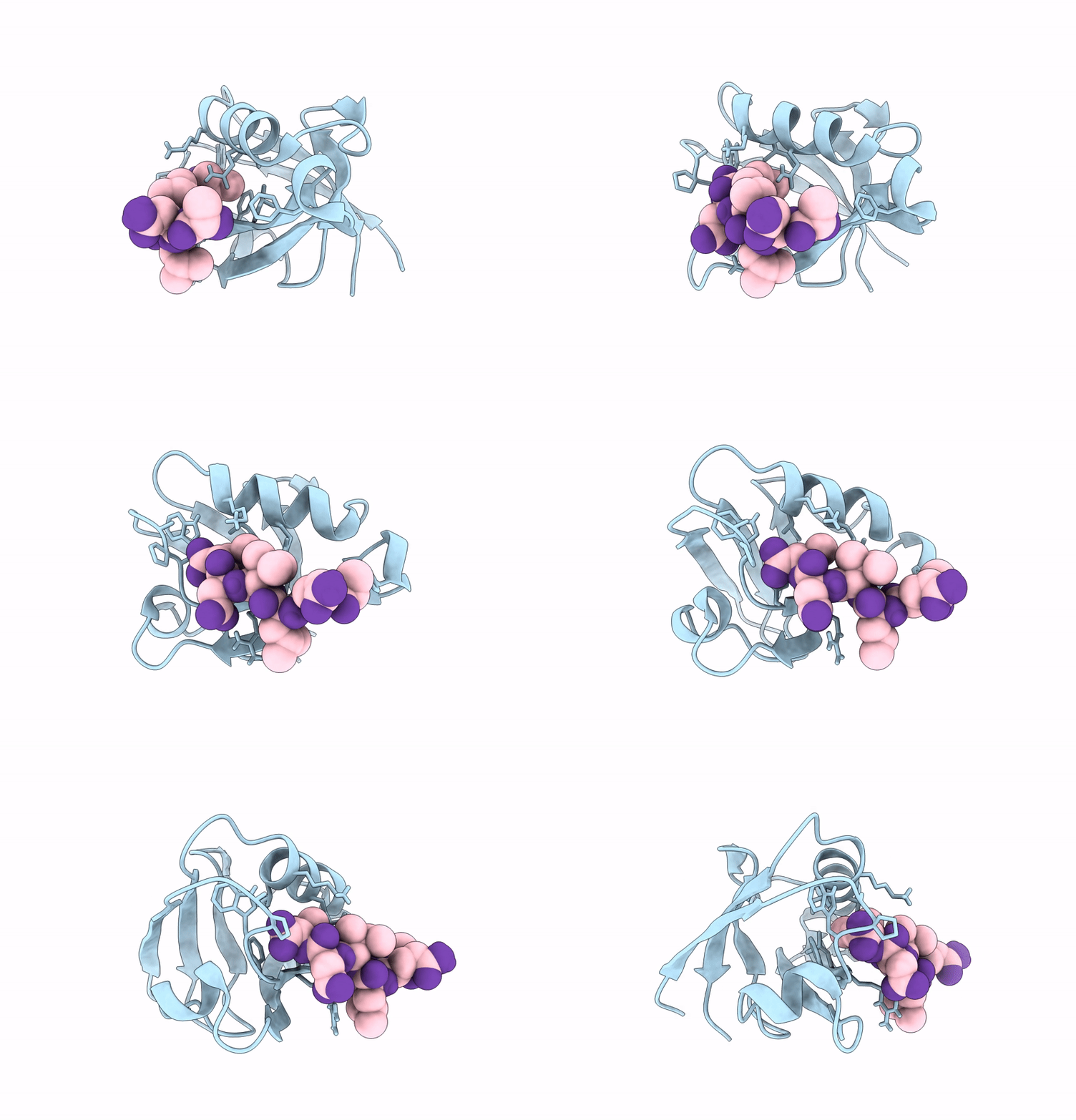
9F6S image
Deposition Date 2024-05-02
Release Date 2025-05-14
Last Version Date 2026-05-27
Entry Detail
PDB ID:
9F6S
Title:
PDZ domain in complex with the peptide from AP2-associated protein kinase 1
Biological Source:
Source Organism(s):
Homo sapiens (Taxon ID: 9606)
Expression System(s):
Method Details:
Experimental Method:
Resolution:
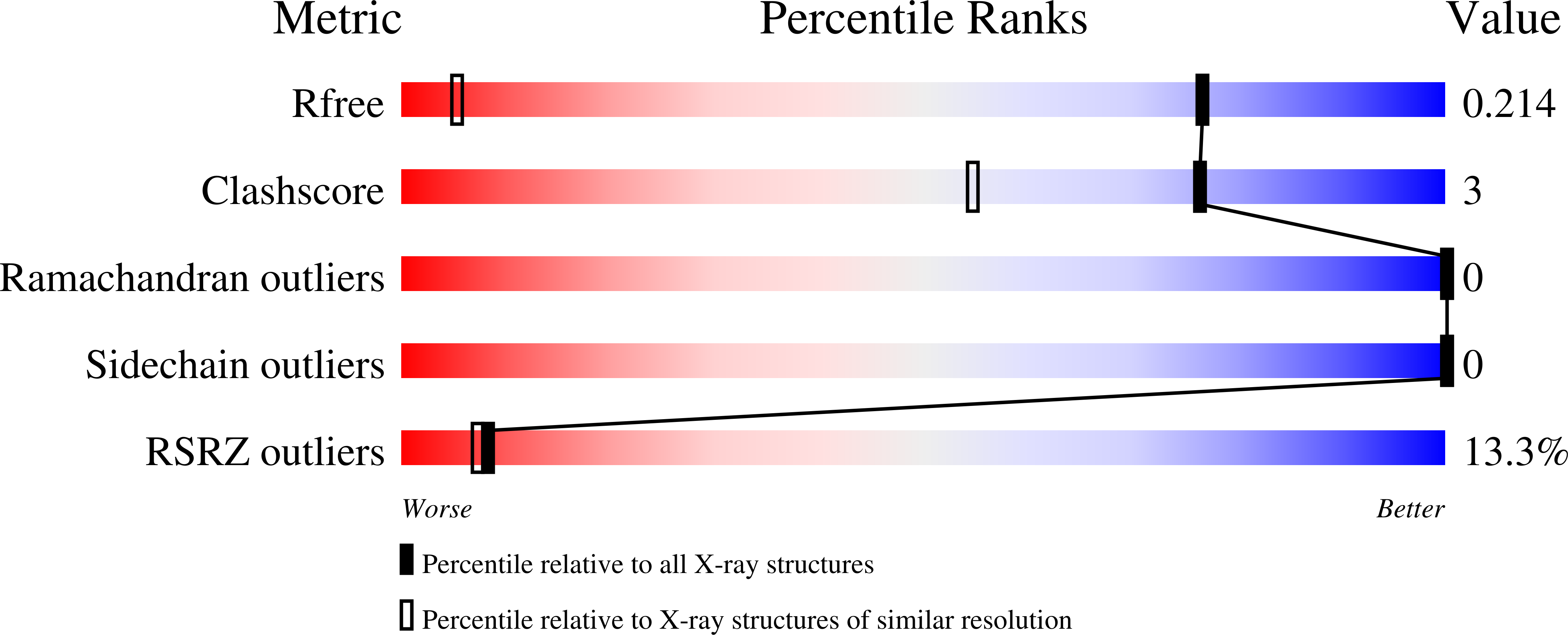
1.00 Å
R-Value Free:
0.21
R-Value Work:
0.20
R-Value Observed:
0.20
Space Group:
P 21 21 21
Macromolecular Entities
Structures with similar UniProt ID
Protein Blast
Polymer Type:polypeptide(L)
Molecule:PDZ and LIM domain protein 5
Gene (Uniprot):PDLIM5
Chain IDs:A
Chain Length:90
Number of Molecules:1
Biological Source:Homo sapiens
Structures with similar UniProt ID
Protein Blast
Polymer Type:polypeptide(L)
Molecule:AP2-associated protein kinase
Gene (Uniprot):AAK1
Chain IDs:B
Chain Length:6
Number of Molecules:1
Biological Source:Homo sapiens
Primary Citation
AAK1-mediated phosphorylation of PDLIM5 and Talin1 promotes focal adhesion disassembly to accelerate cell migration.
Nat Commun ? ? ? (2026)
PMID: 42082516 DOI: 10.1038/s41467-026-72501-w

Abstact

AAK1 and BMP2K are serine/threonine kinases traditionally known for phosphorylating AP2 during clathrin-mediated endocytosis (CME), but their broader roles remained incompletely defined. Here, using motif-guided in silico, biochemical, and phosphoproteomic screens, we identify PDLIM5 and Talin1 as direct AAK1/BMP2K substrates. Despite high kinase-domain similarity, only AAK1 promotes cell migration and potentiates focal adhesion (FA) turnover. Live-cell imaging shows that AAK1 recruitment to FAs peaks as disassembly begins. The conserved AAK1 C-terminal PDZ-binding motif mediates direct, low-affinity binding to PDLIM5, providing a plausible mechanism for localized substrate access. Dynamic analyses of phospho-mimetic and phospho-null mutants support a model in which AAK1-dependent phosphorylation promotes timely release of PDLIM5 and Talin1 during FA disassembly. These findings reveal a kinase-driven contribution to FA turnover distinct from protease- and phosphatase-based mechanisms and suggest that functional divergence between AAK1 and BMP2K may provide a strategy to modulate cell migration with reduced impact on CME.

Legend

Protein

Chemical

Disease

Primary Citation of related structures
Feedback Form
Name
Email
Institute
Feedback