

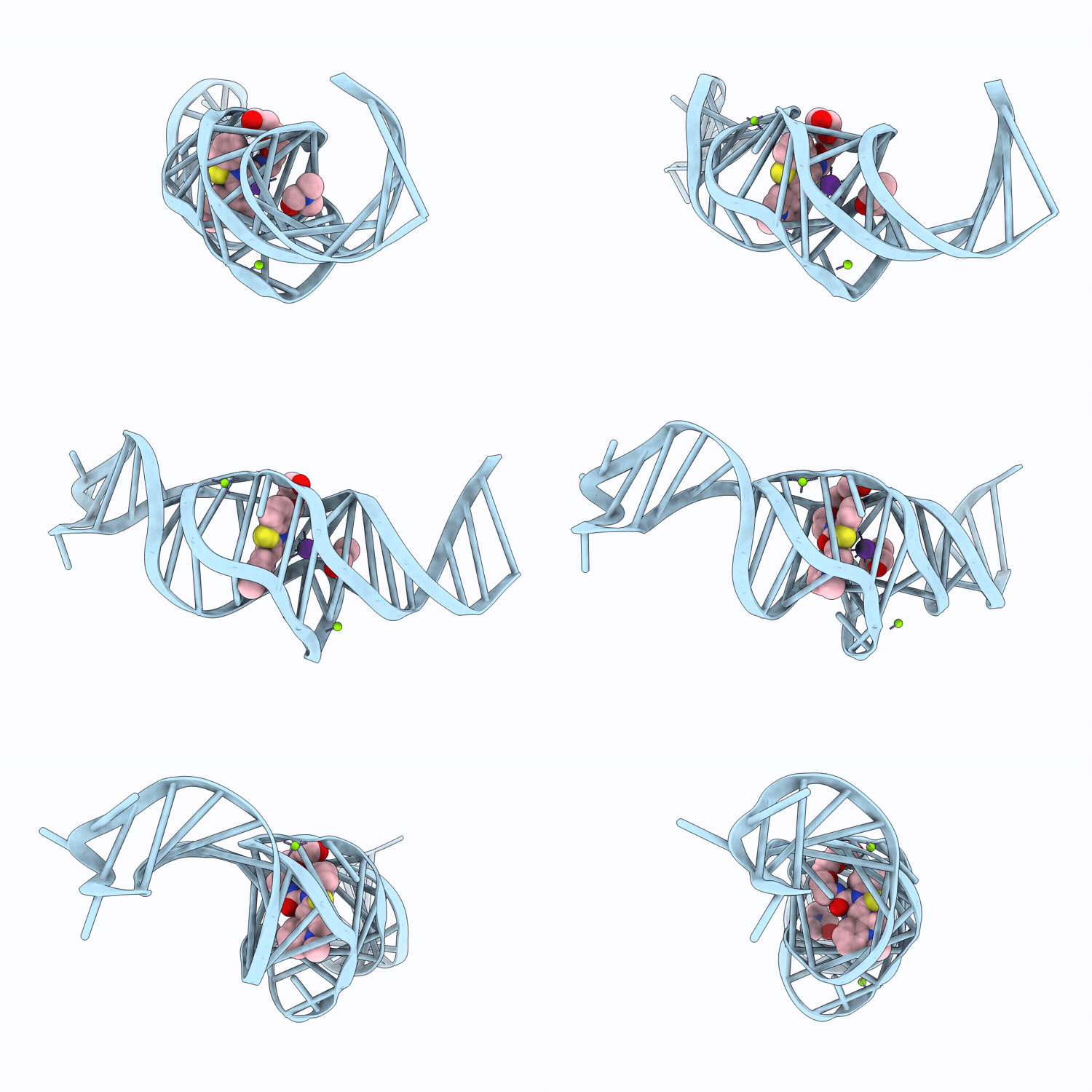
9EHE image
Deposition Date 2024-11-22
Release Date 2026-05-27
Last Version Date 2026-05-27
Entry Detail
PDB ID:
9EHE
Keywords:
Title:
Structure of short Lettuce aptamer (A5T variant) bound with TO1-biotin.
Biological Source:
Source Organism(s):
Method Details:
Experimental Method:
Resolution:
1.63 Å
R-Value Free:
0.27
R-Value Work:
0.22
R-Value Observed:
0.22
Space Group:
P 21 21 21

Macromolecular Entities
Polymer Type:polydeoxyribonucleotide
Molecule:DNA 53-mer
Chain IDs:A (auth: B)
Chain Length:53
Number of Molecules:1
Biological Source:synthetic construct
Primary Citation
Fluorogenic Aptamer Optimization on a Massively Parallel Sequencing Platform.
ACS Sens ? ? ? (2026)
PMID: 42112875 DOI: 10.1021/acssensors.5c04046

Abstact

Fluorogenic aptamers (FAPs) are increasingly important tools for cellular sensing and pathogen diagnostics. However, enhancing their performance remains a significant challenge. Here, we introduce a massively parallel approach to optimize the DNA-based FAP Lettuce using repurposed next-generation sequencing flow cells. By replacing Lettuce's cognate fluorogen, DFHBI-1T, with TO1-biotin, we achieve a 4-fold ensemble fluorescence enhancement, and a broader fluorescence lifetime modulation range from 4.7 to 6.0 ns. Through screening 8821 Lettuce variants complexed with TO1-biotin on a MiSeq chip, we identify the C14T mutant which exhibits an improved dissociation constant, increased quantum yield, extended fluorescence lifetime, and enhanced emission intensity. Co-crystal structures of the aptamer/fluorogen complexes reveal that pi-pi stacking interactions are critical for the stable coordination of TO1-biotin within Lettuce. When tested in a cellular environment, both the screening-identified C14T mutant and a structure-guided rationally designed variant, C14dU, exhibit 15% and 18% stronger fluorescence intensities, respectively, compared with canonical Lettuce. Our massive screening and molecular dynamics simulation pipeline enable efficient FAP optimization without prior structural knowledge, yielding not only improved probes for fluorescence sensing but also deeper insights into aptamer-fluorogen interactions.

Legend

Protein

Chemical

Disease

Primary Citation of related structures
Feedback Form
Name
Email
Institute
Feedback