

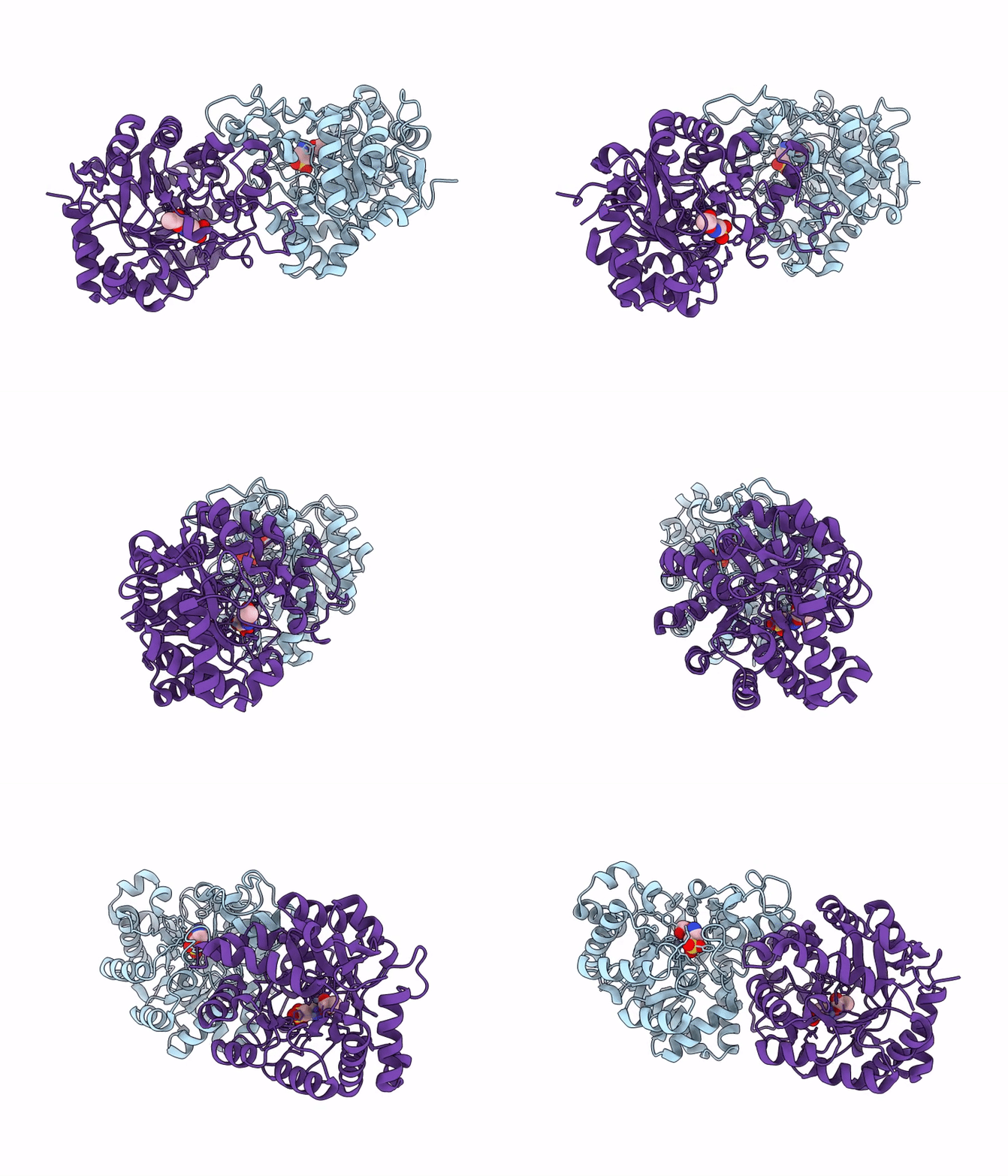
9EFB image
Deposition Date 2024-11-20
Release Date 2026-02-25
Last Version Date 2026-02-25
Entry Detail
PDB ID:
9EFB
Keywords:
Title:
Chemical inhibition of the N-acetyltaurine amidohydrolase PTER reduces food intake and obesity
Biological Source:
Source Organism(s):
Expression System(s):
Method Details:
Experimental Method:
Resolution:
2.40 Å
R-Value Free:
0.27
R-Value Work:
0.18
Space Group:
P 1 21 1

Macromolecular Entities
Structures with similar UniProt ID
Protein Blast
Polymer Type:polypeptide(L)
Molecule:Phosphotriesterase-related pr
Chain IDs:A, B
Chain Length:356
Number of Molecules:2
Biological Source:Amphimedon queenslandica
Primary Citation

Abstact

PTER (phosphotriesterase-related) is an amidohydrolase that mediates catabolism of the anorexigenic taurine metabolite N-acetyltaurine. However, the structural basis of PTER ligand binding and catalysis remain unknown, limiting our ability to harness this pathway therapeutically. Here we solve crystal structures of a eukaryotic PTER in apo and product-bound forms. These structures uncover an unexpected pocket homology between PTER and histone deacetylase (HDAC) enzymes. We exploit this similarity to engineer a first-in-class substrate-competitive PTER inhibitor called PTERi with nanomolar potency and >100-fold selectivity for PTER over HDACs in vitro. Administration of PTERi to diet-induced obese mice reduces feeding, enhances GLP1-RA (glucagon like peptide 1 receptor agonist)-induced weight loss, and prevents weight regain after GLP1-RA discontinuation. The structure of PTER connects histone and metabolite deacetylation into a parallel conceptual framework and enables proof-of-concept data for pharmacological inhibition of PTER in obesity.

Legend

Protein

Chemical

Disease

Primary Citation of related structures
Feedback Form
Name
Email
Institute
Feedback