

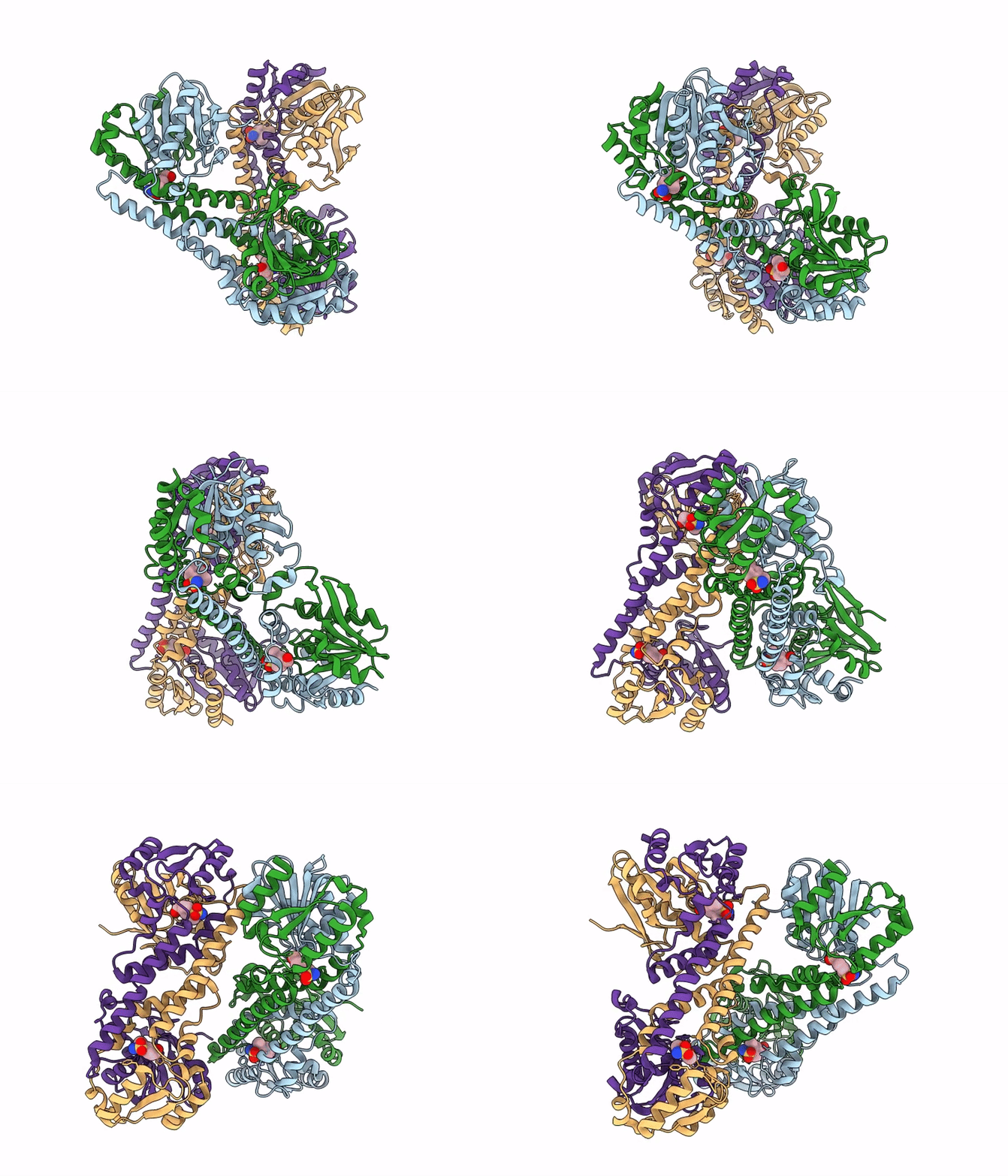
9EBF image
Deposition Date 2024-11-12
Release Date 2026-01-21
Last Version Date 2026-04-01
Entry Detail
PDB ID:
9EBF
Keywords:
Title:
FphE, Staphylococcus aureus fluorophosphonate-binding serine hydrolases E, borolane-based compound Q41 bound in crystal form 6
Biological Source:
Source Organism(s):
Expression System(s):
Method Details:
Experimental Method:
Resolution:
2.50 Å
R-Value Free:
0.22
R-Value Work:
0.18
R-Value Observed:
0.18
Space Group:
I 2 3

Macromolecular Entities
Structures with similar UniProt ID
Protein Blast
Polymer Type:polypeptide(L)
Molecule:Uncharacterized hydrolase SAU
Gene (Uniprot):SAUSA300_2518
Chain IDs:A, B, C, D
Chain Length:279
Number of Molecules:4
Biological Source:Staphylococcus aureus subsp. aureus USA300
Ligand Molecules
Primary Citation
Unique structural and ligand-binding properties of the Staphylococcus aureus serine hydrolase FphE.
Proc. Natl. Acad. Sci. U.S.A. 123 e2532683123 e2532683123 (2026)
PMID: 41875159 DOI: 10.1073/pnas.2532683123

Abstact

Staphylococcus aureus is a human pathogen capable of forming biofilms that complicate treatment and facilitate chronic infections. A family of S. aureus serine hydrolases are important regulators of virulence and biofilm formation. Among these, FphE is highly specific to S. aureus and therefore a viable target for both imaging and therapy. Here, we present bioinformatic and structural evidence that FphE may be involved in aromatic compound metabolism. In addition, 12 distinct crystal forms reveal that FphE exists as a highly unusual but stable and flexible, cross-subunit homodimer, unique to the large alpha/beta hydrolase superfamily. Substrate engagement favors retention of the dimeric state, which is a more catalytically active form of the enzyme, and small-angle X-ray scattering confirms that the dimeric architecture occurs in solution. High-resolution cocrystal structures of FphE covalently bound to two chemically distinct ligands reveal different modes of active site engagement, supporting an atypical structural plasticity of the dimer interface. Together, these findings establish FphE as a structurally unique alpha/beta hydrolase and provide a foundation for structure-guided development of S. aureus-specific inhibitors and imaging probes.

Legend

Protein

Chemical

Disease

Primary Citation of related structures
Feedback Form
Name
Email
Institute
Feedback