

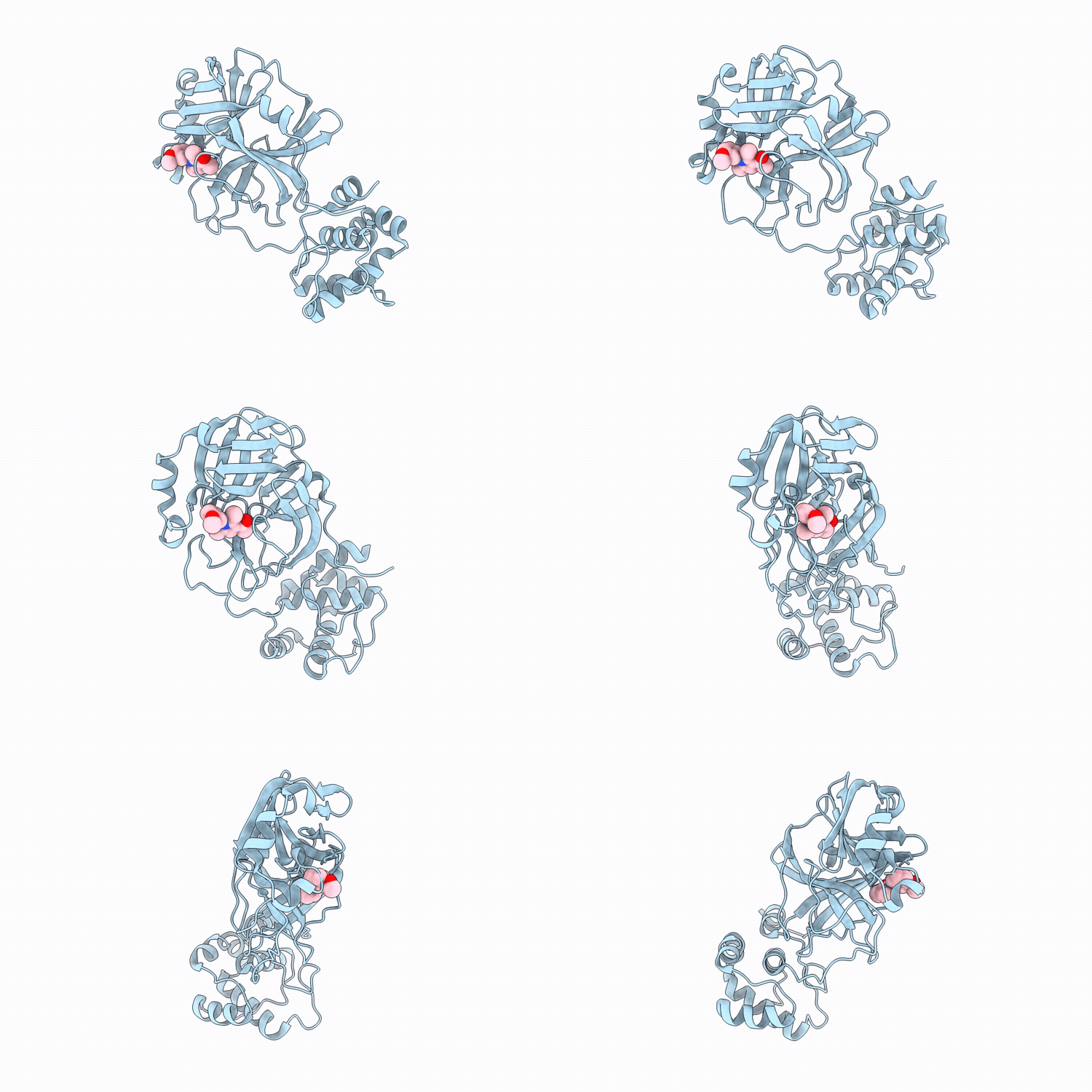
9E9P image
Deposition Date 2024-11-08
Release Date 2026-05-13
Last Version Date 2026-05-27
Entry Detail
PDB ID:
9E9P
Keywords:
Title:
Crystal structure of SARS-CoV-2 main protease (Mpro) in complex with covalent inhibitor A02
Biological Source:
Expression System(s):
Method Details:
Experimental Method:
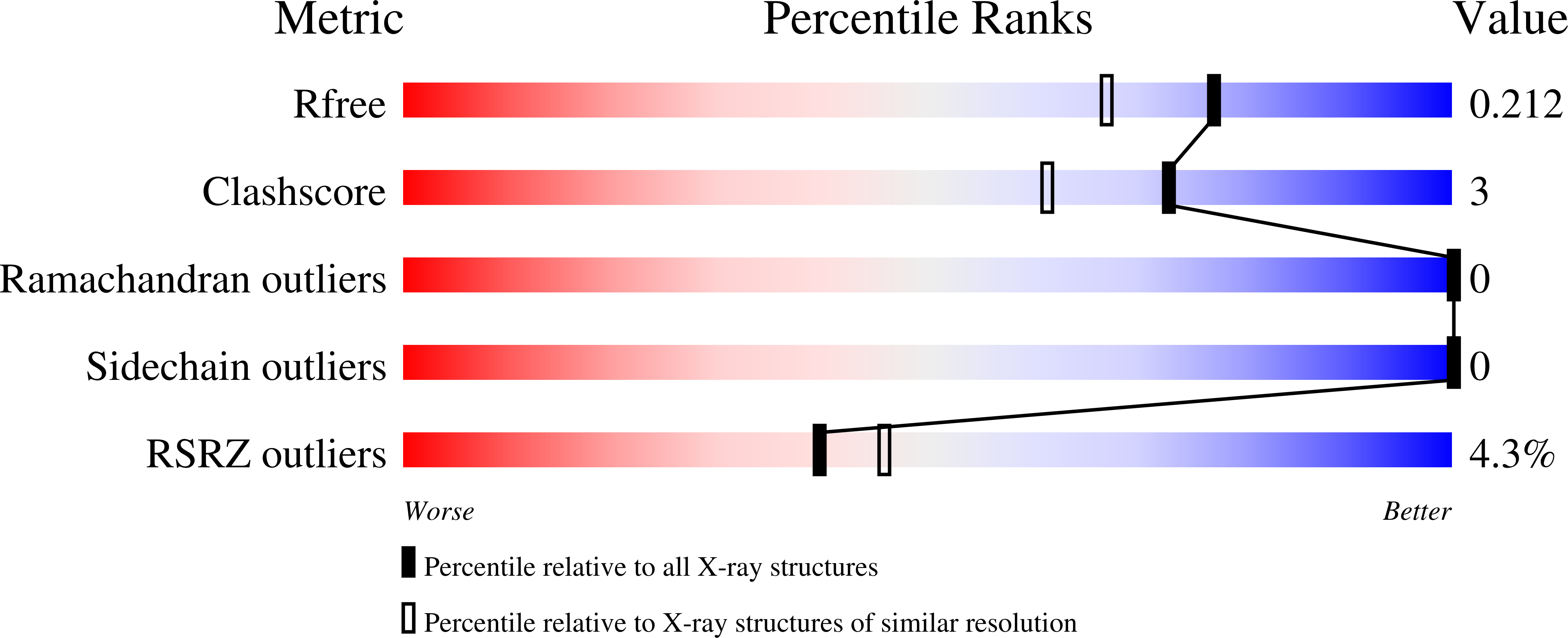
Resolution:
1.76 Å
R-Value Free:
0.21
R-Value Work:
0.17
Space Group:
C 1 2 1
Macromolecular Entities
Polymer Type:polypeptide(L)
Molecule:3C-like proteinase nsp5
Gene (Uniprot):rep
Chain IDs:A
Chain Length:308
Number of Molecules:1
Biological Source:Severe acute respiratory syndrome coronavirus 2
Ligand Molecules
Primary Citation
A Novel Covalent Inhibitor Fragment for the SARS-CoV-2 Main Protease Identified by Target-Specific Deep Learning.
Acs Chem.Biol. 21 1112 1124 (2026)
PMID: 42066065 DOI: 10.1021/acschembio.6c00120

Abstact

The SARS-CoV-2 main protease (M(pro), also known as 3CL(pro)) is an attractive antiviral drug target due to its essential role in viral replication and absence of human homologues. Development of new coronavirus-specific M(pro) inhibitors will be important as SARS-CoV-2 continues to evolve. Leveraging the rapidly expanding pool of diverse, experimental M(pro)-inhibitor data, we developed a target-specific deep learning workflow to accelerate the discovery of new M(pro) inhibitor compounds and fragment-like starting points. This workflow combined a fine-tuned inhibitor prediction model with solubility (logS) and lipophilicity (logP) models, molecular similarity analysis, and literature mining to prioritize novel, drug-like candidates. Applied to a purchasable library of over 500,000 compounds, the approach rapidly identified 24 candidates for experimental testing. Biochemical assays revealed a novel, small covalent inhibitor fragment (A02) with an apparent IC(50) of 1.5 muM, prior to any synthetic optimization or derivatization. A 1.76 A crystal structure of M(pro) bound to A02 confirmed covalent modification of the catalytic M(pro) cysteine (C145), unique engagement of the underutilized M(pro) S3' pocket, and the potential for derivatives of this scaffold to interact with additional M(pro) pockets in future optimization efforts. Together, these results demonstrate the potential for target-specific deep learning approaches to guide the rapid screening and discovery of new inhibitor leads or drug scaffolds.

Legend

Protein

Chemical

Disease

Primary Citation of related structures
Feedback Form
Name
Email
Institute
Feedback