

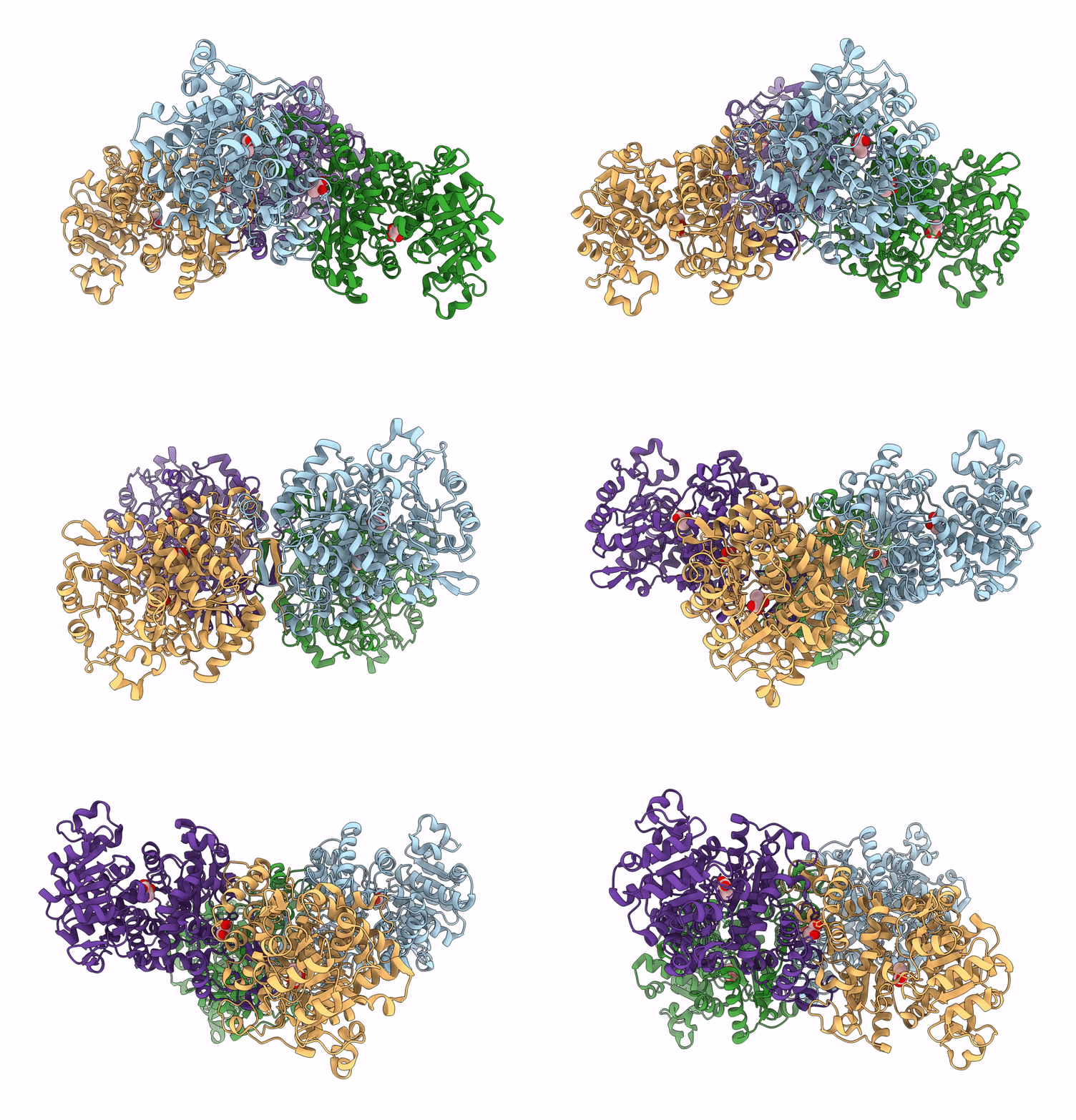
9E6M image
Deposition Date 2024-10-30
Release Date 2025-01-15
Last Version Date 2026-04-29
Entry Detail
PDB ID:
9E6M
Keywords:
Title:
Crystal structure of the G200R mutant from the maize chloroplastic photosynthetic NADP(+)-dependent malic enzyme
Biological Source:
Source Organism(s):
Zea mays (Taxon ID: 4577)
Expression System(s):
Method Details:
Experimental Method:
Resolution:
2.70 Å
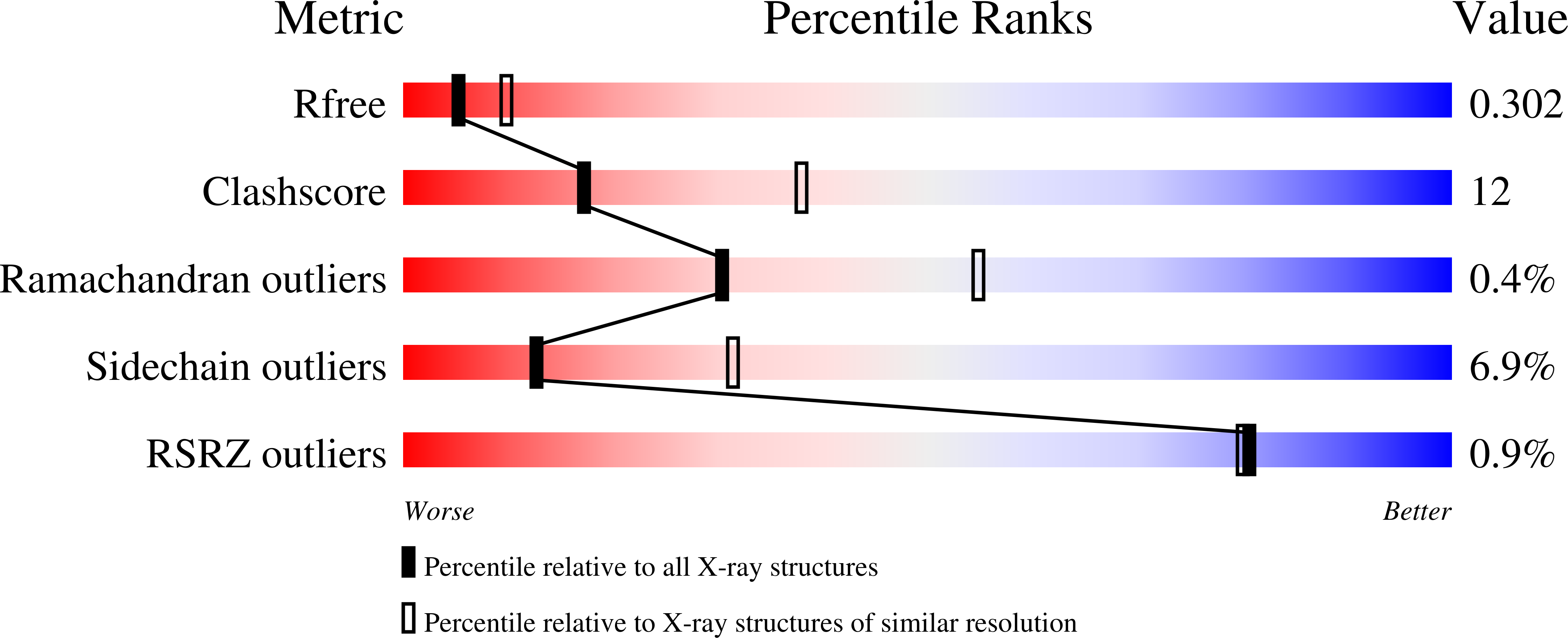
R-Value Free:
0.29
R-Value Work:
0.23
R-Value Observed:
0.24
Space Group:
P 21 21 21
Macromolecular Entities
Structures with similar UniProt ID
Protein Blast
Polymer Type:polypeptide(L)
Molecule:Malic enzyme
Mutagens:G200R
Chain IDs:A, B, C, D
Chain Length:576
Number of Molecules:4
Biological Source:Zea mays
Ligand Molecules
Primary Citation
A milestone in C4 carbon concentration mechanism evolution: structural remodeling of NADP-malic enzyme in Poaceae.
Mol.Biol.Evol. 43 ? ? (2026)
PMID: 42017302 DOI: 10.1093/molbev/msag056

Abstact

The evolution of C4 photosynthesis required extensive modification of ancestral enzymes enabling the development of an efficient carbon concentrating mechanism. A key example is NADP-malic enzyme (NADP-ME), which, in maize and sorghum-members of the same C4 lineage-underwent gene duplication and neofunctionalization, resulting in 2 plastidic isoforms with distinct oligomeric states: a tetrameric C4-specific isoform and a dimeric housekeeping (nonC4) isoform. In this study, we resolve the structural basis of this oligomeric divergence using X-ray crystallography, cryo-electron microscopy, and molecular modeling combined with targeted biochemical analysis. Our findings demonstrate that the N-terminal region of nonC4-NADP-ME is involved in its oligomeric organization, whereas a suite of adaptive substitutions at the dimer interface drives the transition to the stable tetramer characteristic of the C4 isoform. Moreover, the C-terminal region stabilizes the oligomeric states of C4- and nonC4-NADP-ME through specific interactions with adaptive residues. We propose that tetramerization mitigates aggregation at the high expression levels demanded by the C4 cycle and likely creates a scaffold for the emergence of regulatory properties. Collectively, the data show that remodeling of terminal domains and inter-subunit interfaces rewires the quaternary architecture of the enzymes, illustrating how subtle structural changes can drive the evolution of complex innovations such as C4 photosynthesis.

Legend

Protein

Chemical

Disease

Primary Citation of related structures
Feedback Form
Name
Email
Institute
Feedback