

9E2C image
Deposition Date 2024-10-22
Release Date 2025-10-29
Last Version Date 2026-05-13
Entry Detail
PDB ID:
9E2C
Title:
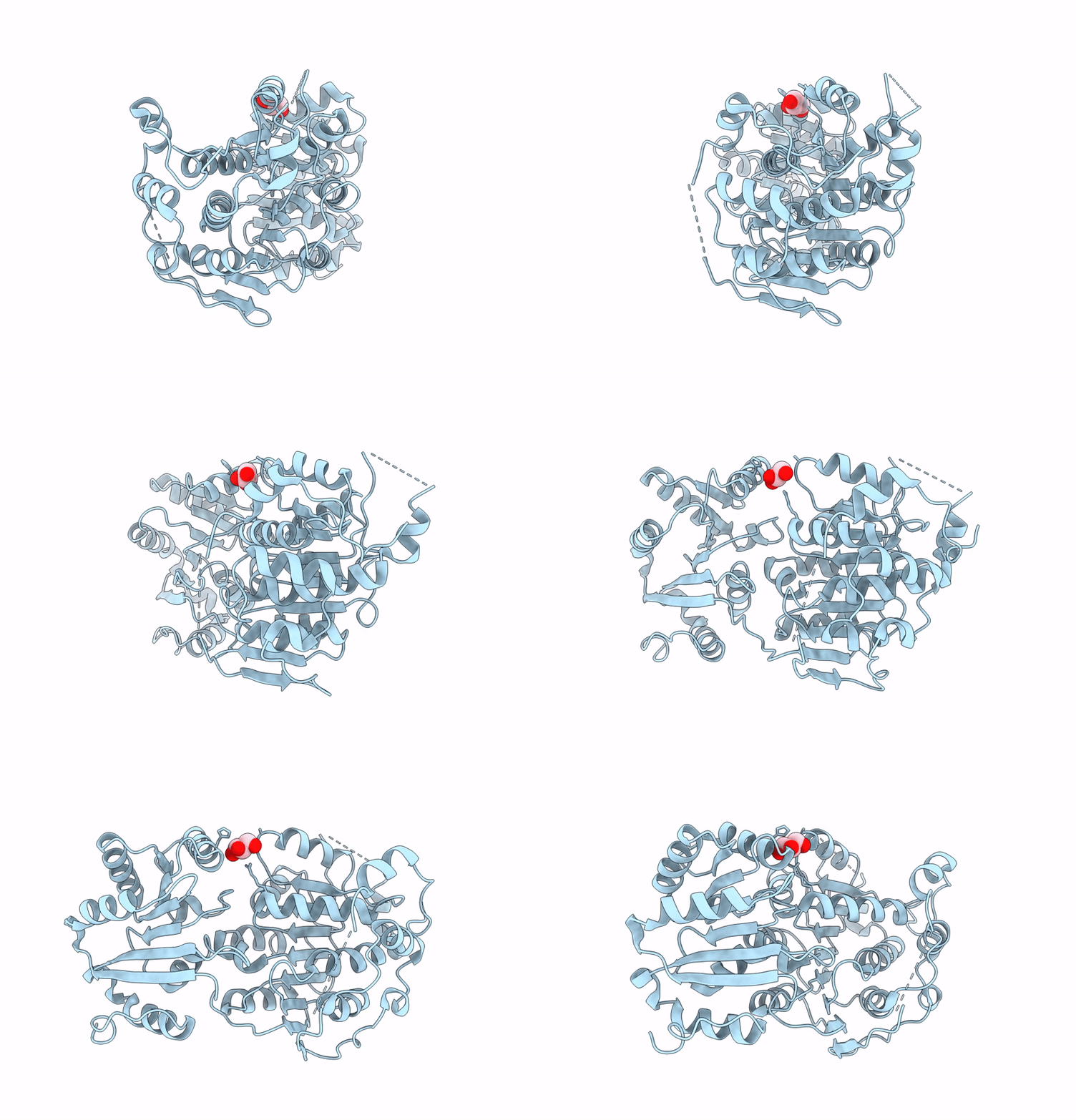
Crystal structure of DEAD-box RNA helicase DDX3X R326H mutant
Biological Source:
Source Organism(s):
Homo sapiens (Taxon ID: 9606)
Expression System(s):
Method Details:
Experimental Method:
Resolution:
2.30 Å
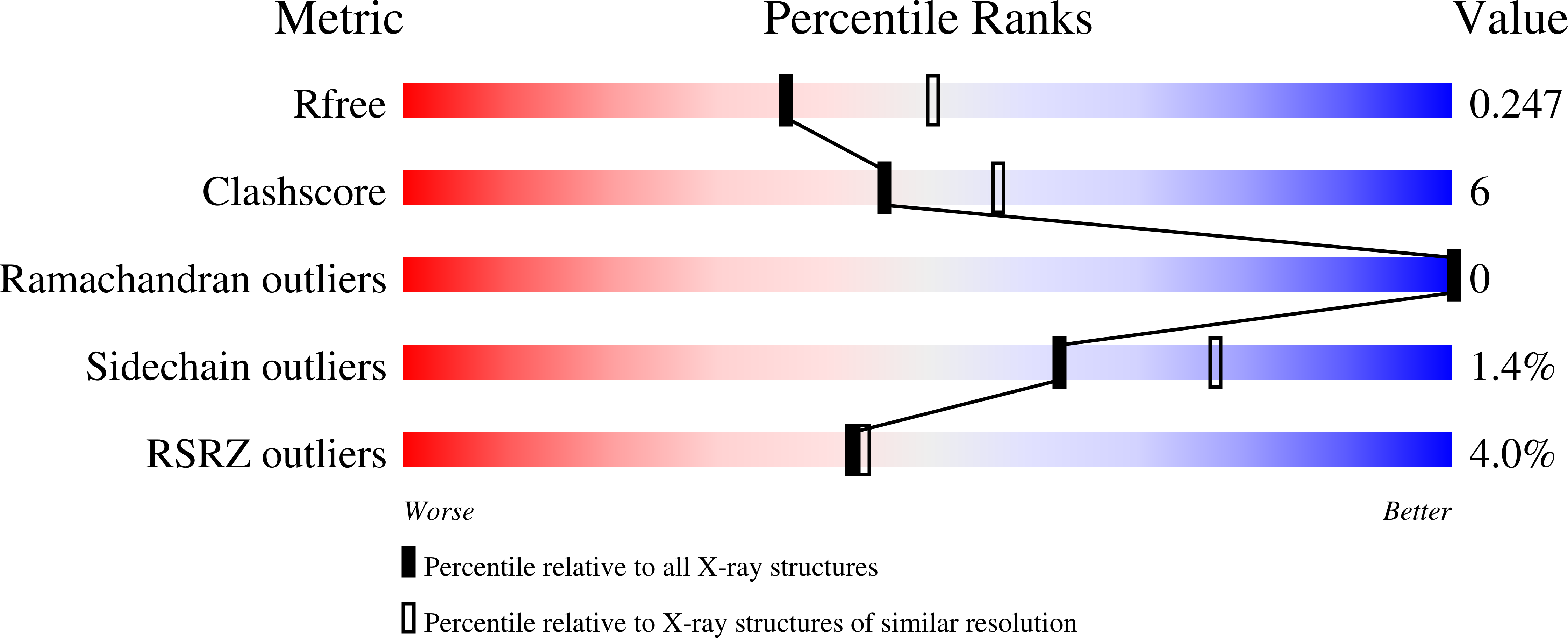
R-Value Free:
0.24
R-Value Work:
0.21
R-Value Observed:
0.21
Space Group:
P 21 21 21
Macromolecular Entities
Structures with similar UniProt ID
Protein Blast
Polymer Type:polypeptide(L)
Molecule:Isoform 2 of ATP-dependent RN
Gene (Uniprot):DDX3X
Mutagens:R326H
Chain IDs:A
Chain Length:498
Number of Molecules:1
Biological Source:Homo sapiens
Ligand Molecules
Primary Citation

Abstact

Cl(-) homeostasis is pivotal during neurodevelopment and in multiple processes in mature neurons, and its disruption is implicated in several neurodevelopmental disorders. Here, we investigated the role of Cl(-) in regulating DDX3X, an ATP-dependent RNA helicase that is associated with a neurodevelopmental disorder and is involved in stress granule assembly through biomolecular condensation. Cl(-) directly interacted with the DDX3X helicase core in the RNA binding region. This interaction impaired both ATPase and RNA helicase activities at physiologically relevant concentrations in a manner similar to inorganic phosphate and disrupted its condensation propensity in vitro. In neuroblastoma cells, Cl(-) efflux induced the formation of large, persistent DDX3X-containing stress granules. Furthermore, the R326H mutation, which is linked to a severe neurodevelopmental disorder, altered the chemical environment of the Cl(-)-binding site and impaired Cl(-)-sensitive functions. Together, our findings demonstrate that Cl(-) binding regulates DDX3X functions and provide insights into the molecular pathophysiology of a neurodevelopmental disorder-linked mutation in DDX3X.

Legend

Protein

Chemical

Disease

Primary Citation of related structures
Feedback Form
Name
Email
Institute
Feedback