

9E0V image
Deposition Date 2024-10-19
Release Date 2025-10-22
Last Version Date 2026-05-27
Entry Detail
PDB ID:
9E0V
Keywords:
Title:
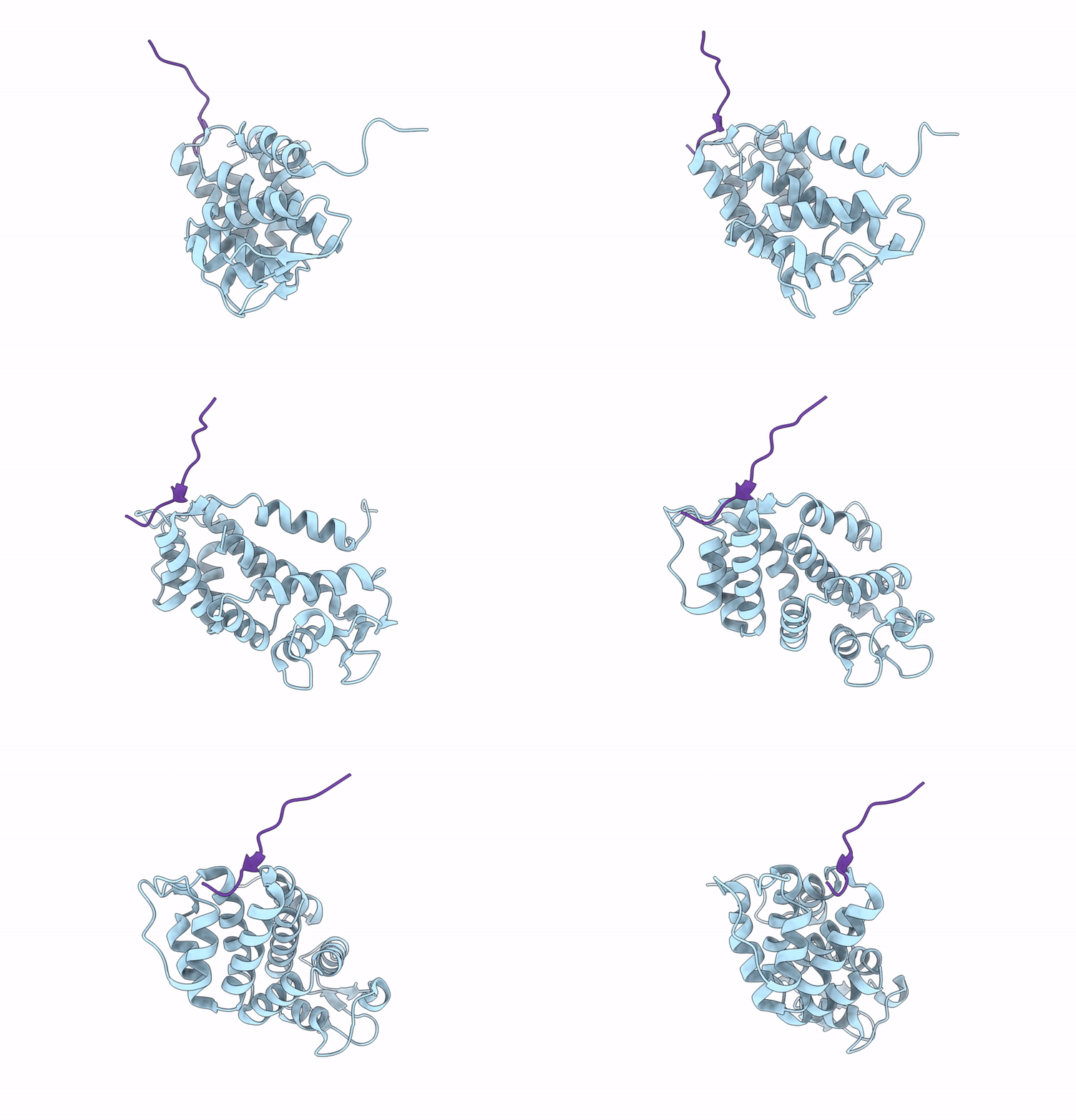
GSDMD bound to a peptide
Biological Source:
Source Organism(s):
Homo sapiens (Taxon ID: 9606)
Expression System(s):
Method Details:
Experimental Method:
Resolution:
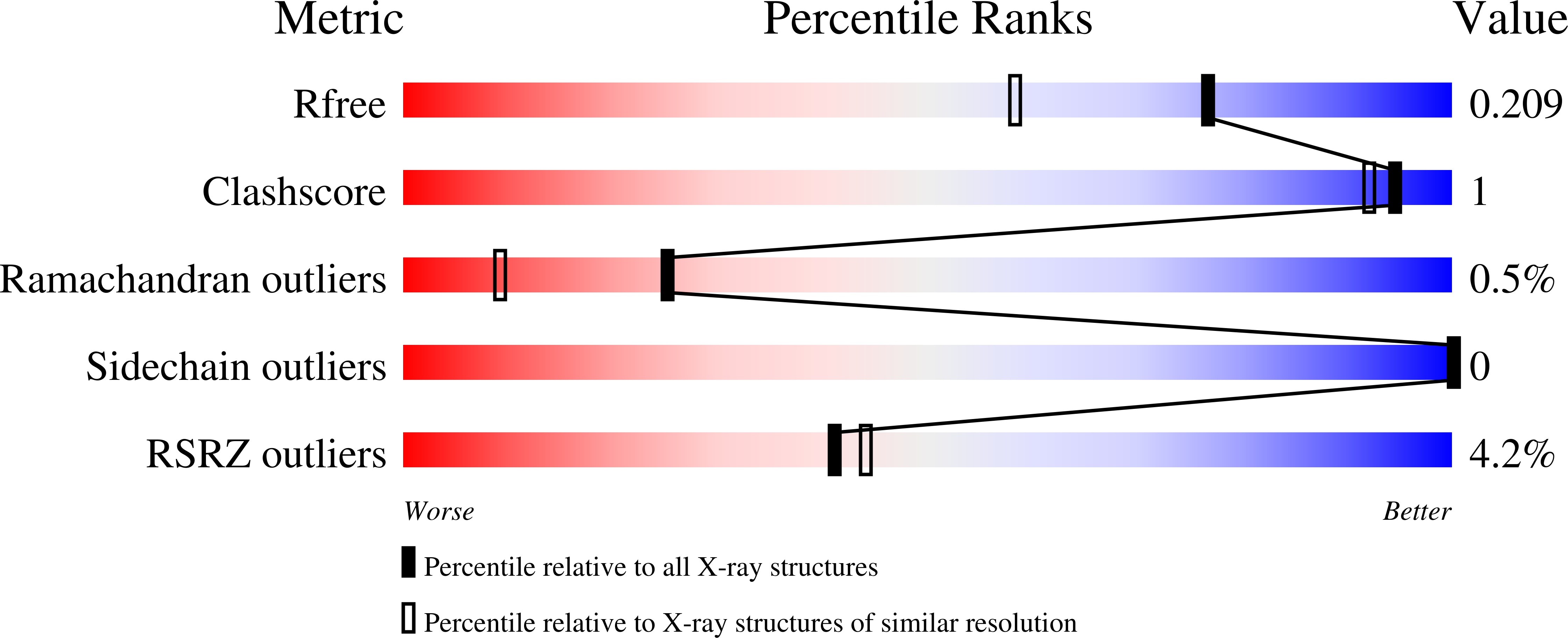
1.64 Å
R-Value Free:
0.21
R-Value Work:
0.20
R-Value Observed:
0.20
Space Group:
P 43 21 2
Macromolecular Entities
Protein Blast
Polymer Type:polypeptide(L)
Molecule:Maltose/maltodextrin-binding
Gene (Uniprot):malE, GSDMD
Chain IDs:A
Chain Length:590
Number of Molecules:1
Biological Source:Homo sapiens
Protein Blast
Polymer Type:polypeptide(L)
Molecule:GLY-CYS-ILE-LYS-LYS-ALA-VAL-6
Chain IDs:B
Chain Length:11
Number of Molecules:1
Biological Source:Homo sapiens
Primary Citation
Peptide binding at the gasdermin D exosite reveals the structural basis for targeting the site.
Acta Crystallogr D Struct Biol ? ? ? (2026)
PMID: 42125920 DOI: 10.1107/S205979832600344X

Abstact

Gasdermin D (GSDMD) has been identified as a critical component of the inflammasome, an important intracellular signaling multi-protein complex. Abnormal activation of GSDMD has been linked to a variety of inflammatory diseases, including non-alcoholic steatohepatitis, inflammatory bowel disease and COVID-19, and has been linked to potential pathogenesis of septic shock. While small molecules have been identified to inhibit N-terminal domain (NTD) pore formation and membrane translocation, further clinical application of these molecules is currently limited due to narrow specificity. Here, we report a peptide from a structure-based computational screen that selectively inhibits caspase-dependent cleavage of GSDMD. We have determined the structure of the GSDMD-peptide complex, indicating that peptide binding is facilitated by negatively charged residues from the peptide and the hydrophobic exosite of the protein, inhibiting caspase binding and activation. The experimental data suggest the potential to target the exosite for therapeutic intervention.

Legend

Protein

Chemical

Disease

Primary Citation of related structures
Feedback Form
Name
Email
Institute
Feedback