

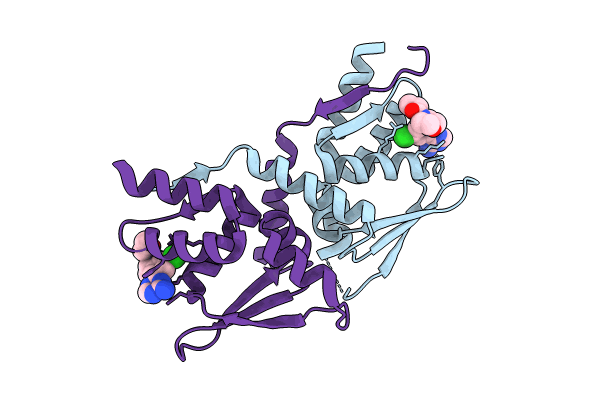
9DU7 image
Deposition Date 2024-10-02
Release Date 2024-10-23
Last Version Date 2026-05-13
Entry Detail
PDB ID:
9DU7
Keywords:
Title:
KEAP1 BTB domain in complex with the covalent activator VVD-065
Biological Source:
Source Organism(s):
Homo sapiens (Taxon ID: 9606)
Expression System(s):
Method Details:
Experimental Method:
Resolution:
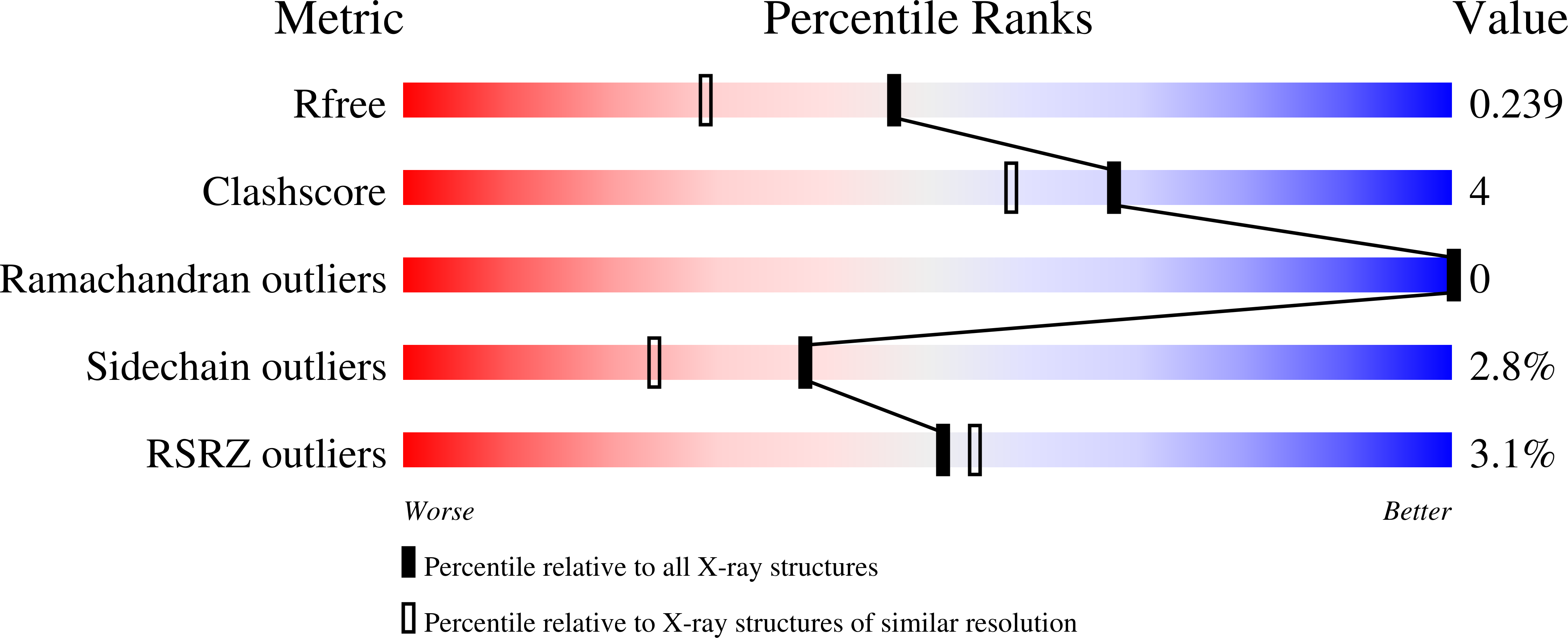
1.87 Å
R-Value Free:
0.23
R-Value Work:
0.19
Space Group:
P 43
Macromolecular Entities
Structures with similar UniProt ID
Protein Blast
Polymer Type:polypeptide(L)
Molecule:Kelch-like ECH-associated pro
Gene (Uniprot):KEAP1
Chain IDs:A, B
Chain Length:137
Number of Molecules:2
Biological Source:Homo sapiens
Ligand Molecules
Primary Citation

Abstact

The NRF2 transcription factor is constitutively active in cancer, in which it functions to maintain oxidative homeostasis and reprogram cellular metabolism. NRF2-active tumors exhibit NRF2 dependency and resistance to chemotherapy/radiotherapy (RT). In this study, we characterize VVD-065, a first-in-class NRF2 inhibitor that acts via an unprecedented allosteric molecular glue mechanism. In the absence of stress or mutation, NRF2 is rapidly degraded by the Kelch-like ECH-associated protein 1 (KEAP1)-cullin3 (CUL3) ubiquitin-ligase complex. VVD-065 specifically and covalently engages Cys151 on KEAP1, which in turn promotes KEAP1-CUL3 complex formation, leading to enhancement of NRF2 degradation. Previously reported Cys151-directed compounds decrease KEAP1-CUL3 interactions and stabilize NRF2, thus establishing KEAP1C151 as a tunable regulator of the KEAP1-CUL3 complex and NRF2 stability. VVD-065 inhibited NRF2-dependent tumor growth and sensitized cancers to chemotherapy/RT, supporting an open phase I clinical trial (NCT05954312). SIGNIFICANCE: NRF2 hyperactivation is frequently observed in various solid tumors, including lung, esophageal, and head and neck cancers, highlighting NRF2 as a potential therapeutic target. We report a first-in-class KEAP1-dependent allosteric molecular glue degrader of NRF2, which demonstrated robust monotherapy responses in NRF2-activated cancers and effectively sensitized chemo-refractory tumors to chemotherapy. See related commentary by Hintzen and Burslem, p. 829.

Legend

Protein

Chemical

Disease

Primary Citation of related structures
Feedback Form
Name
Email
Institute
Feedback