

9DQY image
Deposition Date 2024-09-24
Release Date 2025-03-26
Last Version Date 2026-04-08
Entry Detail
PDB ID:
9DQY
Title:
Structure of western equine encephalitis virus Imperial 181 VLP in complex with house sparrow PCDH10 EC1
Biological Source:
Source Organism(s):
Expression System(s):
Method Details:
Experimental Method:
Resolution:
2.80 Å
Aggregation State:
PARTICLE
Reconstruction Method:
SINGLE PARTICLE
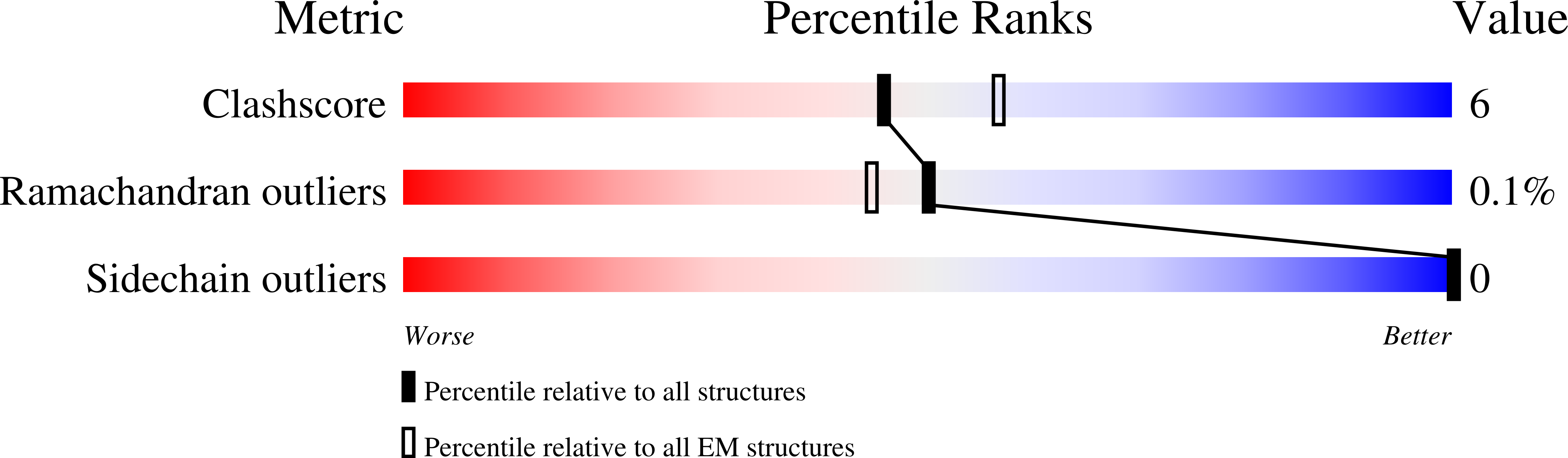
Macromolecular Entities
Structures with similar UniProt ID
Protein Blast
Polymer Type:polypeptide(L)
Molecule:Spike glycoprotein E1
Chain IDs:A, C, E
Chain Length:434
Number of Molecules:3
Biological Source:Western equine encephalitis virus
Structures with similar UniProt ID
Protein Blast
Polymer Type:polypeptide(L)
Molecule:Structural polyprotein
Chain IDs:B, D, F
Chain Length:401
Number of Molecules:3
Biological Source:Western equine encephalitis virus
Structures with similar UniProt ID
Protein Blast
Polymer Type:polypeptide(L)
Molecule:Cadherin domain-containing pr
Chain IDs:G, H, I
Chain Length:103
Number of Molecules:3
Biological Source:Passer domesticus
Ligand Molecules
Primary Citation

Abstact

Western equine encephalitis virus (WEEV) is an arbovirus that historically caused large outbreaks of encephalitis throughout the Americas. WEEV binds protocadherin 10 (PCDH10) as a receptor, and highly virulent ancestral WEEV strains also bind low-density lipoprotein receptor (LDLR)-related proteins. As WEEV declined as a human pathogen in North America over the past century, isolates have lost the ability to bind mammalian receptors while still recognizing avian receptors. To explain shifts in receptor dependencies and assess the risk of WEEV re-emergence, we determined cryoelectron microscopy structures of WEEV bound to human PCDH10, avian PCDH10, and human very-low-density lipoprotein receptor (VLDLR). We show that one to three E2 glycoprotein substitutions are sufficient for a nonpathogenic strain to regain the ability to bind mammalian receptors. A soluble VLDLR fragment protects mice from lethal challenge by a virulent ancestral WEEV strain. Because WEEV recently re-emerged in South America after decades of inactivity, our findings have important implications for outbreak preparedness.

Legend

Protein

Chemical

Disease

Primary Citation of related structures
Feedback Form
Name
Email
Institute
Feedback