

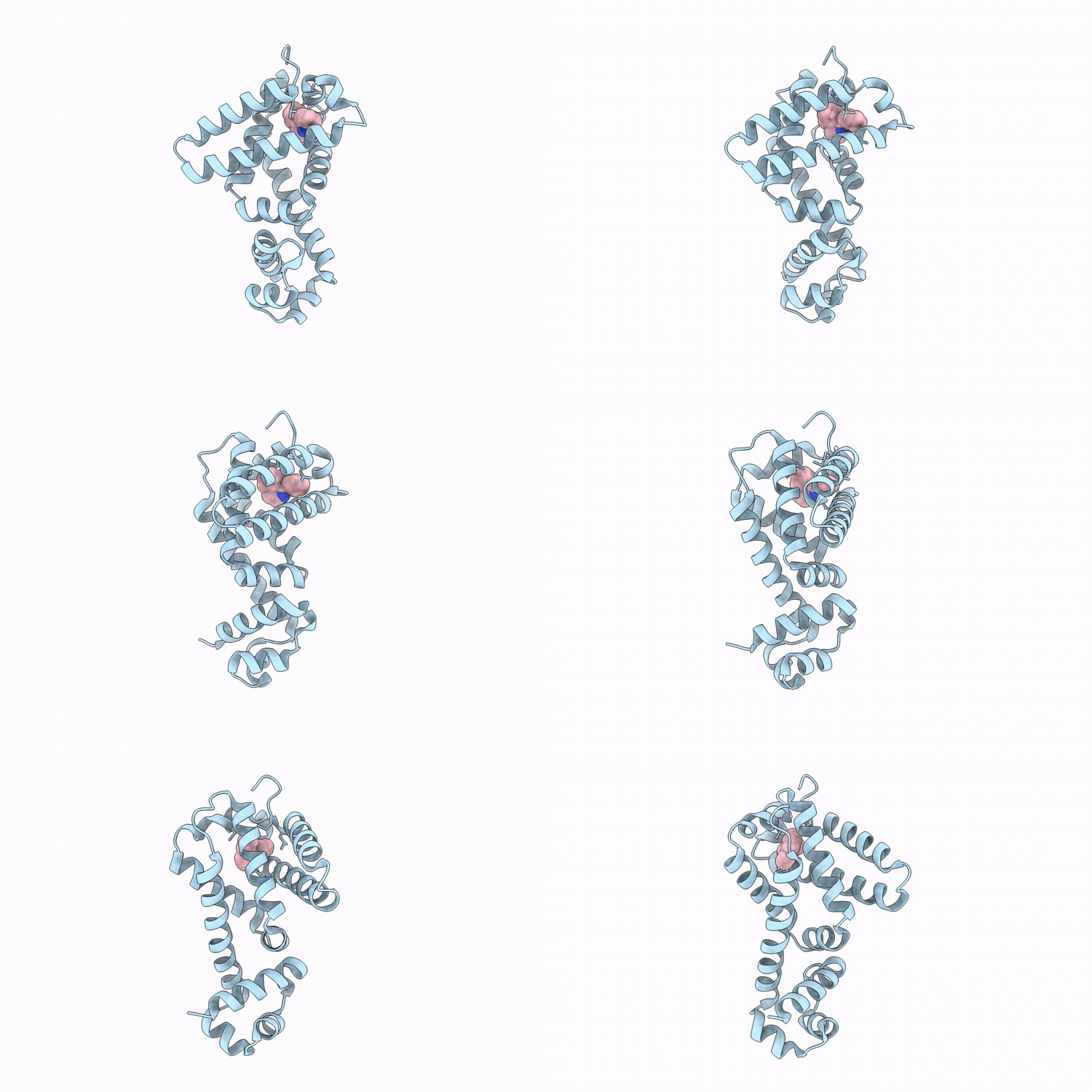
9DNK image
Deposition Date 2024-09-17
Release Date 2026-04-08
Last Version Date 2026-08-05
Entry Detail
PDB ID:
9DNK
Keywords:
Title:
RamR variant R2.1 complexed with 1R-1-phenyl-1,2,3,4-tetrahydroisoquinoline
Biological Source:
Expression System(s):
Method Details:
Experimental Method:
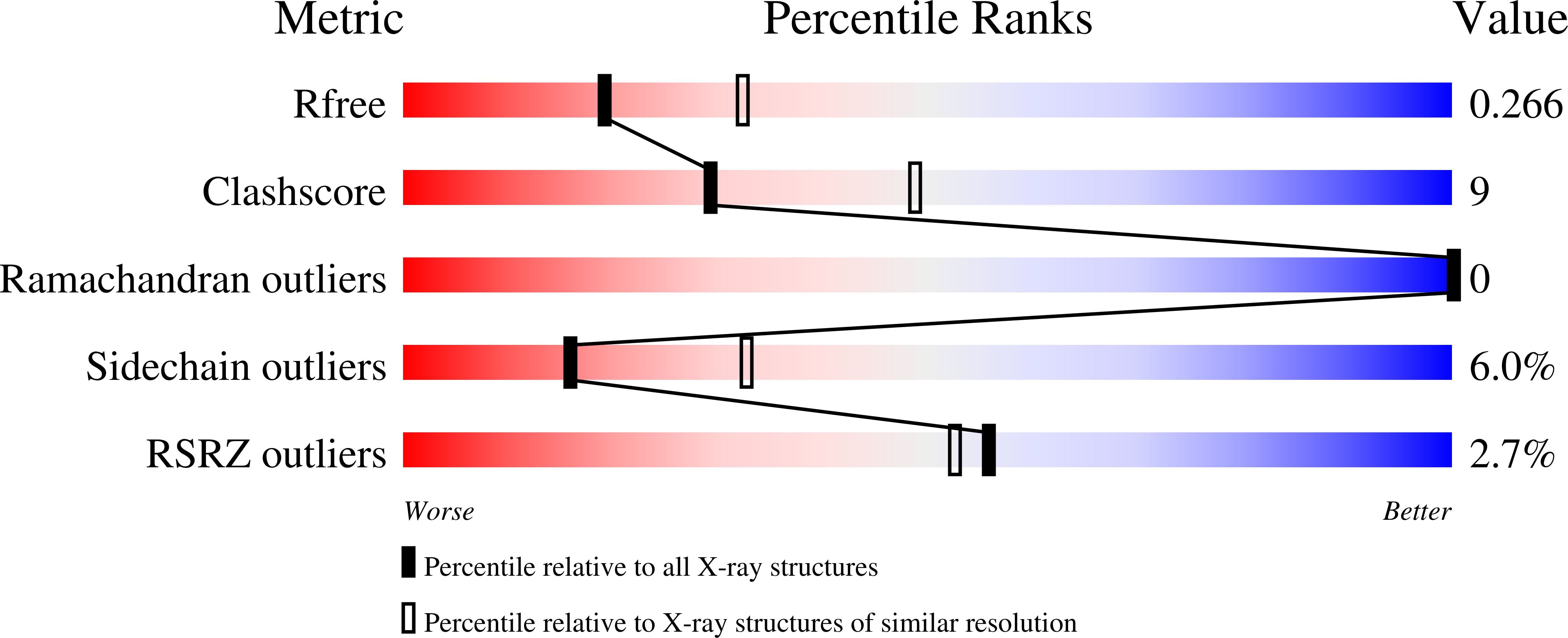
Resolution:
2.50 Å
R-Value Free:
0.26
R-Value Work:
0.22
R-Value Observed:
0.22
Space Group:
C 1 2 1
Macromolecular Entities
Polymer Type:polypeptide(L)
Molecule:Engineered RamR Variant R2.1
Chain IDs:A
Chain Length:194
Number of Molecules:1
Biological Source:Salmonella enterica subsp. enterica serovar Typhimurium
Ligand Molecules
Primary Citation
Using enantioselective biosensors to evolve asymmetric biocatalysts.
Nat.Chem.Biol. ? ? ? (2026)
PMID: 42493606 DOI: 10.1038/s41589-026-02275-1

Abstact

Biocatalysts are prized for their enantioselectivity, but slow chromatographic separations required to measure enantiomeric excess bottleneck their development. To overcome this limitation, we evolve enantioselective transcription factors (eTFs) that convert enzyme-catalyzed enantiomer concentrations into programmable gene expression outputs, focusing on imine reductases. Here, using a massively parallel reporter assay, we measure dose-response curves for over 300,000 transcription factor variants in response to an imine precursor and chiral amine products. We quantify the sensitivity, selectivity and dynamic range across variants generated by random, site-saturation and shuffling mutagenesis, isolating variants with exceptional specificity. High-resolution structures of evolved eTFs elucidate how steric effects enforce enantioselectivity, while charge interactions distinguish the imine from the amines. Using two eTFs, we create an ultrahigh-throughput chiral screen to evolve an imine reductase with inverted enantioselectivity. To support generalizability and speed, we design a genetic circuit that enables TF generation within weeks. Our methods enable rapid measurement of asymmetric reactions, supporting innovation in chemical manufacturing.

Legend

Protein

Chemical

Disease

Primary Citation of related structures
Feedback Form
Name
Email
Institute
Feedback