

9DFS image
Deposition Date 2024-08-30
Release Date 2025-09-10
Last Version Date 2026-09-23
Entry Detail
PDB ID:
9DFS
Keywords:
Title:
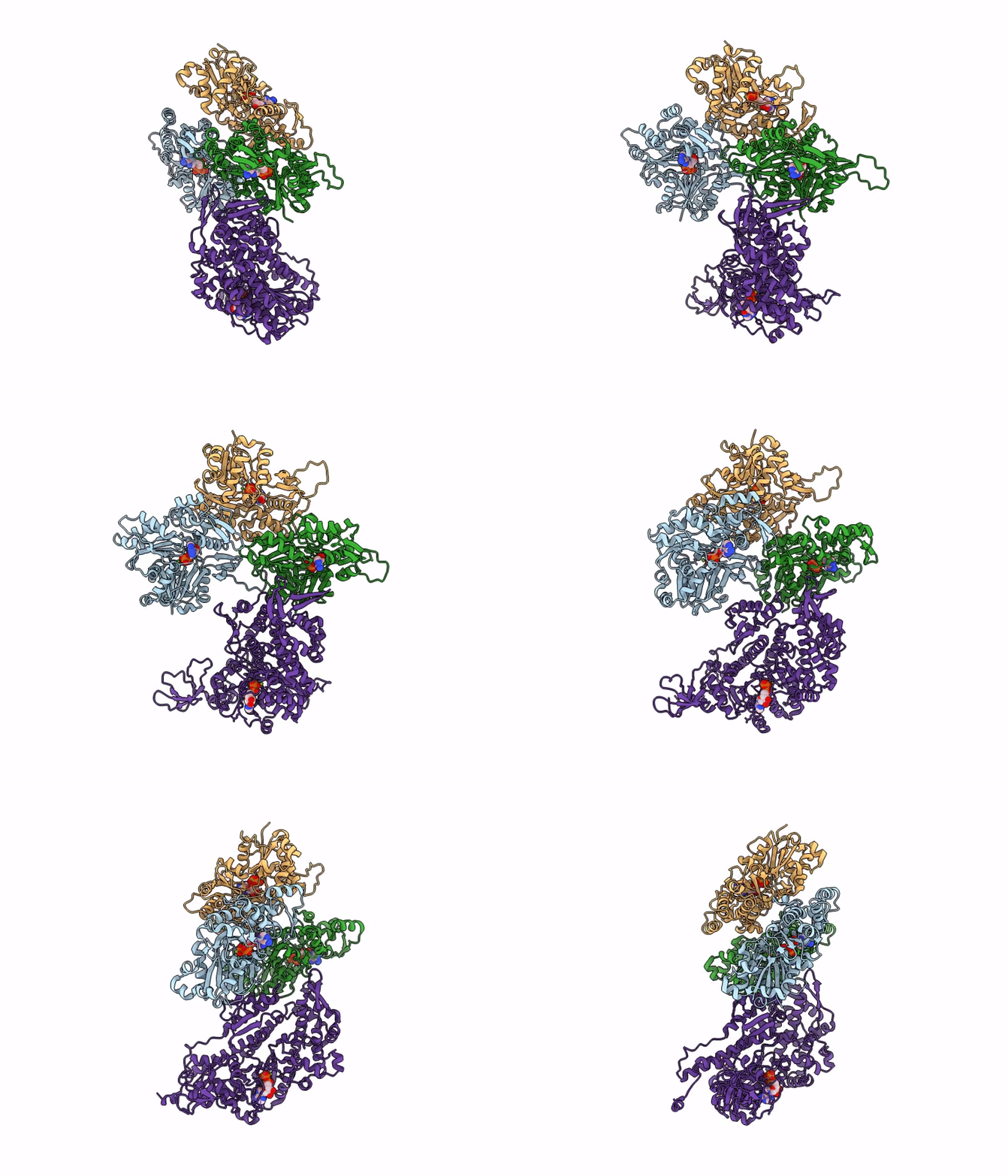
Structure of novel Myo7a-N isoform (ADP-bound) expressed in sensory hair cells (head domain + first two IQ domains), bound to F-actin
Biological Source:
Source Organism(s):
Method Details:
Experimental Method:
Resolution:
3.10 Å
Aggregation State:
FILAMENT
Reconstruction Method:
HELICAL
Macromolecular Entities
Polymer Type:polypeptide(L)
Molecule:Actin, alpha skeletal muscle
Gene (Uniprot):ACTA1
Chain IDs:A, B, C
Chain Length:377
Number of Molecules:3
Biological Source:Oryctolagus cuniculus
Polymer Type:polypeptide(L)
Molecule:Unconventional myosin-VIIa
Gene (Uniprot):Myo7a
Chain IDs:D
Chain Length:1077
Number of Molecules:1
Biological Source:Mus musculus
Modified Residue
Compound ID Chain ID Parent Comp ID Details 2D Image
HIC A, B, C HIS modified residue
Primary Citation
Tonotopic specialization of MYO7A isoforms in auditory hair cells.
Nat Commun 17 ? ? (2026)
PMID: 42236700 DOI: 10.1038/s41467-026-73220-y

Abstact

Mutations in Myo7a cause Usher syndrome type 1B and non-syndromic deafness, but the precise function of MYO7A in sensory hair cells remains unclear. Using long-read sequencing, we identify and characterize a novel isoform, MYO7A-N, expressed in auditory hair cells alongside the canonical MYO7A-C. Isoform-specific knock-in mouse models reveal that inner hair cells primarily express MYO7A-C, while outer hair cells express both isoforms in opposing tonotopic gradients. Both isoforms are localized to the upper tip-link insertion site, consistent with a role in the tip link for mechanotransduction. Loss of MYO7A-N leads to outer hair cell degeneration and progressive hearing loss. Cryo-EM structures reveal isoform-specific differences at actomyosin interfaces, correlating with distinct ATPase activities. These findings reveal an unexpected layer of molecular diversity within the mechanotransduction machinery. We propose that MYO7A isoform specialization enables fine-tuning of tip-link tension, thus hearing sensitivity, and contributes to the frequency-resolving power of the cochlea.

Legend

Protein

Chemical

Disease

Primary Citation of related structures
Feedback Form
Name
Email
Institute
Feedback