

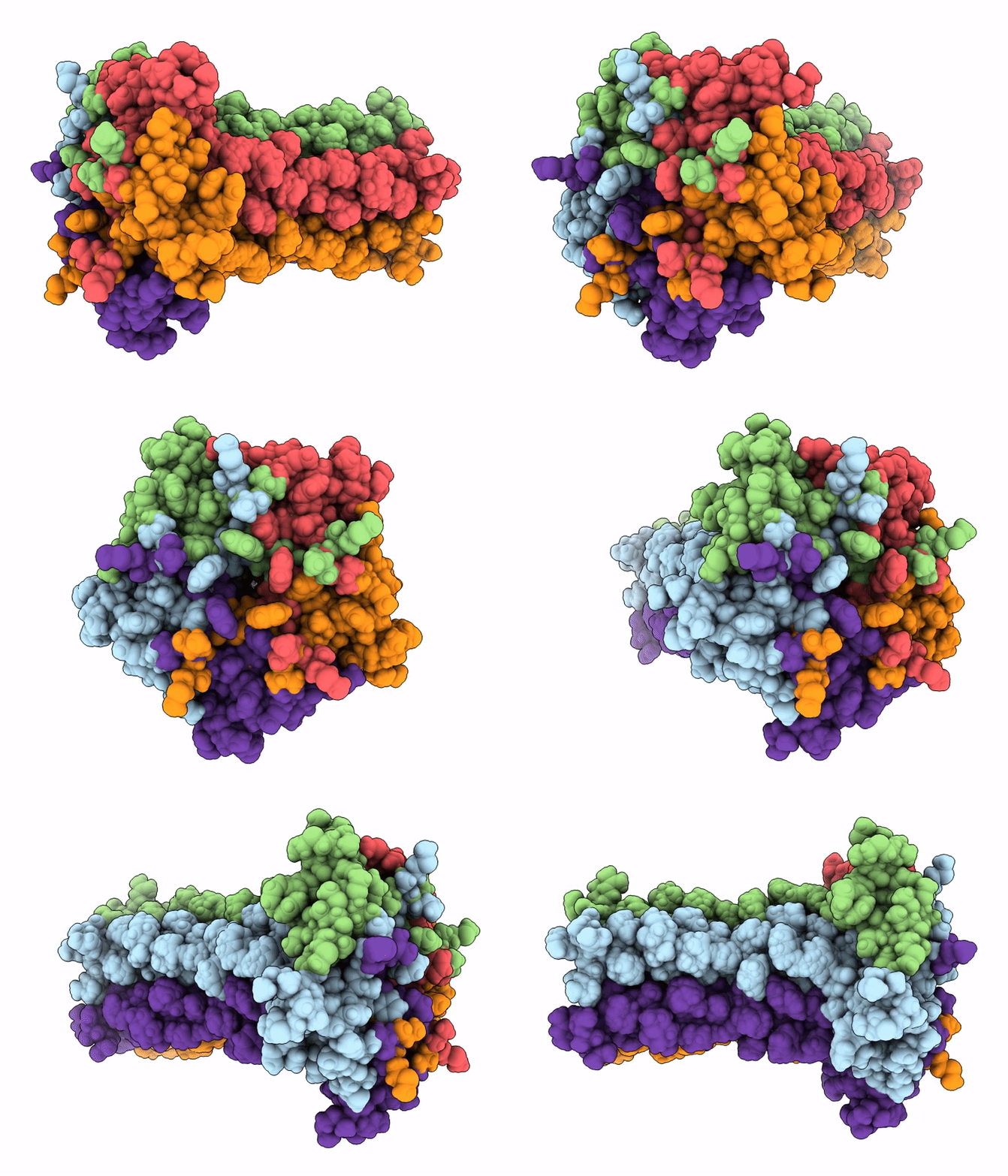
9DCJ image
Deposition Date 2024-08-26
Release Date 2025-09-24
Last Version Date 2026-04-08
Entry Detail
PDB ID:
9DCJ
Keywords:
Title:
Pentameric Structure of MERS-CoV Envelope Protein Transmembrane Domain Determined by Solid-State NMR
Biological Source:
Source Organism(s):
Expression System(s):
Method Details:
Experimental Method:
Conformers Calculated:
200
Conformers Submitted:
10
Selection Criteria:
structures with the lowest energy

Macromolecular Entities
Structures with similar UniProt ID
Protein Blast
Polymer Type:polypeptide(L)
Molecule:Envelope small membrane prote
Gene (Uniprot):E
Mutagens:C23S, C30S
Chain IDs:A, B, C, D, E
Chain Length:38
Number of Molecules:5
Biological Source:Betacoronavirus England 1
Ligand Molecules
Primary Citation
Ion channel structure and function of the MERS coronavirus E protein.
Sci Adv 11 eadx1788 eadx1788 (2025)
PMID: 40632851 DOI: 10.1126/sciadv.adx1788

Abstact

Coronavirus envelope (E) proteins form drug-targeted ion channels that cause virulence to infected cells. The Middle East respiratory syndrome (MERS) virus has high mortality rates, but its E structure and function are unknown. We report the single-channel conductance and structure of membrane-bound MERS E protein. MERS E conducts K(+) ions with a unitary conductance of 113 picosiemens, fivefold larger than the conductance of severe acute respiratory syndrome coronavirus 2 E. Solid-state nuclear magnetic resonance data indicate that the MERS E transmembrane domain forms a five-helix bundle that spans the lipid bilayer. The amino-terminal helical interface features multiple interacting phenylalanine (Phe) residues and an asparagine (Asn), whereas the carboxyl-terminal channel pore contains Phe(33). Mutation of Phe(17) abolished K(+) conductance, whereas mutations of Phe(33) and Asn(15) suppressed most channel activity. These results indicate that MERS E contains two Phe-centered ion-conduction apparatuses, which likely permeate ions through cation-pi interactions, providing the structural basis for developing antiviral drugs to inhibit this pathogenic viroporin.

Legend

Protein

Chemical

Disease

Primary Citation of related structures
Feedback Form
Name
Email
Institute
Feedback