

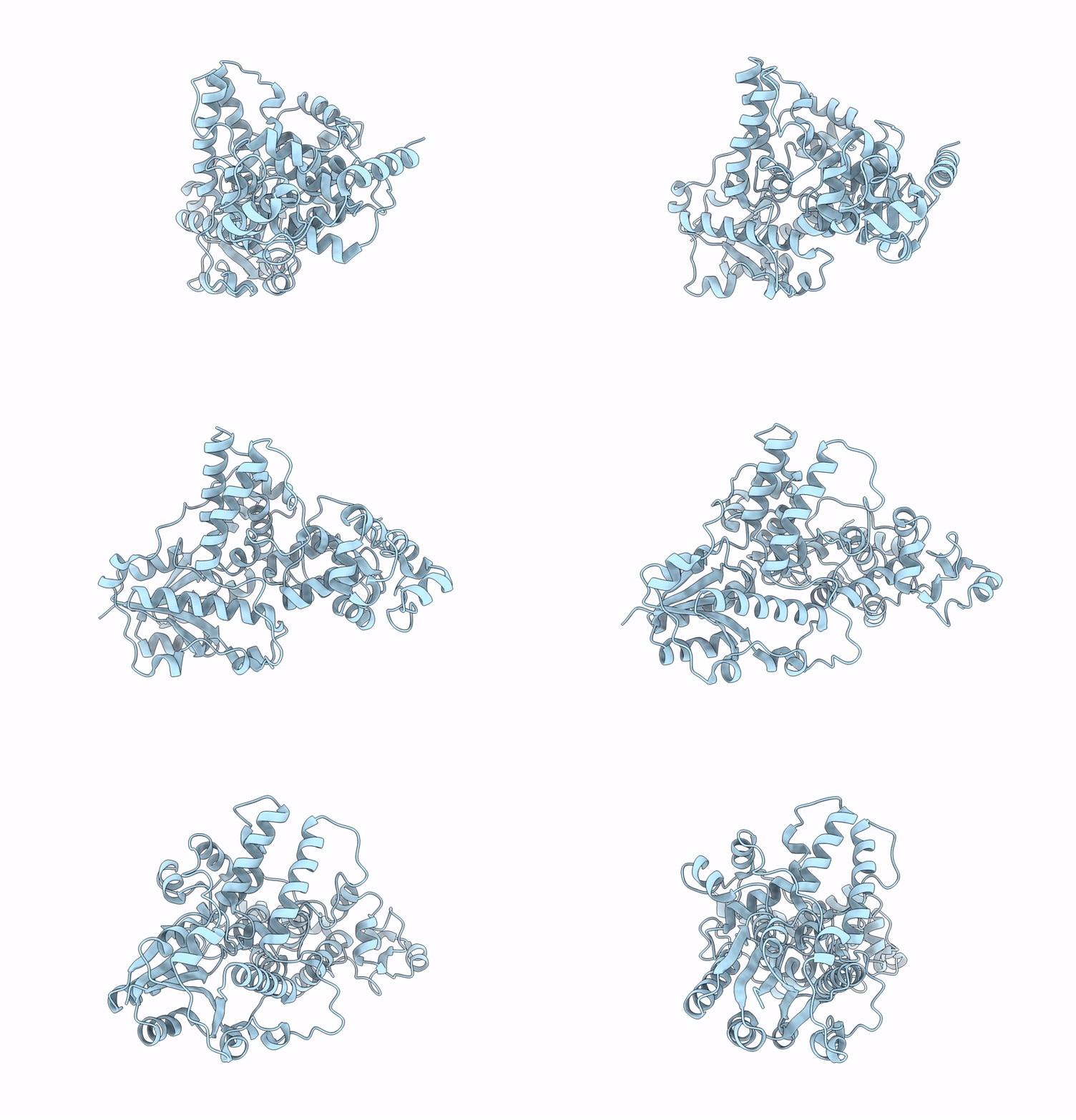
9DC0 image
Deposition Date 2024-08-24
Release Date 2025-08-27
Last Version Date 2026-03-18
Entry Detail
PDB ID:
9DC0
Title:
Crystal Structure of European Robin CRY1
Biological Source:
Source Organism(s):
Expression System(s):
Method Details:
Experimental Method:
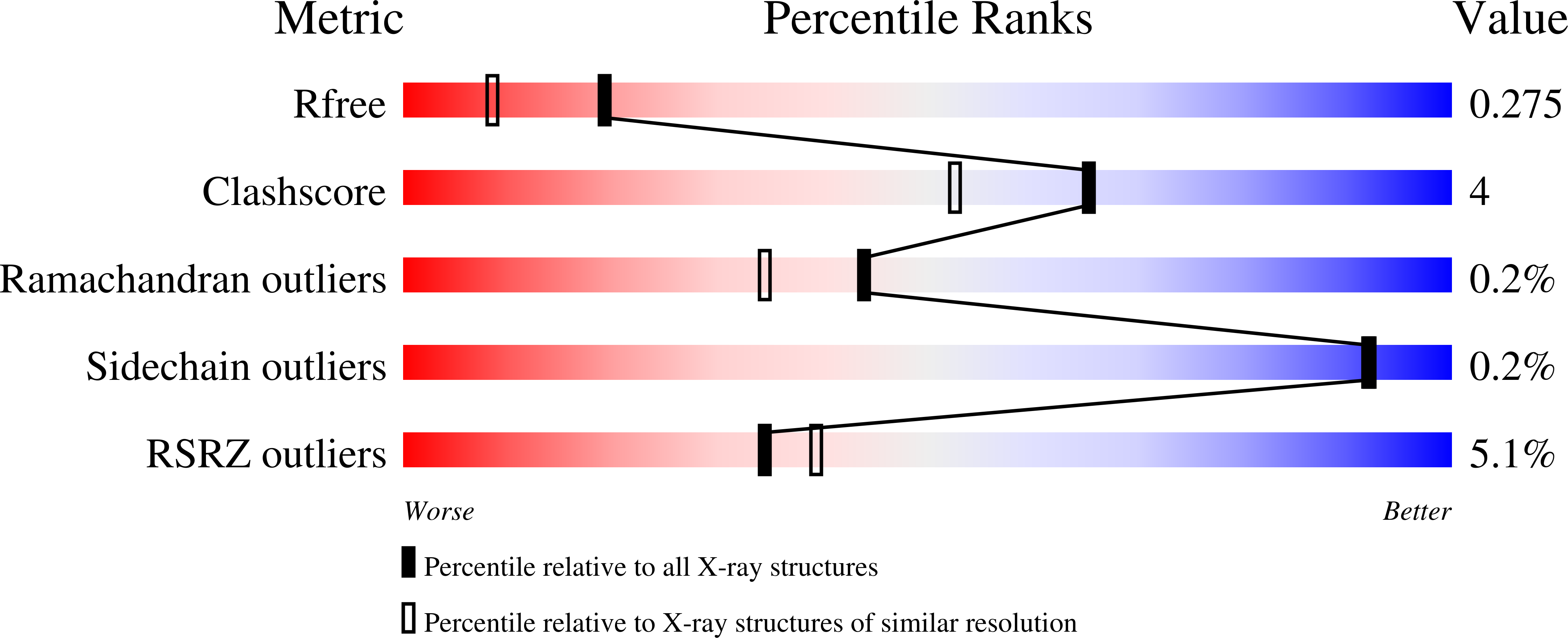
Resolution:
1.91 Å
R-Value Free:
0.27
R-Value Work:
0.20
R-Value Observed:
0.21
Space Group:
P 21 21 21
Macromolecular Entities
Protein Blast
Polymer Type:polypeptide(L)
Molecule:Cryptochrome-1
Gene (Uniprot):CRY1b
Chain IDs:A
Chain Length:515
Number of Molecules:1
Biological Source:Erithacus rubecula
Primary Citation
Structure of European robin cryptochrome 1 reveals a role in circadian rhythms, not magnetoreception.
Iscience 28 114015 114015 (2025)
PMID: 41488359 DOI: 10.1016/j.isci.2025.114015

Abstact

Cryptochromes (CRYs) play critical roles in regulating diverse physiological functions, including circadian rhythms and neuronal firing in light-dependent or -independent fashions. Structural studies of CRYs have highlighted common features, such as the photolyase homology region (PHR), but they also reveal key differences, particularly in the binding of the flavin adenine dinucleotide (FAD) cofactor, leading to a long-standing debate, namely, whether Type I CRYs can function as FAD-dependent photosensors. This study solves the first crystal structure of a Type II CRY from a migratory songbird, namely, the European robin (Erithacus rubecula) CRY1. Structural, biochemical, and computational analyses of erCRY1 reveal that, unlike light-activated Type I and IV CRYs, Type II CRYs do not bind FAD and employ an open primary pocket for protein-protein interactions. These findings offer new insights into the structural basis of CRY function and suggest that migratory song-bird Type II CRYs function as circadian regulators, not magnetoreceptors.

Legend

Protein

Chemical

Disease

Primary Citation of related structures
Feedback Form
Name
Email
Institute
Feedback