

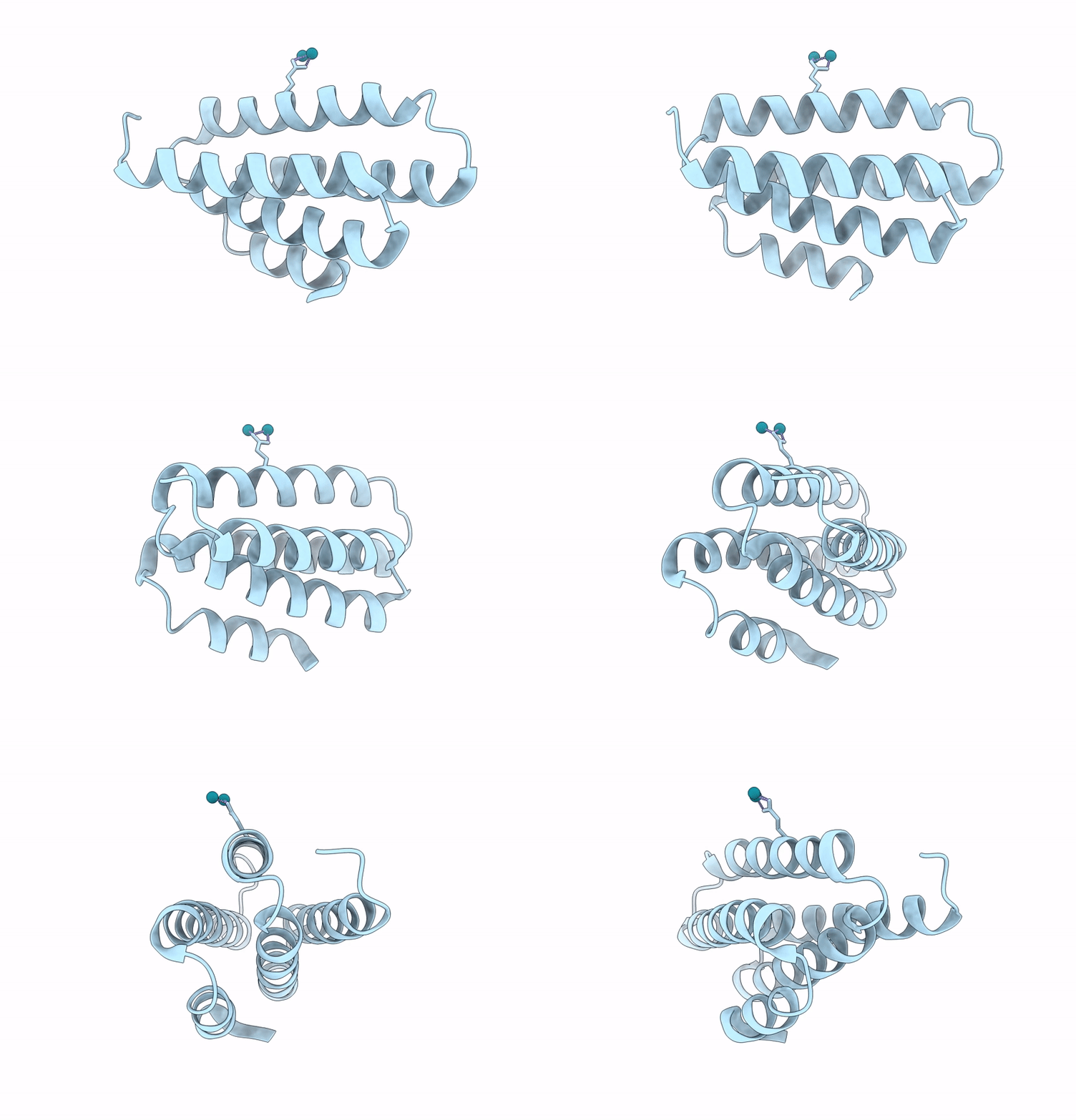
9DBW image
Deposition Date 2024-08-23
Release Date 2025-08-27
Last Version Date 2026-03-11
Entry Detail
PDB ID:
9DBW
Keywords:
Title:
Rh-Bound Structure of Computationally Designed Homotetramer PW1
Biological Source:
Source Organism(s):
Expression System(s):
Method Details:
Experimental Method:
Resolution:
2.10 Å
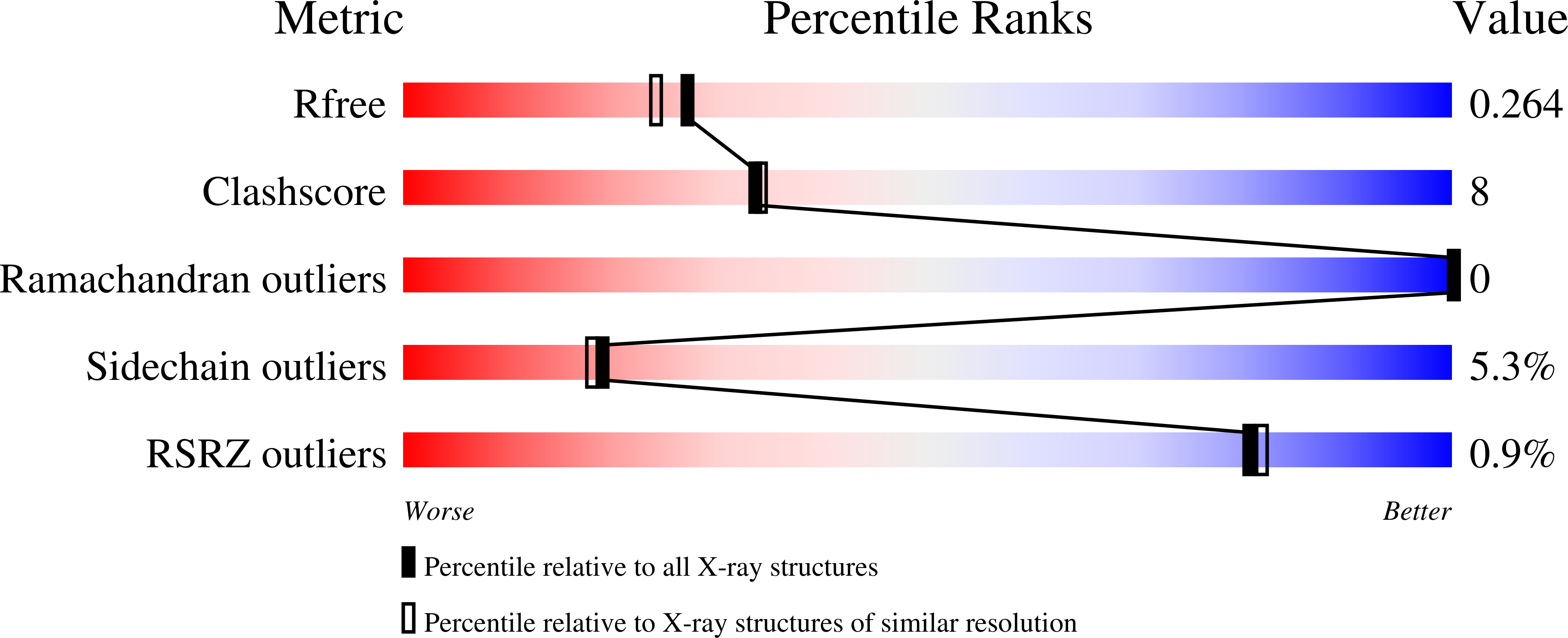
R-Value Free:
0.25
R-Value Work:
0.18
R-Value Observed:
0.19
Space Group:
I 4
Macromolecular Entities
Protein Blast
Polymer Type:polypeptide(L)
Molecule:Computationally Designed PW1
Chain IDs:A
Chain Length:111
Number of Molecules:1
Biological Source:synthetic construct
Ligand Molecules
Primary Citation
De Novo Design of a Metalloprotein with a Synthetically Inspired Dinuclear Paddlewheel Coordination Motif.
J. Am. Chem. Soc. 147 40788 40798 (2025)
PMID: 41143657 DOI: 10.1021/jacs.5c13813

Abstact

A metal-centered design approach was used to design a tetrameric protein assembly, PW1, with a new-to-nature metal center inspired by the structures of transition metal paddlewheel complexes such as di-Cu(II) tetraacetate. The structure of PW1 matches the design prediction with atomic accuracy, preorganizing four Glu residues to form the desired dinuclear Cu(II) center. Notably, Cu-PW1 has a reduction potential of -0.085 V at pH 7.0, which is more negative than any natural or engineered Cu redox protein. In addition to Cu(II), PW1 can also scaffold Rh(II) ions in the dinuclear paddlewheel geometry in crystallo as well as trivalent lanthanide ions in a mononuclear fashion. These results demonstrate the feasibility of designing new protein architectures around synthetically inspired, nonbiological metal centers, thus expanding the scope of artificial metalloproteins beyond those constructed around pre-existing protein scaffolds and opening new avenues to discover structure-function relationships outside the constraints of natural evolution.

Legend

Protein

Chemical

Disease

Primary Citation of related structures
Feedback Form
Name
Email
Institute
Feedback