

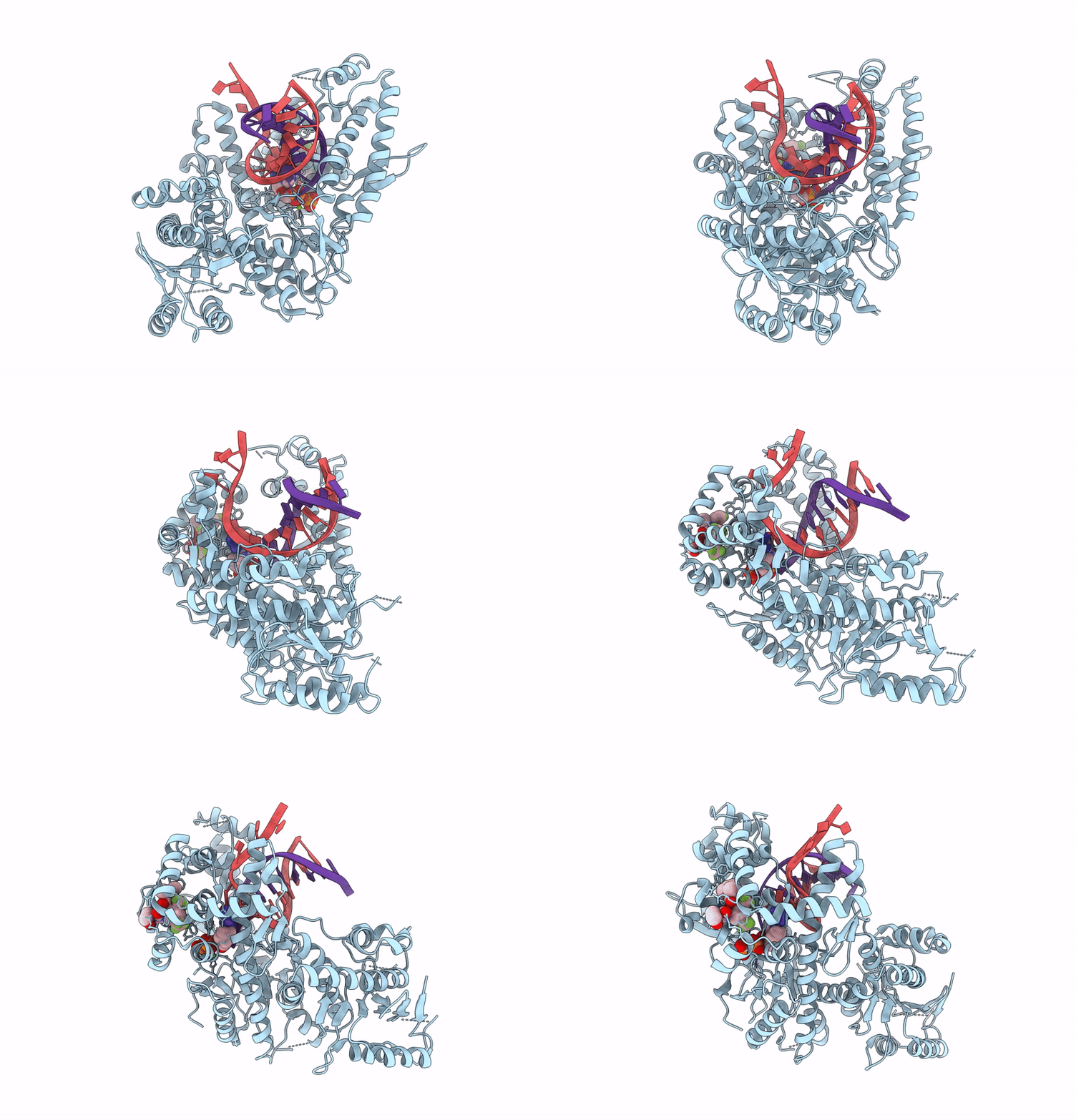
9D6O image
Deposition Date 2024-08-15
Release Date 2025-08-20
Last Version Date 2026-03-04
Entry Detail
PDB ID:
9D6O
Title:
Loop-Deleted DNA Polymerase Theta Polymerase Domain in Complex with a dsDNA Overhang and an Allosteric Inhibitor
Biological Source:
Source Organism(s):
Expression System(s):
Method Details:
Experimental Method:
Resolution:
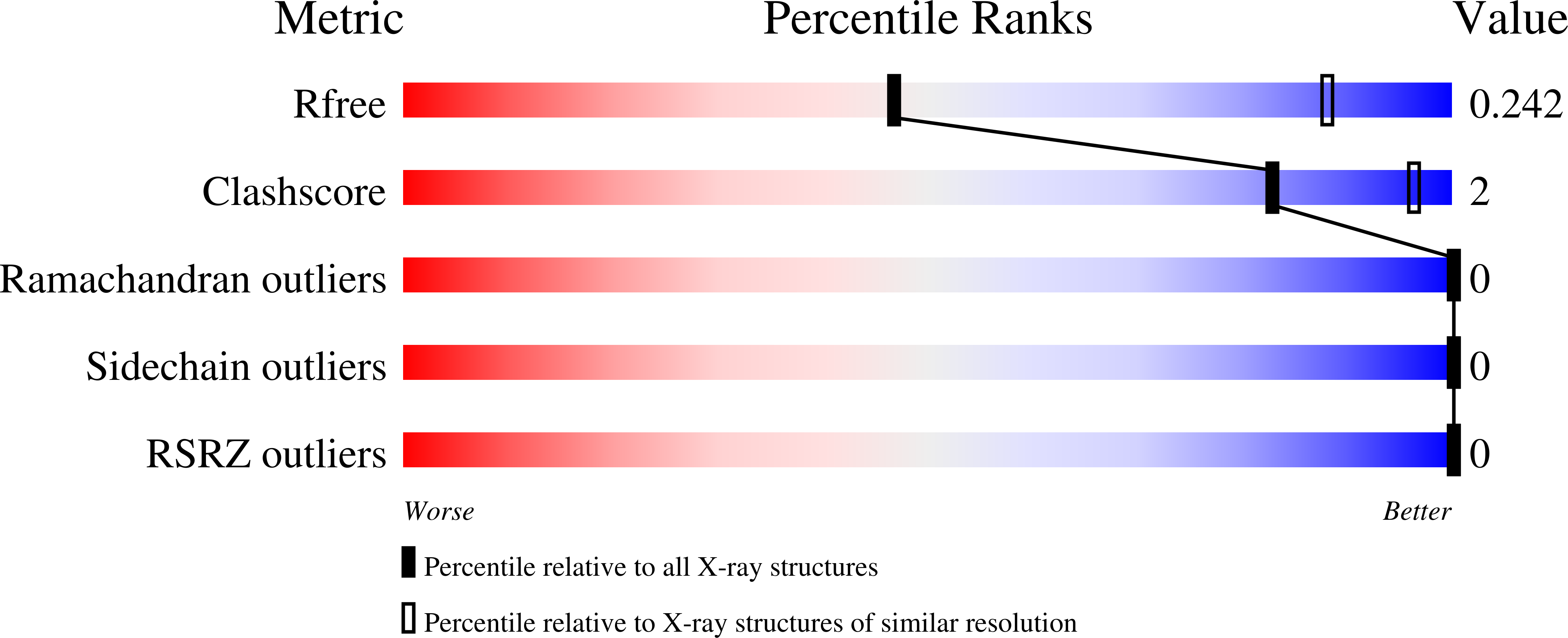
3.31 Å
R-Value Free:
0.23
R-Value Work:
0.20
R-Value Observed:
0.20
Space Group:
P 31 2 1
Macromolecular Entities
Structures with similar UniProt ID
Protein Blast
Polymer Type:polypeptide(L)
Molecule:DNA polymerase theta
Gene (Uniprot):POLQ
Chain IDs:A
Chain Length:652
Number of Molecules:1
Biological Source:Homo sapiens
Polymer Type:polydeoxyribonucleotide
Molecule:DNA Template
Chain IDs:B (auth: E)
Chain Length:24
Number of Molecules:1
Biological Source:synthetic construct
Polymer Type:polydeoxyribonucleotide
Molecule:DNA Primer
Chain IDs:C (auth: F)
Chain Length:14
Number of Molecules:1
Biological Source:synthetic construct
Primary Citation
RTx-303, an Orally Bioavailable Pol theta Polymerase Inhibitor That Potentiates PARP Inhibitors in BRCA Mutant Tumors.
J. Med. Chem. 68 22196 22215 (2025)
PMID: 41124685 DOI: 10.1021/acs.jmedchem.5c00551

Abstact

DNA polymerase theta (Poltheta) is a polymerase-helicase fusion protein that is synthetically lethal with homologous recombination (HR) factors, such as BRCA1/2, and confers resistance to PARP inhibitors (PARPi) and other genotoxic cancer therapies. Previously developed Poltheta polymerase (Poltheta-pol) inhibitors (Polthetai) exhibited limited pharmacological activity and metabolic stability, warranting the development of a Polthetai with improved drug-like properties. Here, we developed RTx-303, a selective allosteric small-molecule Poltheta-pol inhibitor that exhibits 5.1 nM IC(50), 88% oral bioavailability, and a prolonged half-life along with its equipotent metabolite. X-ray crystallography highlights the development of a solvent-exposed side-chain that is essential for the optimal drug-like properties of RTx-303. Notably, RTx-303 exhibits significantly higher cellular potency than previously developed Poltheta-pol inhibitors and strongly potentiates PARPi in BRCA1/2 mutant cells and patient-derived xenograft models. The superior potency, robust pharmacological activity, and high tolerability of RTx-303 warrant further development as a Poltheta-pol inhibitor drug candidate.

Legend

Protein

Chemical

Disease

Primary Citation of related structures
Feedback Form
Name
Email
Institute
Feedback