

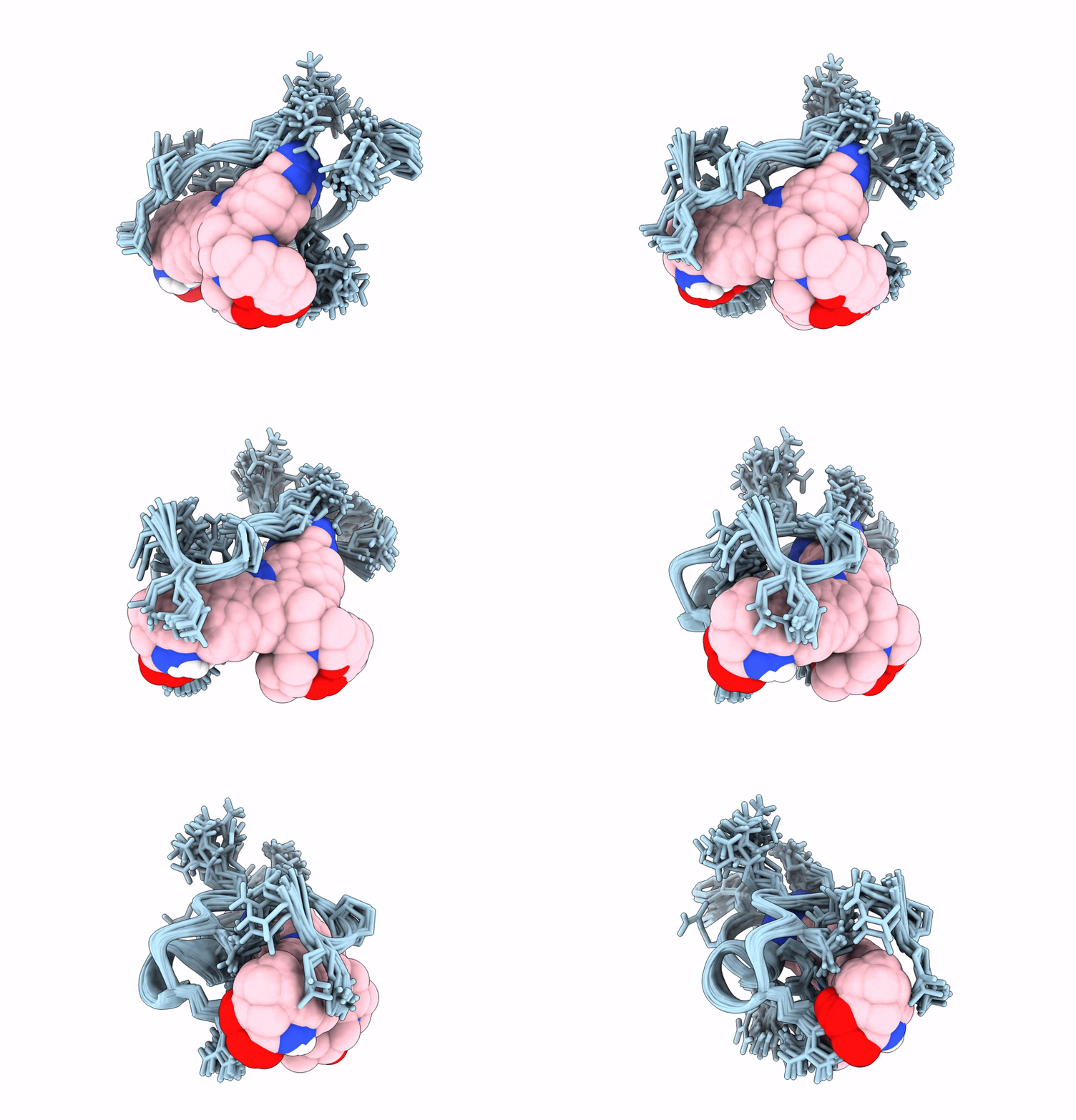
9D36 image
Deposition Date 2024-08-09
Release Date 2025-08-13
Last Version Date 2026-02-25
Entry Detail
PDB ID:
9D36
Title:
Structure of the C-terminal Domain of RAGE and Its Inhibitor
Biological Source:
Source Organism(s):
Homo sapiens (Taxon ID: 9606)
Expression System(s):
Method Details:
Experimental Method:
Conformers Calculated:
10000
Conformers Submitted:
20
Selection Criteria:
target function

Macromolecular Entities
Structures with similar UniProt ID
Protein Blast
Polymer Type:polypeptide(L)
Molecule:Advanced glycosylation end pr
Gene (Uniprot):AGER
Chain IDs:A
Chain Length:43
Number of Molecules:1
Biological Source:Homo sapiens
Ligand Molecules
Primary Citation
RAGE-mediated activation of the formin DIAPH1 and human macrophage inflammation are inhibited by a small molecule antagonist.
Cell Chem Biol 32 1221 1234.e8 (2025)
PMID: 41038162 DOI: 10.1016/j.chembiol.2025.09.004

Abstact

RAGE and its intracellular effector molecule, the actin polymerase DIAPH1, mediate inflammation and the complications of diabetes. Using NMR spectroscopy and mass spectrometry, we built a structural model of the RAGE-DIAPH1 complex, revealing how binding of the cytoplasmic tail of RAGE (ctRAGE) to DIAPH1 stimulates its actin polymerization activity, which is inhibited by a small molecule antagonist of RAGE-DIAPH1 interaction, RAGE406R. The solution structure of the RAGE406R - ctRAGE suggests that RAGE406R prevents the formation of the RAGE-DIAPH1. FRET, actin polymerization assays, smooth muscle cell migration, and THP1 cell inflammation experiments, together with the in vivo interrogation of the effects of RAGE406R in mouse models of inflammation and diabetic wound healing, support this mode of RAGE-DIAPH1 antagonism. Finally, the treatment of macrophages differentiated from peripheral blood-derived mononuclear cells from humans with type 1 diabetes with RAGE406R reduces the mRNA expression of the chemokine CCL2, diminishing the expression of a key node in the inflammatory response.

Legend

Protein

Chemical

Disease

Primary Citation of related structures
Feedback Form
Name
Email
Institute
Feedback