

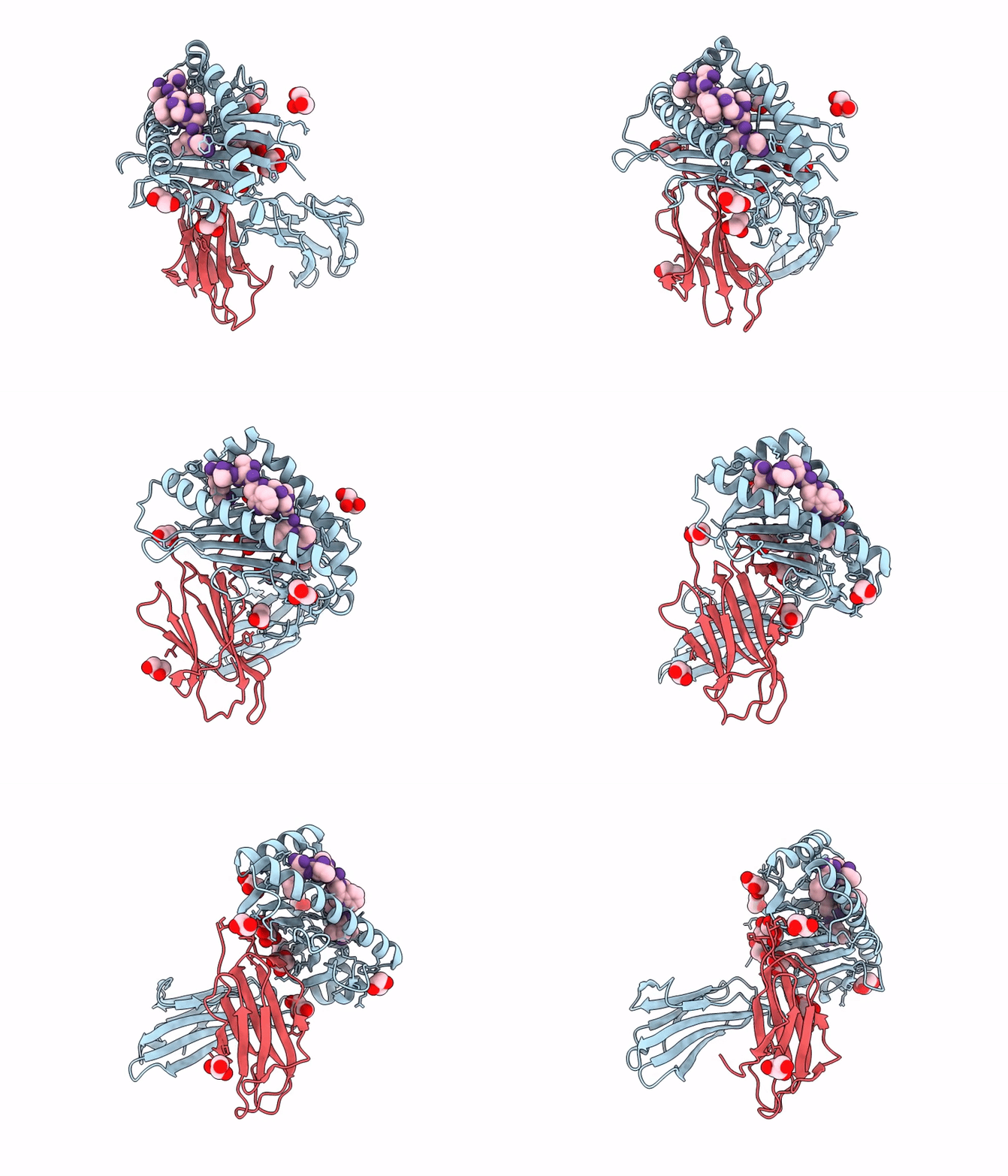
9CWZ image
Deposition Date 2024-07-30
Release Date 2026-02-04
Last Version Date 2026-08-26
Entry Detail
PDB ID:
9CWZ
Keywords:
Title:
Crystal structure of HLA-A*03:02 in complex with a mutant PIK3CA peptide
Biological Source:
Source Organism(s):
Homo sapiens (Taxon ID: 9606)
Expression System(s):
Method Details:
Experimental Method:
Resolution:
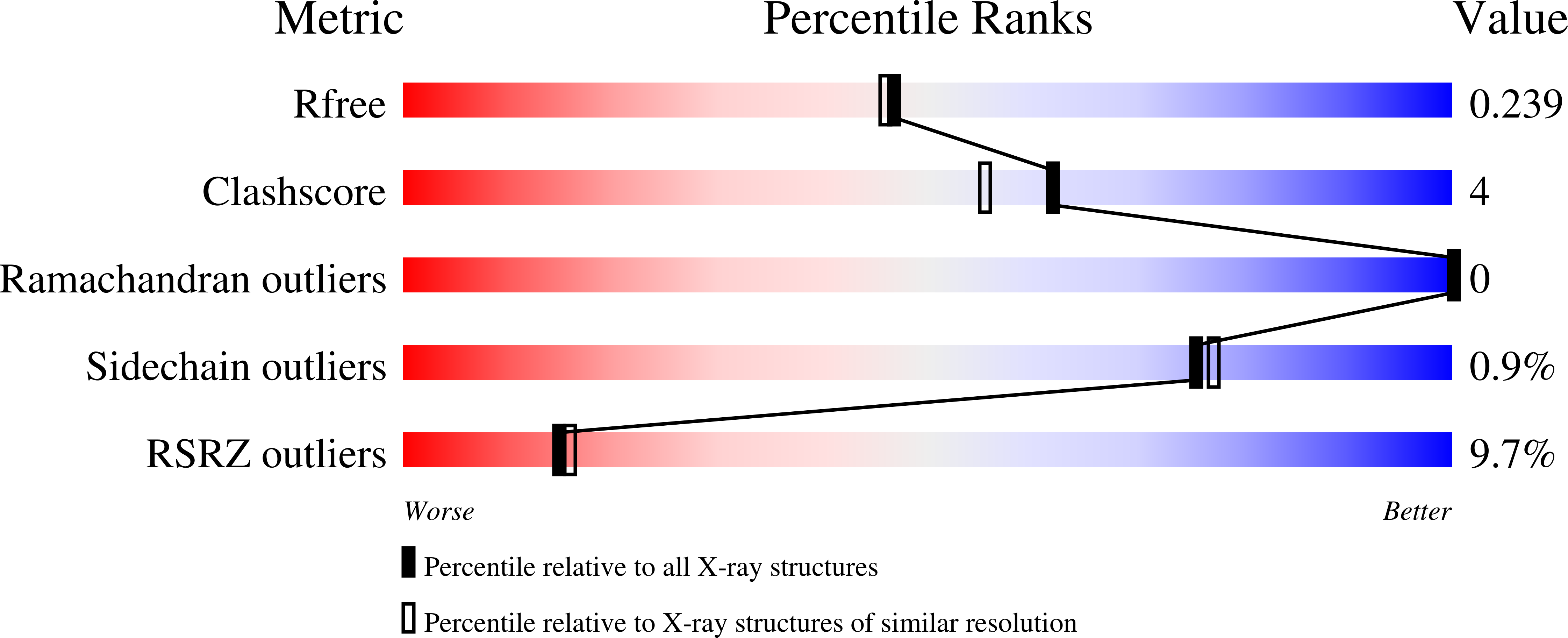
2.05 Å
R-Value Free:
0.23
R-Value Work:
0.20
R-Value Observed:
0.21
Space Group:
P 6 2 2
Macromolecular Entities
Polymer Type:polypeptide(L)
Molecule:HLA class I histocompatibilit
Gene (Uniprot):HLA-A
Chain IDs:A
Chain Length:274
Number of Molecules:1
Biological Source:Homo sapiens
Polymer Type:polypeptide(L)
Molecule:Beta-2-microglobulin
Gene (Uniprot):B2M
Chain IDs:B
Chain Length:100
Number of Molecules:1
Biological Source:Homo sapiens
Polymer Type:polypeptide(L)
Molecule:Mutant PIK3CA peptide
Gene (Uniprot):PIK3CA
Mutagens:H2L
Chain IDs:C
Chain Length:9
Number of Molecules:1
Biological Source:Homo sapiens
Ligand Molecules
Primary Citation
HLA micropolymorphisms confine neoantigen conformational adaptability and guide T cell receptor selectivity.
Proc.Natl.Acad.Sci.USA 123 e2602949123 e2602949123 (2026)
PMID: 42224598 DOI: 10.1073/pnas.2602949123

Abstact

T cell receptor (TCR) restriction by highly polymorphic major histocompatibility complex (MHC) proteins is a foundation of cellular immunity. Although the effects of MHC polymorphisms on peptide binding and selection are well established, how micropolymorphisms within MHC supertypes impact immune recognition is poorly understood. Here, we identified a mechanism through which the micropolymorphisms in two closely related HLA-A3 superfamily members govern TCR specificity. We previously showed that TCRs specific for a public neoantigen arising from a PIK3CA oncogenic hotspot mutation restricted by HLA-A*03:01 were unable to recognize the same epitope in the context of HLA-A*03:02 despite equivalent processing and presentation by both alleles. We found here that the two micropolymorphisms distinguishing A*03:02 from A*03:01 prevent TCR binding not by altering peptide binding or static structures, but by altering the conformational ensemble of the neoantigen, preventing it from adopting a binding-permissive state. The effect is rooted in how the two polymorphic sites interact with other covarying, evolutionarily coupled polymorphisms, reflecting a cross-groove network of interactions that controls the conformational adaptability of the peptide/HLA complex. We suggest polymorphism-dependent adaptability reflects an evolved feature of class I MHC proteins, further diversifying epitopes and contributing to how TCRs and other immunoreceptors differentiate between antigens. Beyond this mechanistic insight, our findings emphasize the need for high-resolution HLA typing in efforts across immunology, including antigen-specific immunotherapy.

Legend

Protein

Chemical

Disease

Primary Citation of related structures
Feedback Form
Name
Email
Institute
Feedback