

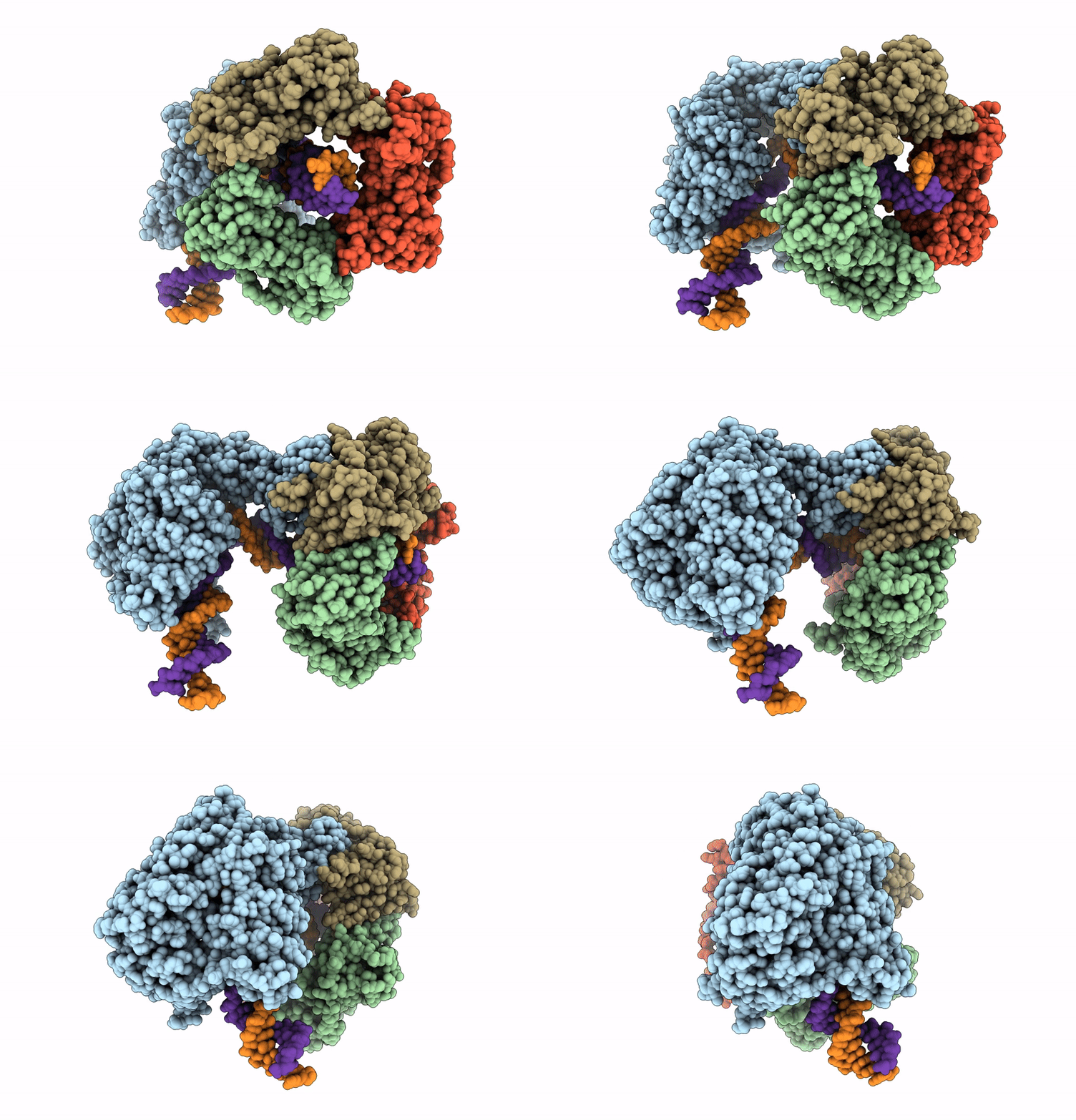
9CMA image
Deposition Date 2024-07-13
Release Date 2025-02-19
Last Version Date 2025-02-19
Entry Detail
PDB ID:
9CMA
Title:
Cryo-EM structure of FAN1 R507H-PCNA-DNA in final state
Biological Source:
Source Organism(s):
Expression System(s):
Method Details:
Experimental Method:
Resolution:
3.97 Å
Aggregation State:
PARTICLE
Reconstruction Method:
SINGLE PARTICLE

Macromolecular Entities
Structures with similar UniProt ID
Protein Blast
Polymer Type:polypeptide(L)
Molecule:Fanconi-associated nuclease 1
Gene (Uniprot):FAN1
Chain IDs:A
Chain Length:646
Number of Molecules:1
Biological Source:Homo sapiens
Structures with similar UniProt ID
Protein Blast
Polymer Type:polypeptide(L)
Molecule:Proliferating cell nuclear an
Gene (Uniprot):PCNA
Chain IDs:B, C, D
Chain Length:261
Number of Molecules:3
Biological Source:Homo sapiens
Polymer Type:polydeoxyribonucleotide
Molecule:DNA (46-MER) with (CAG)2 extr
Chain IDs:E
Chain Length:46
Number of Molecules:1
Biological Source:synthetic construct
Polymer Type:polydeoxyribonucleotide
Molecule:DNA (40-MER)
Chain IDs:F
Chain Length:40
Number of Molecules:1
Biological Source:synthetic construct
Ligand Molecules
Primary Citation
Structural and molecular basis of PCNA-activated FAN1 nuclease function in DNA repair.
Nat Commun 16 4411 4411 (2025)
PMID: 40368897 DOI: 10.1038/s41467-025-59323-y

Abstact

FAN1 is a DNA dependent nuclease whose proper function is essential for maintaining human health. For example, a genetic variant in FAN1, Arg507 to His hastens onset of Huntington's disease, a repeat expansion disorder for which there is no cure. How the Arg507His mutation affects FAN1 structure and enzymatic function is unknown. Using cryo-EM and biochemistry, we have discovered that FAN1 arginine 507 is critical for its interaction with PCNA, and mutation of Arg507 to His attenuates assembly of the FAN1-PCNA complex on a disease-relevant extrahelical DNA extrusions formed within DNA repeats. This mutation concomitantly abolishes PCNA-FAN1-dependent cleavage of such extrusions, thus unraveling the molecular basis for a specific mutation in FAN1 that dramatically hastens the onset of Huntington's disease. These results underscore the importance of PCNA to the genome stabilizing function of FAN1.

Legend

Protein

Chemical

Disease

Primary Citation of related structures
Feedback Form
Name
Email
Institute
Feedback