

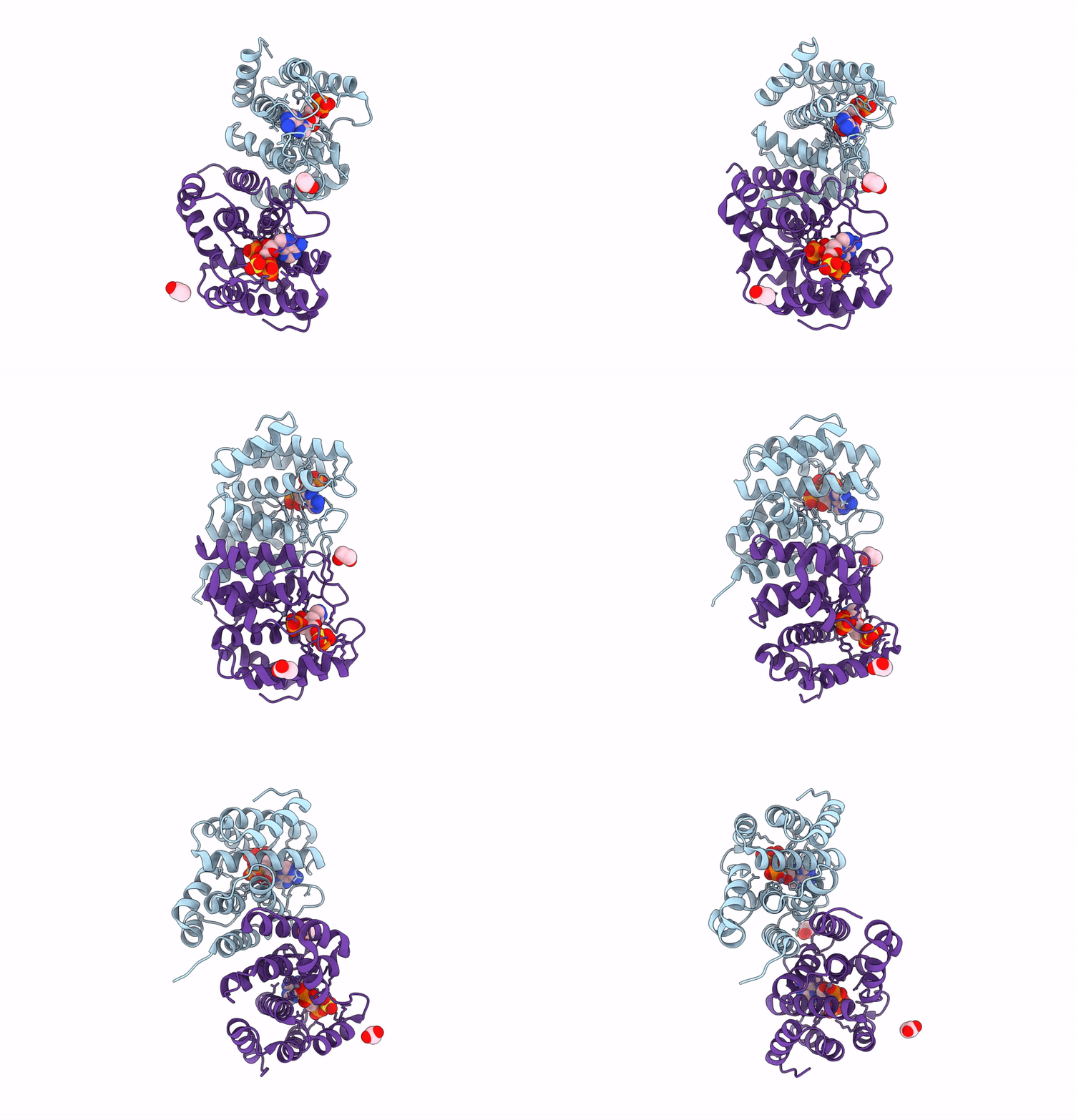
9CHY image
Deposition Date 2024-07-02
Release Date 2025-12-10
Last Version Date 2026-04-22
Entry Detail
PDB ID:
9CHY
Keywords:
Title:
Crystal structure of the human MESH1 (D66K)-PAPS complex
Biological Source:
Source Organism(s):
Homo sapiens (Taxon ID: 9606)
Expression System(s):
Method Details:
Experimental Method:
Resolution:
1.90 Å
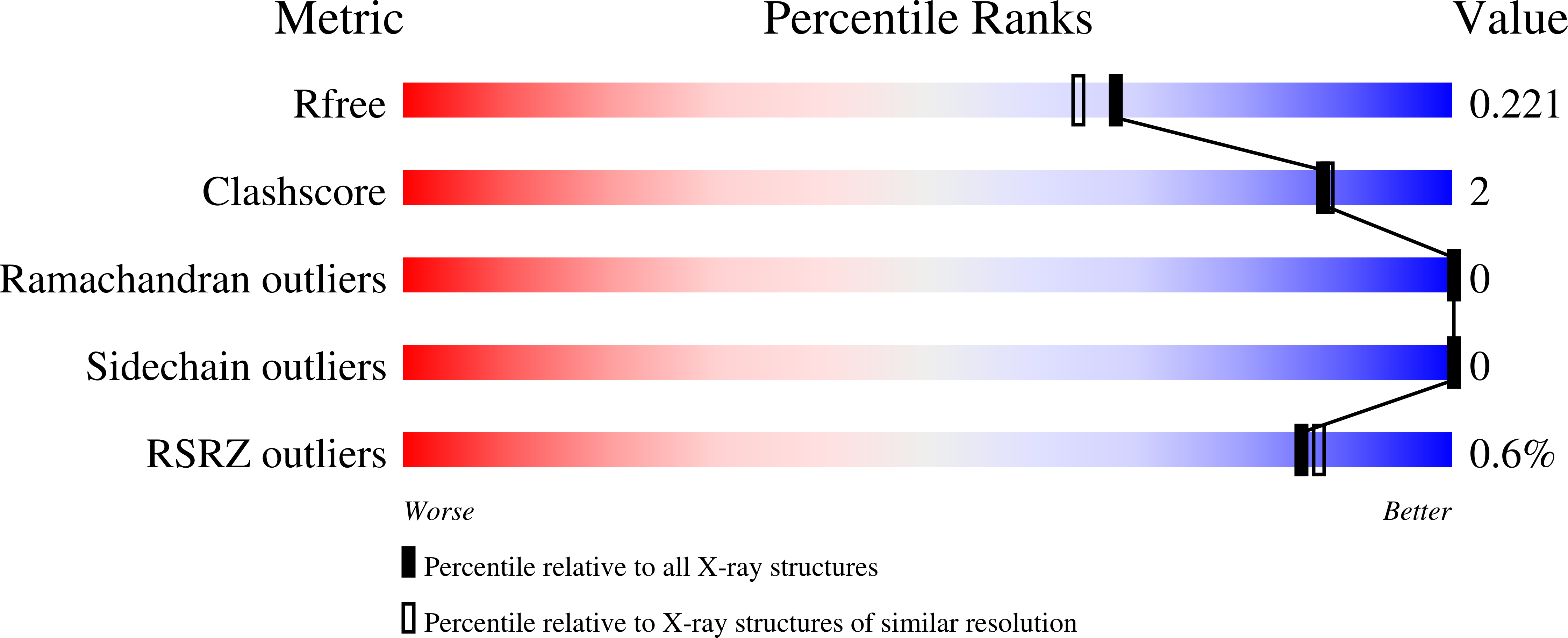
R-Value Free:
0.22
R-Value Work:
0.17
R-Value Observed:
0.17
Space Group:
P 21 21 21
Macromolecular Entities
Structures with similar UniProt ID
Protein Blast
Polymer Type:polypeptide(L)
Molecule:Guanosine-3',5'-bis(diphospha
Gene (Uniprot):HDDC3
Mutagens:D66K
Chain IDs:A, B
Chain Length:180
Number of Molecules:2
Biological Source:Homo sapiens
Primary Citation
MESH1 functions as a metazoan PAPS phosphatase to regulate sulfation.
Nat.Chem.Biol. ? ? ? (2026)
PMID: 41963701 DOI: 10.1038/s41589-026-02190-5

Abstact

Biological sulfation reactions require 3'-phosphoadenosine-5'-phosphosulfate (PAPS) as the universal sulfate donor. While the biosynthetic pathway of PAPS has been well characterized, the phosphatase degrading PAPS remains unidentified. Here, we discover MESH1 as a PAPS phosphatase that hydrolyzes PAPS into adenosine-5'-phosphosulfate and phosphate. Our crystallographic analysis of the MESH1-PAPS complex confirms PAPS as a bona fide substrate of MESH1. We further show that MESH1 localizes to Golgi, where sulfotransferases consume PAPS to produce sulfated glycosaminoglycan (sGAG). We show that MESH1 (also known as HDDC3) knockdown enhances sGAG production in a chondrogenic cell line. Furthermore, in brachymorphic mice, Mesh1 knockout significantly elevates sGAG levels in joint cartilage and improves bone density. In Caenorhabditis elegans lacking bpnt-1, neurotoxic PAP accumulation is alleviated by MESH1 overexpression, reducing upstream PAPS levels. Our biochemical, structural and functional findings establish MESH1 as a key PAPS phosphatase and highlights its potential as a therapeutic target in disorders characterized by sulfation deficiency.

Legend

Protein

Chemical

Disease

Primary Citation of related structures
Feedback Form
Name
Email
Institute
Feedback