

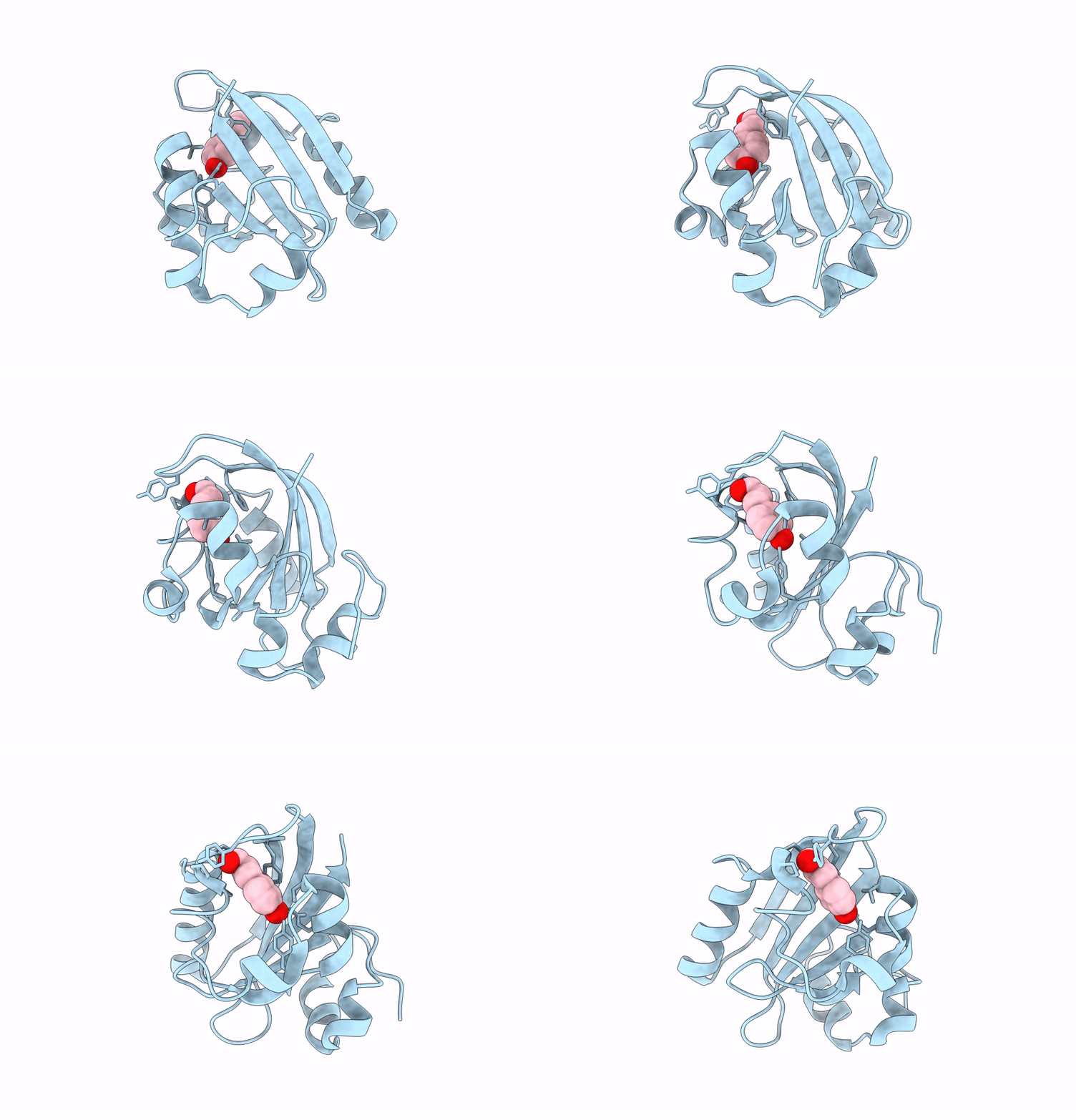
9CGH image
Deposition Date 2024-06-28
Release Date 2025-06-04
Last Version Date 2026-03-04
Entry Detail
PDB ID:
9CGH
Keywords:
Title:
Photoactive yellow protein crystallized in situ on cyclic olefin copolymer microfluidic chip through counter diffusion
Biological Source:
Source Organism(s):
Expression System(s):
Method Details:
Experimental Method:
Resolution:
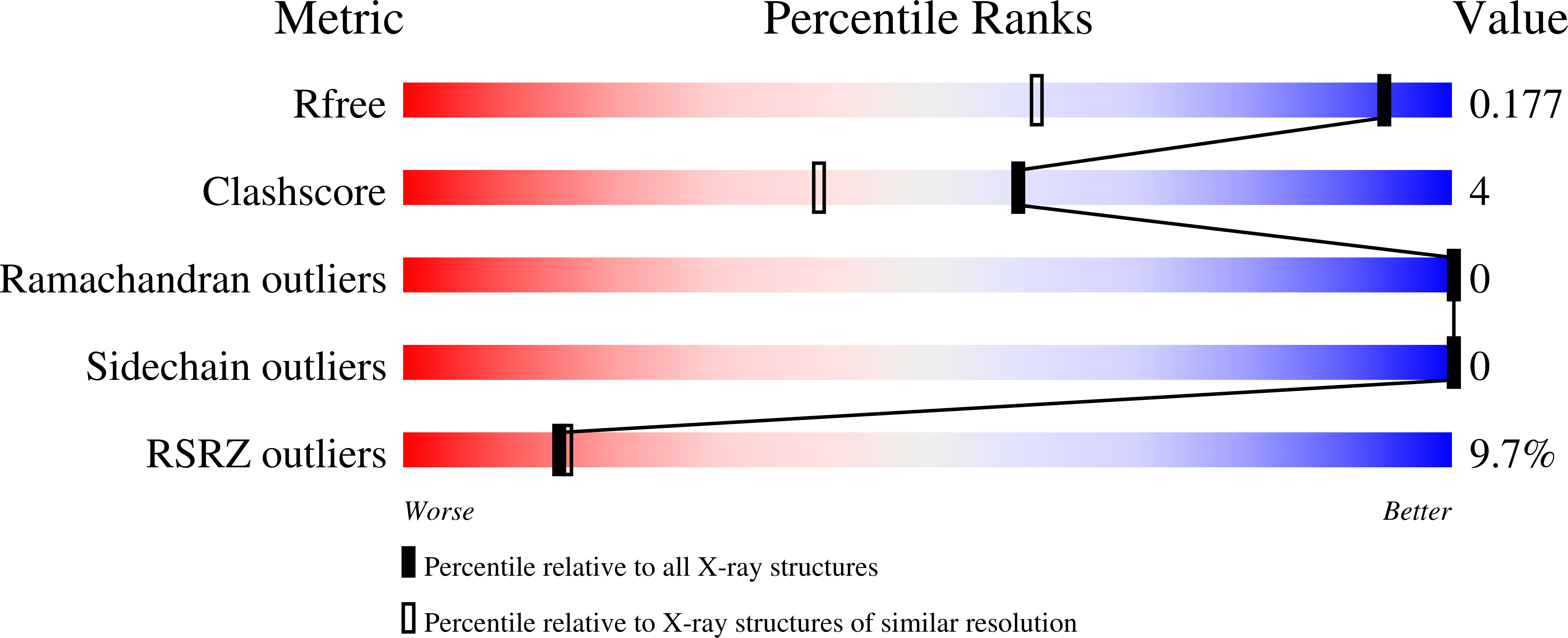
1.32 Å
R-Value Free:
0.17
R-Value Work:
0.17
R-Value Observed:
0.17
Space Group:
P 65
Macromolecular Entities
Structures with similar UniProt ID
Protein Blast
Polymer Type:polypeptide(L)
Molecule:Photoactive yellow protein
Gene (Uniprot):pyp
Chain IDs:A
Chain Length:125
Number of Molecules:1
Biological Source:Halorhodospira halophila
Ligand Molecules
Primary Citation
In situ counter-diffusion crystallization and long-term crystal preservation in microfluidic fixed targets for serial crystallography.
J Appl Crystallogr 57 1539 1550 (2024)
PMID: 39387069 DOI: 10.1107/S1600576724007544

Abstact

Compared with batch and vapor diffusion methods, counter diffusion can generate larger and higher-quality protein crystals yielding improved diffraction data and higher-resolution structures. Typically, counter-diffusion experiments are conducted in elongated chambers, such as glass capillaries, and the crystals are either directly measured in the capillary or extracted and mounted at the X-ray beamline. Despite the advantages of counter-diffusion protein crystallization, there are few fixed-target devices that utilize counter diffusion for crystallization. In this article, different designs of user-friendly counter-diffusion chambers are presented which can be used to grow large protein crystals in a 2D polymer microfluidic fixed-target chip. Methods for rapid chip fabrication using commercially available thin-film materials such as Mylar, propyl-ene and Kapton are also detailed. Rules of thumb are provided to tune the nucleation and crystal growth to meet users' needs while minimizing sample consumption. These designs provide a reliable approach to forming large crystals and maintaining their hydration for weeks and even months. This allows ample time to grow, select and preserve the best crystal batches before X-ray beam time. Importantly, the fixed-target microfluidic chip has a low background scatter and can be directly used at beamlines without any crystal handling, enabling crystal quality to be preserved. The approach is demonstrated with serial diffraction of photoactive yellow protein, yielding 1.32 A resolution at room temperature. Fabrication of this standard microfluidic chip with commercially available thin films greatly simplifies fabrication and provides enhanced stability under vacuum. These advances will further broaden microfluidic fixed-target utilization by crystallographers.

Legend

Protein

Chemical

Disease

Primary Citation of related structures
Feedback Form
Name
Email
Institute
Feedback