

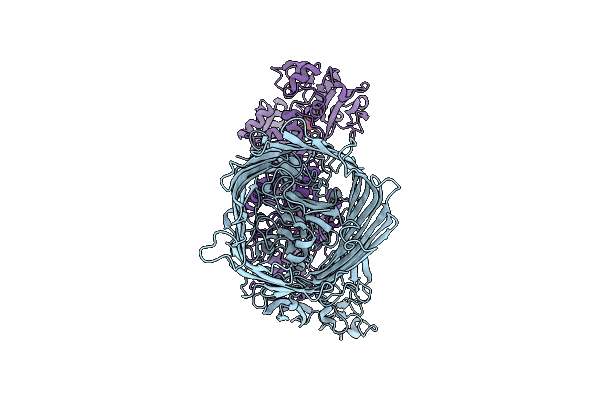
9CDQ image
Deposition Date 2024-06-25
Release Date 2026-03-11
Last Version Date 2026-04-15
Entry Detail
PDB ID:
9CDQ
Title:
Transferrin Binding Protein A in complex with transferrin (iron bound in N lobe only)
Biological Source:
Source Organism(s):
Method Details:
Experimental Method:
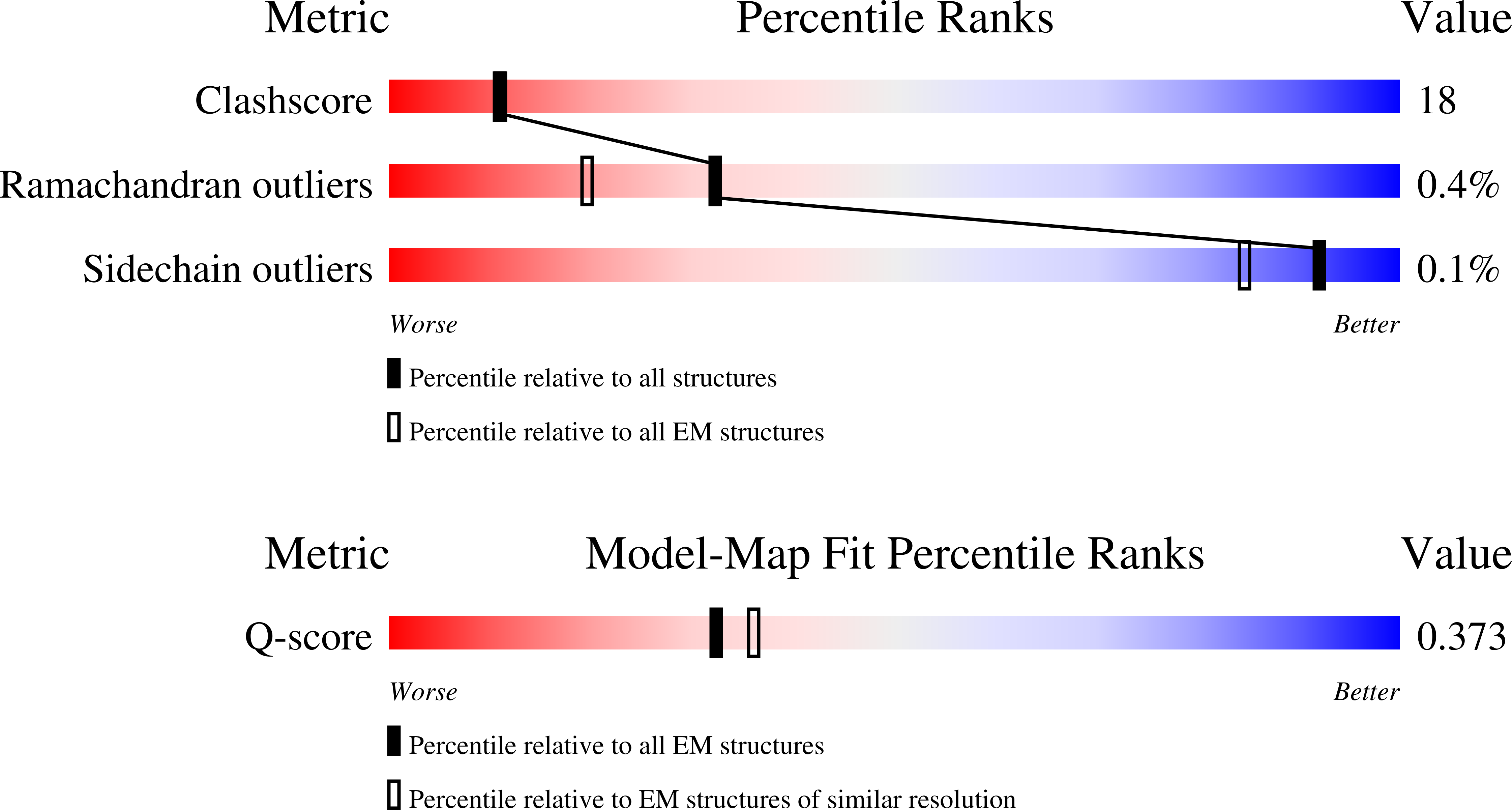
Resolution:
3.76 Å
Aggregation State:
PARTICLE
Reconstruction Method:
SINGLE PARTICLE
Macromolecular Entities
Structures with similar UniProt ID
Protein Blast
Polymer Type:polypeptide(L)
Molecule:Transferrin-binding protein A
Gene (Uniprot):tbp1
Chain IDs:B (auth: A)
Chain Length:915
Number of Molecules:1
Biological Source:Neisseria meningitidis serogroup B
Structures with similar UniProt ID
Protein Blast
Polymer Type:polypeptide(L)
Molecule:Serotransferrin
Gene (Uniprot):TF
Chain IDs:A (auth: F)
Chain Length:698
Number of Molecules:1
Biological Source:Homo sapiens
Primary Citation
Structural insights into the mechanism underpinning iron piracy in pathogenic Neisseria.
Sci Adv 12 eaea2470 eaea2470 (2026)
PMID: 41931607 DOI: 10.1126/sciadv.aea2470

Abstact

The pathogenesis of Neisseria hinges on the surface proteins TbpA and TbpB, which orchestrate the acquisition of iron from transferrin. TbpB selectively captures iron-loaded transferrin and delivers it to TbpA for iron import. We report a series of cryo-electron microscopy structures of trapped intermediates along the iron acquisition pathway. These structural studies are supported by pulldowns, electron paramagnetic resonance studies, molecular dynamics simulations, and studies in Neisseria gonorrhoeae, which show that TbpA mechanically opens the C-lobe of transferrin, triggering iron release. Once iron is removed, TbpB dissociates and undergoes large subunit rearrangements with its C-lobe rebinding at a different interface on transferrin. TonB binding expands the barrel of TbpA, helping displace the plug to open a path for iron import. This also disrupts the interaction of the plug loop with the C1 domain of transferrin, leading to the dissociation of the spent transferrin. Together, our study provides a more complete understanding of metal acquisition systems in Neisseria and other Gram-negative bacteria.

Legend

Protein

Chemical

Disease

Primary Citation of related structures
Feedback Form
Name
Email
Institute
Feedback