

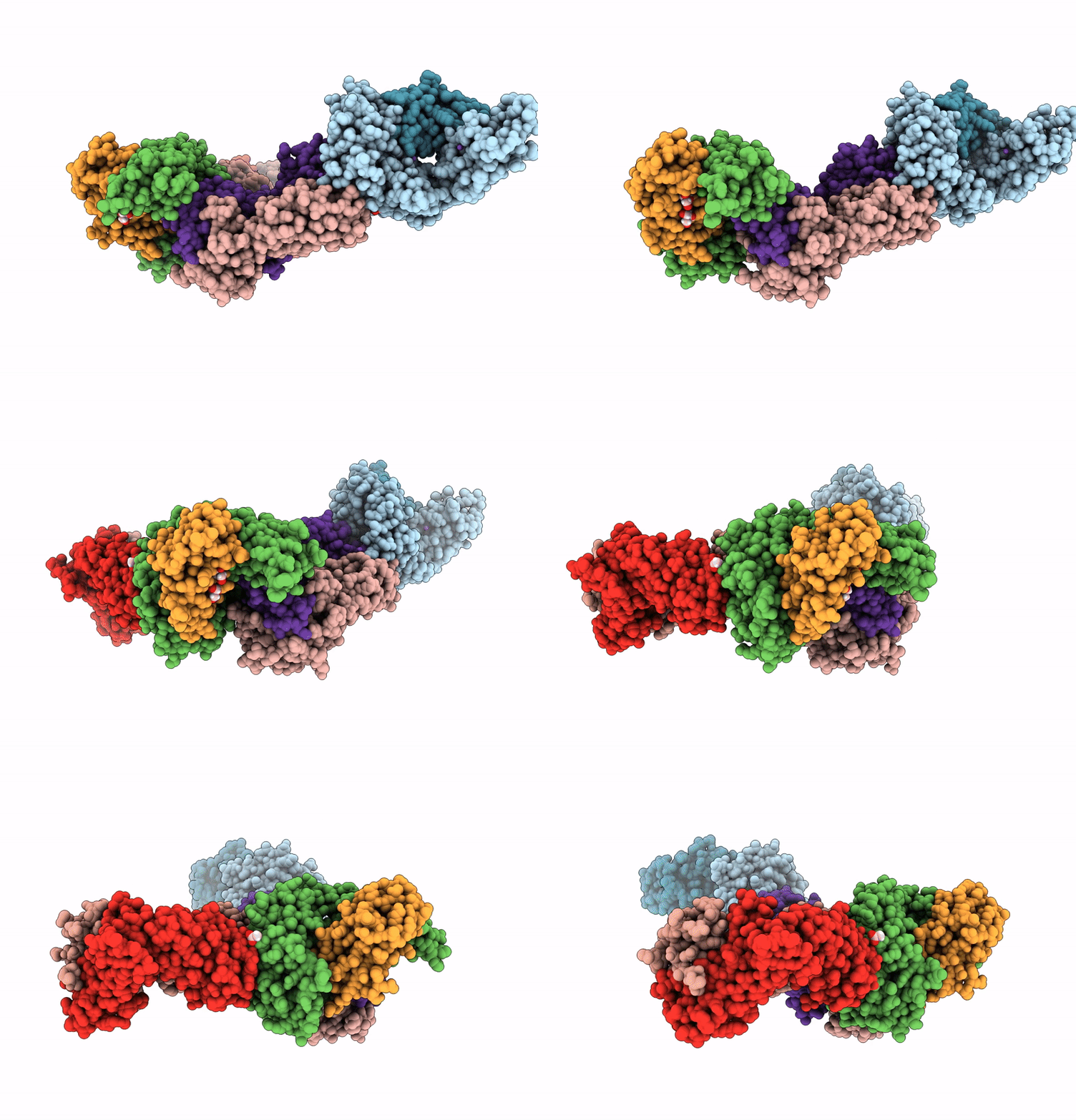
9C42 image
Deposition Date 2024-06-02
Release Date 2025-06-11
Last Version Date 2026-03-11
Entry Detail
PDB ID:
9C42
Keywords:
Title:
Structure of human MR1-ellagic acid in complex with human MAIT A-F7 TCR
Biological Source:
Source Organism(s):
Homo sapiens (Taxon ID: 9606)
Expression System(s):
Method Details:
Experimental Method:
Resolution:
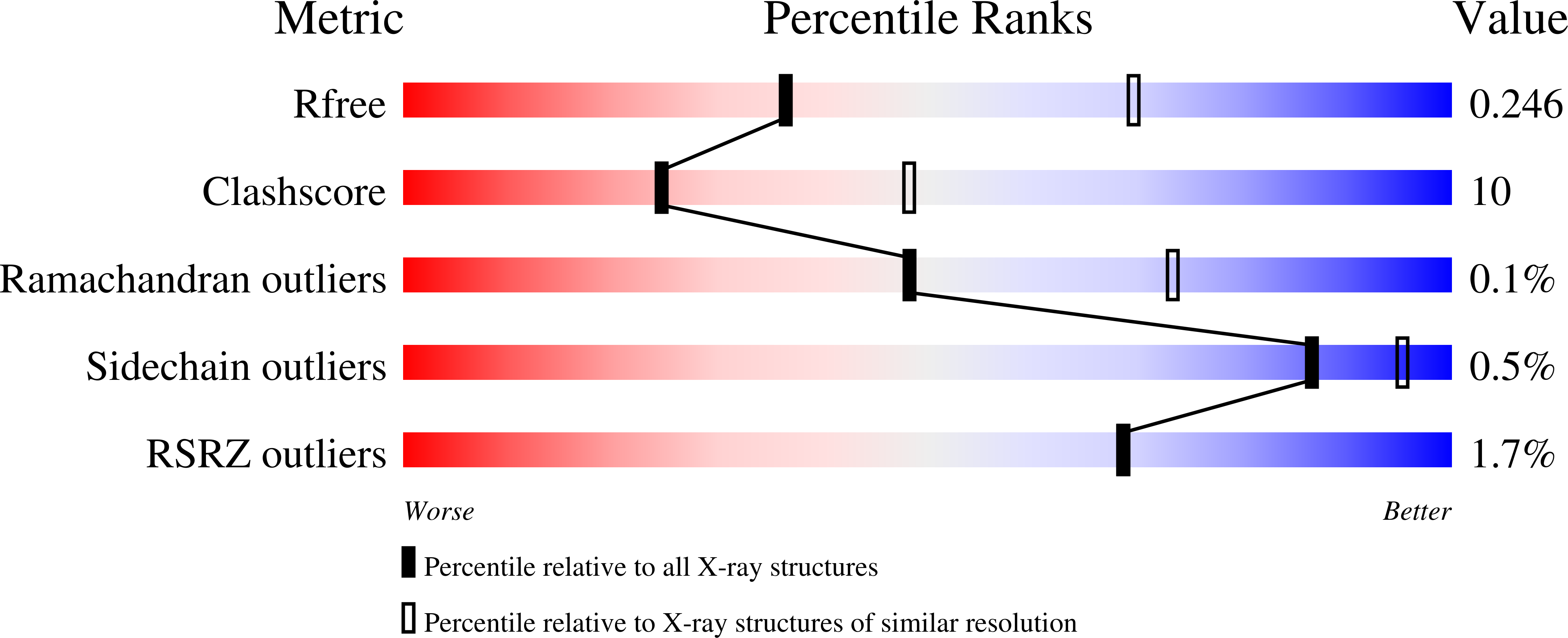
2.69 Å
R-Value Free:
0.24
R-Value Work:
0.19
R-Value Observed:
0.19
Space Group:
C 1 2 1
Macromolecular Entities
Structures with similar UniProt ID
Protein Blast
Polymer Type:polypeptide(L)
Molecule:Major histocompatibility comp
Gene (Uniprot):MR1
Chain IDs:A, C
Chain Length:271
Number of Molecules:2
Biological Source:Homo sapiens
Structures with similar UniProt ID
Protein Blast
Polymer Type:polypeptide(L)
Molecule:Beta-2-microglobulin
Gene (Uniprot):B2M
Chain IDs:B, F
Chain Length:100
Number of Molecules:2
Biological Source:Homo sapiens
Structures with similar UniProt ID
Protein Blast
Polymer Type:polypeptide(L)
Molecule:TRA@ protein
Gene (Uniprot):TRA@
Chain IDs:D, G
Chain Length:204
Number of Molecules:2
Biological Source:Homo sapiens
Protein Blast
Polymer Type:polypeptide(L)
Molecule:MAIT T-cell receptor beta cha
Chain IDs:E, H
Chain Length:246
Number of Molecules:2
Biological Source:Homo sapiens
Primary Citation
Ellagic acid metabolism as a source of dietary MR1 ligands.
J Immunol. 215 ? ? (2026)
PMID: 41758608 DOI: 10.1093/jimmun/vkaf346

Abstact

MR1 is an major histocompatibility complex class I-like molecule that presents small molecule metabolites to MR1-restricted T cells that include a major population of highly conserved T cells known as mucosal-associated invariant T (MAIT) cells. MAIT cells recognize bacterial riboflavin pathway-derived neoantigens and are being attributed an increasing number of immune and homeostatic functions. However, the chemical breadth and diversity of MR1-restricted ligands remain to be fully elucidated. Due to the largely (poly)cyclic structure of known MR1 ligands, we aimed to identify MR1 ligands from a library of dietary phenolic metabolites. Competitive MAIT cell inhibition assays using both cell lines and primary cells isolated from human blood identified gut microbial metabolites of ellagitannins that include ellagic acid (EA), urolithin D (UroD), and UroM5 as potential MR1 ligands. Fluorescence polarization binding assays demonstrated that EA, UroM5, UroC, and UroB bound to MR1, and we provide a structural basis for EA presentation by MR1. Overall, our findings indicate that EA metabolism provides dietary MR1 ligands that inhibit T cell receptor-dependent MAIT cell activation.

Legend

Protein

Chemical

Disease

Primary Citation of related structures
Feedback Form
Name
Email
Institute
Feedback